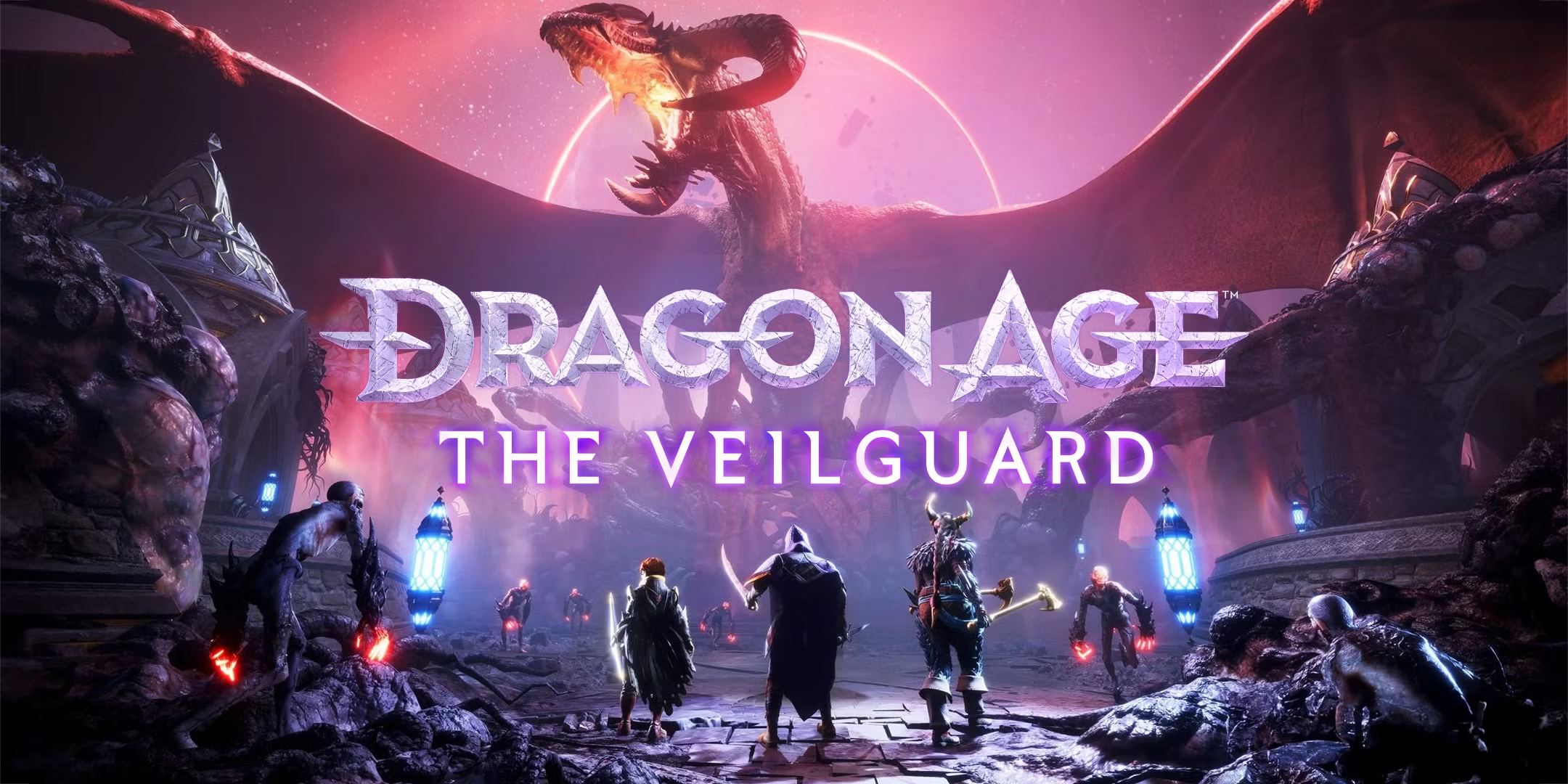
The Dragon Age video game franchise by BioWare, spanning four major entries — Dragon Age: Origins (2009), Dragon Age II (2011), Dragon Age: Inquisition (2014), and now Dragon Age: The Veilguard (2024) — is known for its immersive world-building, complex narratives, and deep relationship-building mechanics. These qualities have established Dragon Age as one of the most bi-inclusive franchises in gaming, pioneering meaningful bi representation that allows players to explore diverse romantic paths.
Each game centers on a unique protagonist facing distinct challenges in the high-fantasy world of Thedas: a Grey Warden combating an ancient evil in Origins, a refugee-turned-hero named Hawke in Dragon Age II, a chosen leader known as the Inquisitor in Inquisition, and Rook, a protagonist navigating a complex web of alliances and ancient threats in The Veilguard. Across all installments, players can romance a variety of characters regardless of the player character’s sex, cementing Dragon Age as a landmark series for LGBT representation.
The Dragon Age franchise is celebrated for its cast of bi characters, each with distinct personalities, motivations, and rich backstories that make them feel real and multifaceted. Among these beloved companions are the bard Leliana, a deeply devoted character with a complicated past; the charismatic assassin Zevran, who openly discusses his attraction to both men and women; Josephine, a brilliant diplomat with an understated charm; and Iron Bull, a Qunari spy who implies that bisexuality is common in his culture. Other bi characters from the early entries include troubled deserter Anders, escaped slave Fenris, pirate captain Isabela, and blood mage Merrill. Each of these characters brings a unique perspective, grounding bisexuality as an authentic part of their identities rather than a superficial trait.
The Veilguard builds on this tradition, introducing an impressive lineup of eight bi/pan characters, the most in any entry of the series. Alongside Rook, the protagonist who can be played as gay, straight, or bi, players can romance seven companions: fan-favorite Lace Harding, returning from Inquisition as a main character; Bellara Lutare, an elven mage and Veil Jumper fascinated with ancient technology; Neve Gallus, a fiercely loyal human Shadow Dragon; Lucanis Dellamorte, a rogue assassin entangled with the Antivan Crows; Davrin, a determined Grey Warden with a rare pet griffin; Taash, a non-binary Qunari warrior working for the Lords of Fortune; and Emmrich Volkarin, an eccentric professor of necromancy. Each of these characters is romanceable by Rook regardless of their sex or gender identity, adding to the inclusive legacy of the series.
In addition to the explicitly bisexual characters, Dragon Age includes exclusively straight and gay characters, such as the straight Morrigan and Alistair or the exclusively gay Dorian and Sera. This range of orientations deepens the gaming experience, presenting a realistic spectrum of sexual identities and making the world of Thedas feel more diverse and inclusive.
BioWare’s commitment to authentic bisexual representation is reflected not only in the range of romance options but also in the depth of each character’s personal story. Through nuanced dialogue trees, players can engage in meaningful interactions that bring these relationships to life. For example, Zevran’s candid reflections on his past with both men and women and Iron Bull’s cultural perspective on sexuality are incorporated naturally, making their bisexuality feel like an intrinsic part of their character. The Veilguard introduces similarly intricate dialogues, with characters like Taash openly discussing their attraction and identity in ways that are representational yet woven into the narrative.
Overall, Dragon Age has set a high bar for bi representation in gaming, influencing perceptions of bisexuality across gaming culture and beyond. The franchise’s dedication to showcasing bisexuality as a natural aspect of identity, combined with its richly crafted characters, makes Dragon Age a touchstone for respectful and meaningful LGBT representation in the RPG genre.