I can’t deny it, I love vampires. Yes, I was the teenager obsessed with Twilight… and now I’m the adult obsessed with Lestat. When I watched AMC’s adaptation of Interview with the Vampire, I confirmed my bisexuality. Turns out I really was in love with a man (oh no, how cringe!). You cannot measure the FOMO I felt from missing Lestat’s concert, which, yes, actually happened in real life! And as a fan and content creator, I was obsessed with all the wonderful marketing campaigns that kept me on the edge of my seat waiting for this series.
And I have to say that sometimes a show gives you bi representation, and other times it throws it in your face covered in glitter. The Vampire Lestat definitely belongs in the second category.
Before we continue, I have to warn you that this review will contain SPOILERS for the series The Vampire Lestat and, consequently, for Interview with the Vampire. If you’re not familiar with the Unicorn Scale, I recommend checking out how this review rates bi representation here. You can also check out our bi media entry for this series here.
Anyway… let’s continue: “Lestat, Lestat, Lestat, Lestat, Lestat, Lestat…”
After two seasons told primarily from Louis’ perspective, Interview with the Vampire changes its name, protagonist, and tone to become The Vampire Lestat. Based on Anne Rice’s second novel, this season follows Lestat de Lioncourt (Sam Reid) as he rebuilds his life before and after meeting Louis, from his youth in France to his transformation into an immortal rockstar. In the present day, Lestat turns his need to tell his own version of the events described in the popular book that emerges after Louis’s interview into a musical tour filled with blood, sex, glitter, and, of course, plenty of vampire drama.
The change is huge. The show goes from the melancholic intimacy of the earlier seasons to something much more glam, camp, and rock ’n’ roll. The season draws inspiration from glam rock and figures like David Bowie and Iggy Pop to build a version of Lestat who seems to exist beyond the rules of humanity. And, in many ways, that’s also reflected in the show’s bi representation.
What I Liked:
What I liked most about this season is, quite simply, how little it fears bisexuality.
From the very first episode, Lestat makes it crystal clear that his sexuality isn’t limited by gender. In one of the first scenes, he jokes, “A little draining, both ways,” a play on words that works for him as a vampire rockstar (talking about blood and vodka) and his sexuality. Soon after, we see him kiss a man and a woman as he gets in his tour bus, and the show presents sexual encounters with people of different genders without turning any of them into a big deal.
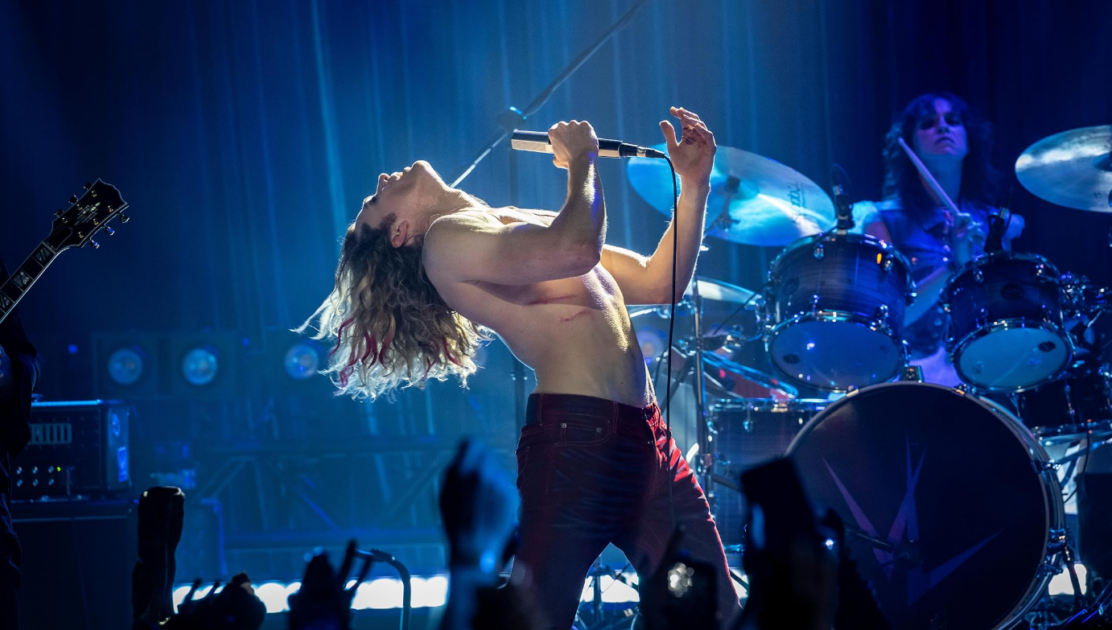
And that’s exactly what I love about it: nobody seems to need an explanation. In the world of The Vampire Lestat, vampires’ sexual fluidity is so normal that it doesn’t even seem to be up for discussion. Lestat can be with men and women; Daniel can have relationships with people of different genders, and the characters simply go on with their lives. There’s no “What does this mean about you?” moment or crisis over whether Lestat is “really” attracted to both sexes. His sexuality exists in the same way as any other character trait.
Even when the show doesn’t use the word “bisexual,” it does talk about Lestat’s sexual fluidity. I think it’s important to recognize that the season doesn’t treat bisexuality as a phase, a confusion, or a dramatic revelation. Lestat and most of the vampires in this universe simply are this way.
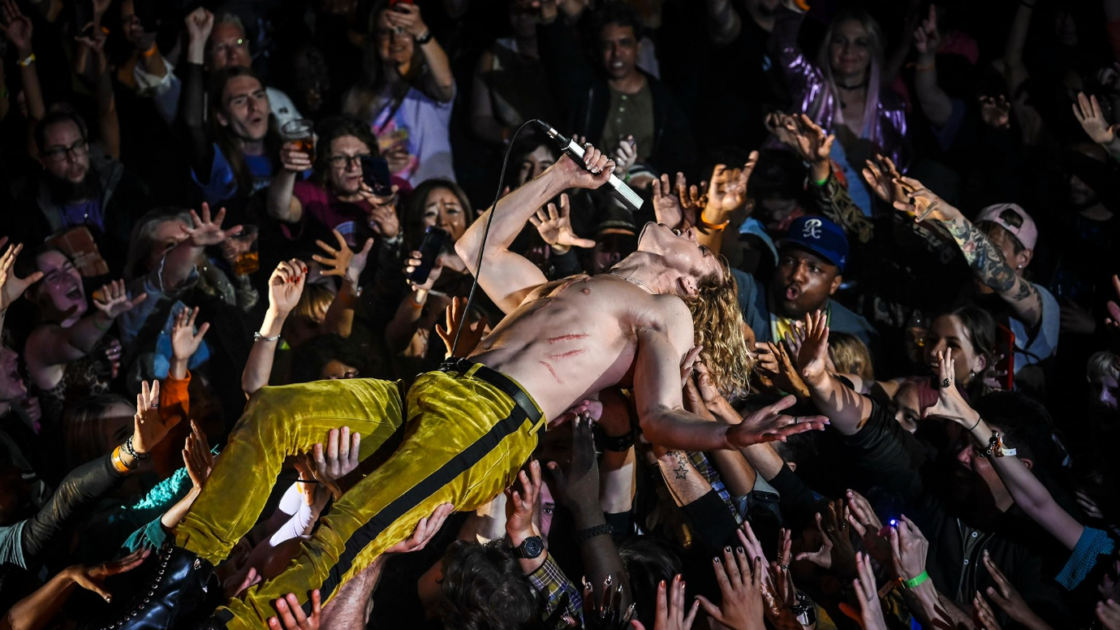
I also think it’s impossible not to talk about the character’s visual construction. This rockstar version of Lestat is an absolute bi fantasy: glitter, makeup, colorful hair, extravagant clothes, bi lighting, and a masculinity that constantly plays with femininity. Sam Reid plays Lestat as a glamorous, seductive, over-the-top rockstar, and the show never seems interested in making him less queer in order to make him more acceptable. The Guardian even described this new version as a “dandy of the underworld,” highlighting David Bowie’s influence on his stage presence.
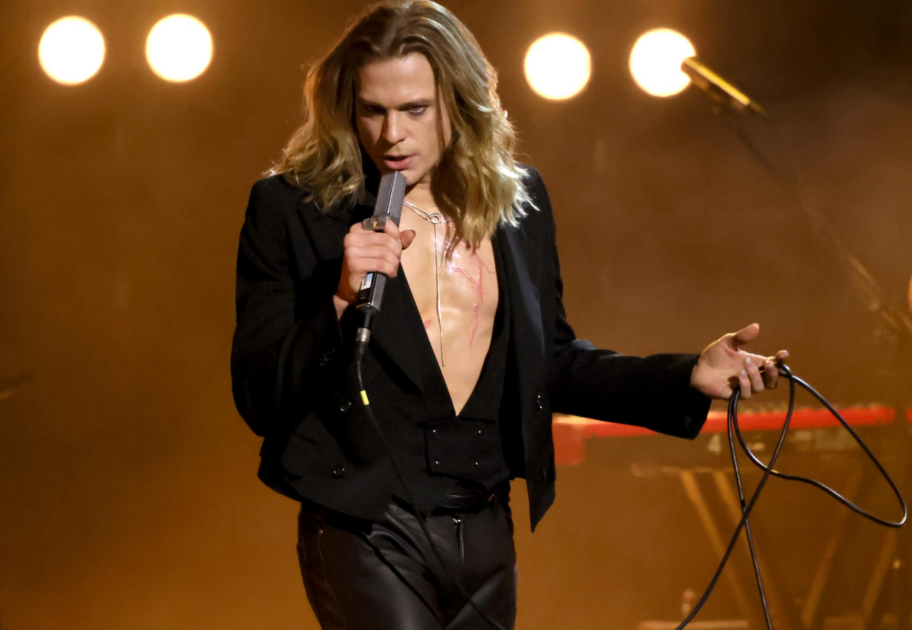
To me, that’s bi representation too. Not just because Lestat is attracted to more than one gender, but because the show allows a bi man to be sensual, extravagant, feminine, masculine, sexual, and completely confident in himself all at the same time.
I also liked that the season continued expanding the sexual fluidity of other characters. Daniel Molloy and Armand finally move toward the relationship that readers of The Vampire Chronicles know as Devil’s Minion. Although we didn’t actually see their romance on screen (Daniel only mentions dating someone, and it’s later revealed that he and Armand became companions), it’s an important confirmation for Daniel, especially after we meet him as a man who was married to a woman but went to gay bars in his youth. The show doesn’t present his sexuality as a contradiction: it’s simply part of his story.
In that sense, The Vampire Lestat presents a world where bisexuality isn’t just accepted: it’s sexy. And after decades of bi characters having to justify their orientation, that feels refreshing.
What I Didn’t Like:
But I have one pretty big complaint: why does nobody say the word “bisexual”? I understand that the show comes from a time period and a work of fiction in which the characters don’t necessarily use modern labels to describe their sexuality. I also understand that Lestat is described in the first season, which takes place between 1910 and 1940, as “non-discriminating,” and that the idea that vampires transcend human categories is central to Anne Rice’s work. But this season takes place mostly in the modern era, namely 2025–2026. It’s full of references to contemporary culture; the characters use phrases like “serving cunt,” and they mention TikTok and even Labubus. It would have been wonderful if at some point someone had simply said, “Lestat is bi” or referred to his sexuality that way.
Not because we need a label to validate something that’s already obvious, but because naming bisexuality matters too.
There are also some choices that made me much more uncomfortable from a bi perspective. The relationship between Lestat and Gabriella, his mother, is obviously an element inherited from the books, and the show presents it as deeply toxic. It’s difficult to separate that story from certain particularly unpleasant stereotypes about bisexuality: the idea that bi people have indiscriminate desires, can’t control their impulses, or are willing to cross any sexual boundary.
Gabriella also has a brief moment with another woman when she kisses a stripper, but the scene seems to be primarily constructed to provoke Lestat. After that, the show doesn’t really develop a queer storyline, but we do see her having plenty of sex with men. It’s pretty disappointing to use the trope of kissing another woman as a provocation for Lestat, especially in a universe filled with canonically bi vampires.
There’s also an interesting conversation around how much visual space is given in the season to queer sexuality. Some viewers have pointed out that the straight scenes are more explicit than some of the queer scenes, and that intimacy between Lestat and male characters like Nicolas is filmed in a more restrained way.
I’m not completely convinced this is censorship. I think much of the difference can be explained by the season’s narrative and stylistic choices: not all the relationships are telling the same story, and some sex scenes are designed to be uncomfortable rather than erotic. Still, the comparison is valid, especially because the first two seasons of Interview with the Vampire showed that the series wasn’t afraid to depict queer sexuality explicitly. But precisely because the show has established such a high standard for its queer representation, it’s understandable that some viewers have noticed the difference.
The Rating:
I give The Vampire Lestat: 3 out of 4 unicorns.
This season does something that’s still surprisingly rare: it presents a bi man as someone who can be openly sexual, extravagant, romantic, powerful, and completely comfortable with his sexuality. He doesn’t need to “discover” that he’s bi or justify it to anyone. His bisexuality simply exists, and the world around him seems to have very few problems with it. His bisexuality is a fully integrated part of the way he lives, loves, desires, and presents himself to the world.
Taking place in a contemporary era, I would have liked the show to use the word “bi” explicitly, to have avoided using Gabriella’s memory of kissing a girl, and to develop some of the queer relationships further — especially Daniel and Armand’s; I suppose we’ll see more of that relationship in the following seasons.
But even with those reservations, it’s hard not to celebrate what The Vampire Lestat is doing. Lestat can show up onstage covered in glitter, kiss men and women, play with his gender and sexuality, sing about sex and desire, and simply be. It’s not a crisis. It’s not a phase. It’s not a revelation.
It’s Lestat.
And honestly, what could be more bi than that?