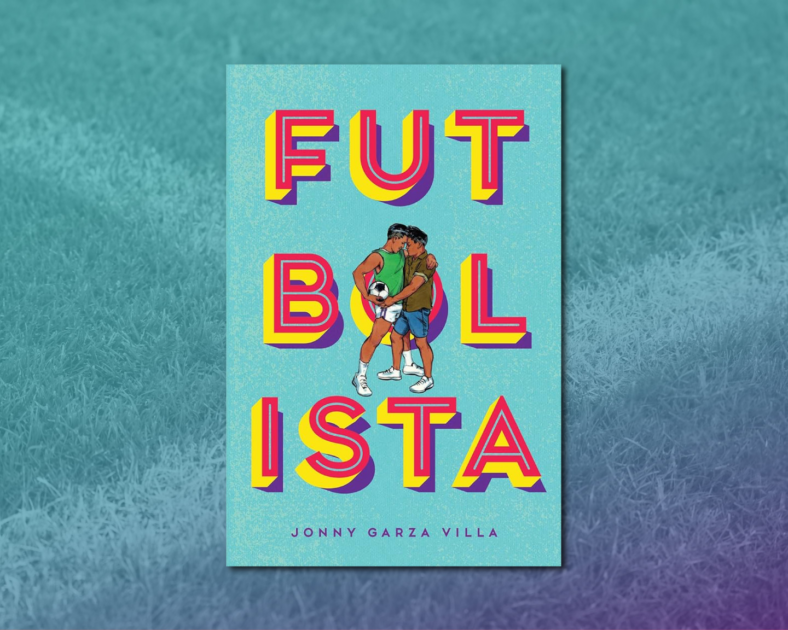
Futbolista follows the life of Gabriel Piña, known as Gabi, a young college goalkeeper beginning his first semester at Texas A&M University-Corpus Christi with a clear future ahead: to excel in college soccer, protect his reputation, and move closer to his dream of playing professionally in the Liga MX, Major League Soccer, or even representing El Tri (the Mexican National Team). Gabi believes he knows exactly who he is: disciplined, focused, proudly Mexican, and above all, heterosexual. His identity seems as solid as his athletic trajectory, and straying from that path is not an option. In the opening chapters, it becomes clear that Gabi’s attraction to women is central to his sense of self.
However, that certainty begins to waver when Vale, a classmate from his philosophy course, offers to tutor him. Vale is not a stranger: they share the awkward memory of a party where, in a fleeting moment, they kissed during a game of dares. For the reader, this may seem revealing, but the novel shows how Gabi rationalizes the episode rather than accepting it as part of his desire.
I don’t see any of my roommates, not that it would be the worst thing in the world if they saw me kissing a guy. They’d probably tease me, but I expect they also respect the rules of drinking games enough to know that I’m just helping out.
This reasoning reveals his need to situate the act within an external logic — peer pressure, social dynamics — so as not to question his identity. For him, kissing a boy is not a problem, but he frames it as neutral, almost technical, without emotional implications: a gesture of “allyship” rather than desire. The incident is filed away as an isolated event, devoid of meaning.
I don’t have to prove my comfort or my personal kissing history to reassure him that he picked the Day One Ally.
It is not until an intimate conversation at the gym, when Kat tries to open a space of trust, that the subject of Vale arises. Kat gently points out an emotional closeness and tension that seem to go beyond friendship: the way Gabi looks at him, tries to impress him, and the physical contact between them. Gabi quickly denies it, reaffirms that he is heterosexual, and insists they are just friends — though his discomfort betrays otherwise.
The passage highlights the contrast between what he says and what he thinks. While he insists there is nothing, internally, he acknowledges an intense and recurring attraction to Vale. This contradiction forces him to question his identity, caught between denial and acceptance. The tension spills into his daily life: he is distracted in class, performs worse in training, and spends much of his time imagining intimate scenarios with him.
Eventually, he admits to himself that he is bisexual. No longer as an abstract possibility, but as a truth he can finally name by declaring:
I’m so fucking bi.
Unlike earlier moments, when he rationalized his feelings as curiosity, here he recognizes that his desire for Vale is real and profound. Yet this acceptance occurs only in private and is marked by fear: he anticipates homophobia, rejection from teammates, and the threat of losing his athletic future. Garza Villa has stated that Futbolista was born from his interest in exploring the masculine culture surrounding soccer, particularly from a Latin and Mexican perspective.
According to the author, although this sport is often seen as a symbol of cultural pride, community, and aspiration, it can also function as an exclusionary space for those who challenge its traditional norms of gender and sexuality. He also noted that he wanted to present Gabriel Piña as a protagonist who is self-assured, proud of his masculinity and his talent on the field, yet still faces questions of belonging, representation, and acceptance.