Step closer, my unicorns; we are here to reform you in the safe and idyllic world of Tall Pines Academy. There is nothing to fear here, but you must give yourself entirely to the bisexual representation we are going to evaluate in Mae Martin’s limited series, Wayward.
Wayward is the Canadian miniseries mystery thriller created by bicon Mae Martin that tells the tale of two teenagers and a police officer digging into the sinister happenings of a small town and its secrets within its suspicious reform school. Is it a cult? Definitely not. Is it controlling the town and blackmailing all the traumatized alumni who still live within its power and reach? Heavens, no.
Our story takes place in 2003, though many pieces of this eccentric puzzle take us even further back. Two students try to escape a reform school that they slowly realize is a cult, and this cult happens to run the entire town. The abuse happening is hard to name, but slowly we see the children being brainwashed and forced into toxic groupthink and volatile behaviors.
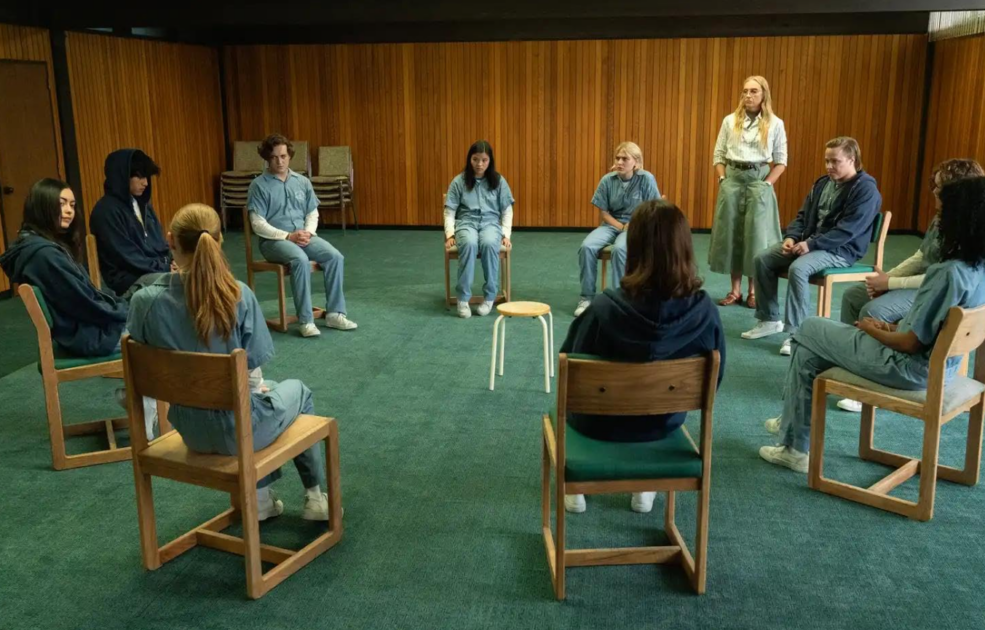
We are going to dive into the chilling waters of Wayward. So, come, sit down in the Hot Seat, and let’s talk about your perception of bisexuality and how to improve your thoughts and actions about its media representation. There will be spoilers. But with enough work, you will better yourself and grow. Let’s begin, class.
What I Liked:
We have a main character, Leila, who is quite openly bi. Leila is the problematic, envelope-pushing teenager no parent wants their child associating with. She does drugs, she has trauma from a broken family with a dead sister, and nobody truly understands her except her bestie, Abbie.
From the get-go, we see her with her awful older boyfriend, Kyle, an absolute sleazeball and definitely a bad influence. Later, we see her macking on a fellow Tall Pines student, Ello, so we are visually confirmed that she indeed goes both ways. While this isn’t a requirement for bi people, it is certainly a nice change of pace to be able to assert that this character is bisexual without hesitation. Oftentimes, we are left wondering whether they will suddenly be portrayed as abandoning all attraction to the prior sex they were attracted to. Still, here, we see that she stands firm in her bisexuality with both actions and words.
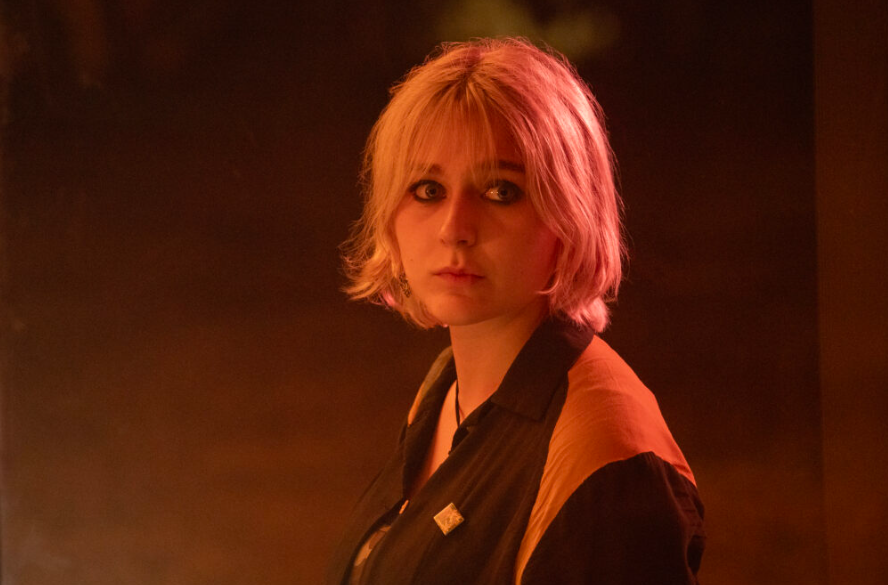
But that’s not all! The other teenagers often try to insult Leila by calling her gay, usually because of her close relationship with her best friend. When pushed too far, Leila fires back with a string of brutal truths before correcting them: she’s bi.
And don’t get it twisted — she says the word bisexual. She ain’t afraid of no biphobia.
What’s interesting is that “gay” gets used as an insult even though queerness itself doesn’t seem especially taboo. The teens’ homophobia feels selective and mostly performative, more like a filler insult than genuine hatred. If anything, they seem jealous that Leila has someone she can rely on while they’re all trapped there. By mocking and invalidating that friendship, they’re trying to drag Leila and Abbie down to the same level of misery as everyone else.
This is important because it pushes back against the idea that people can’t be friends with the gender(s) they’re attracted to. Straight men and women supposedly can’t be “just friends,” and bi people? Apparently we’re screwed. One of the most annoying clichés is when a bi person comes out, and their friend immediately assumes they’re attracted to them. BIG NOPE.
I liked that Leila had plenty of platonic relationships throughout the series, subtly rejecting the stereotype that bi people are attracted to everyone they meet.
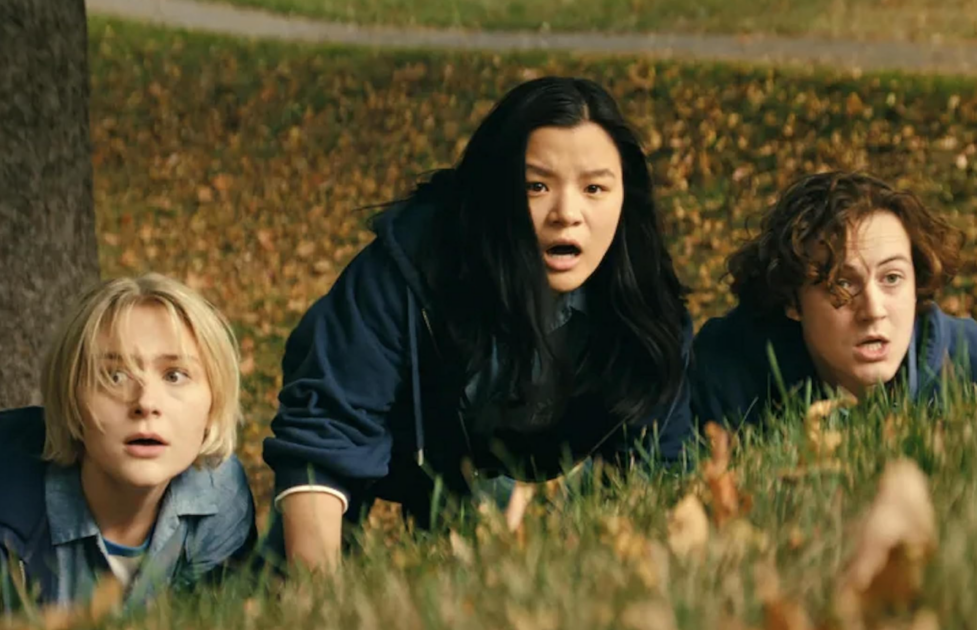
Weirdly enough, when brought to the warden’s office, Leila is ready to be reprimanded for her queer outburst, only to have the warden scoff at the accusation of having a problem with her bisexuality. We learn here that this cult is LGBTQ inclusive. They’re cult leaders, not monsters. Geez.
This was another great example of where, in this world, being bi is not something people are bothered by or see as a strange trait in their societal norms. It was refreshing to imply that being a bigot about LGBTQ issues is simply shrugged off because the idea of being homophobic was ridiculous to the character.
Side note: We also have bicon Mae Martin playing the trans police officer, and they get some seriously swoon-worthy moments and plenty of on-screen chemistry. So, A+ for bi actor representation. Respectfully, we are looking.
What I Didn’t Like:
Here’s where things get nitpicky. Leila is openly bi; she says bi, but my bone to pick with the representation here is that she is messy as hell.
Of course, bi characters don’t need to be picture-perfect, but Wayward still reinforces some frustrating stereotypes. Leila is rebellious, impulsive, uses drugs, makes bad choices, and is paired with a much older male partner. She’s intentionally written as a troubled teen, but it’s hard not to notice that the show’s most adamantly bi character is also its messiest.
One of the most popular problems we face in bi media is being seen as unstable, slutty, having poor judgment, being impulsive and irrational, and I don’t believe Wayward does the best job of countering any of that. Whether intentional or not, that does little to challenge the familiar portrayal of bi people as unstable, slutty, impulsive, or having poor judgment. At times, it almost feels like someone Googled negative bi tropes and slapped them onto Leila’s character board. Was she simply meant to be flawed, or did the writers accidentally reproduce every cliché along the way?
That being said, bad bis are actually my favorite, and I love when we get more baddies.
But still, it’s not great for us to have so many.
I also am not fond of them giving her such terrible connections. The only relationships we see are mega shallow and so vapid. Her relationship with Kyle is a joke, and the only thing we glean from that is that she makes terrible decisions and has a low bar for dating. Not the greatest look for our Leila. And those who know nothing about bisexuality might think that bi people don’t take relationships seriously.
The Rating:
I believe this miniseries earns a full four unicorns. We have actual visual confirmation of attraction and action to more than one sex (absolutely baffling for modern media), the MAIN character loudly proclaims multiple times that she is specifically bi (holy cow, pinch me because we never get people just blurting out the B WORD!!!), and even better, she is feisty about it! We even have a great scene of experienced biphobia where the main character punches back.
It’s not woven into every single episode, but that would be strange since this is a crime thriller about a cult for children. So aside from my absolute nitpicking about whether or not the negative stereotypes are an actual problem, I think this series did a fantastic job bringing in bisexuality and really representing some authentic bi vibes. Boy howdy, I do declare this to be a bi banger that knocks it out of the creepy park for bi representation.