Greetings, Unicorns and rebel scum alike! Nope, I’m not playing any Jedi mind tricks on you — I’m visiting a galaxy far, far away again in this column. Yes, my piece about Lando being queer kicked up more than a little space dust from salty fanboys on social media. But you know what? I am 100% okay with that. I’ve listened to fan theories on Star Wars lore for as long as I can remember. Two out of three of my siblings are huge fans. And I grew up to have nerdy tastes. I’m not afraid to throw my hat into the cantina about my queer theories. So why am I bringing up this saga again? Well, read on.
But before we get into the particulars, I should go over a few disclaimers. First and foremost: if you haven’t watched Star Wars: The Rise of Skywalker yet, this review is gonna be riddled with SPOILERS. (It’ll also reference parts of The Force Awakens and The Last Jedi as well, so hopefully everyone has binged on Disney+ and is caught up.) Oh, and if you need a reminder on what the Unicorn Scale is all about, you can read up on the metric here.
Star Wars: The Rise of Skywalker (henceforth referred to as TROS) is the ninth and final chapter of the Skywalker saga. The story picks up with our heroes — former scavenger Rey (played by Daisy Ridley), defector from the fascistic First Order Finn (John Boyega), and charismatic flyboy Poe (Oscar Isaac) — on their quest to save their galaxy from the surprising return of Emperor Palpatine.
What I Liked:
One element that was missing from the original Star Wars trilogy, along with the prequels, was diversity in roles and casting, something these newer installments rectified by focusing on a woman and two men of color as the main heroes. Representation matters, and the next generation of non-white or female fans will grow up seeing themselves represented on the big screen in leading roles as fact, not speculative fiction. Even more delicious was seeing people of color in male bi roles, which is still a rarity to see these days. That’s huge.
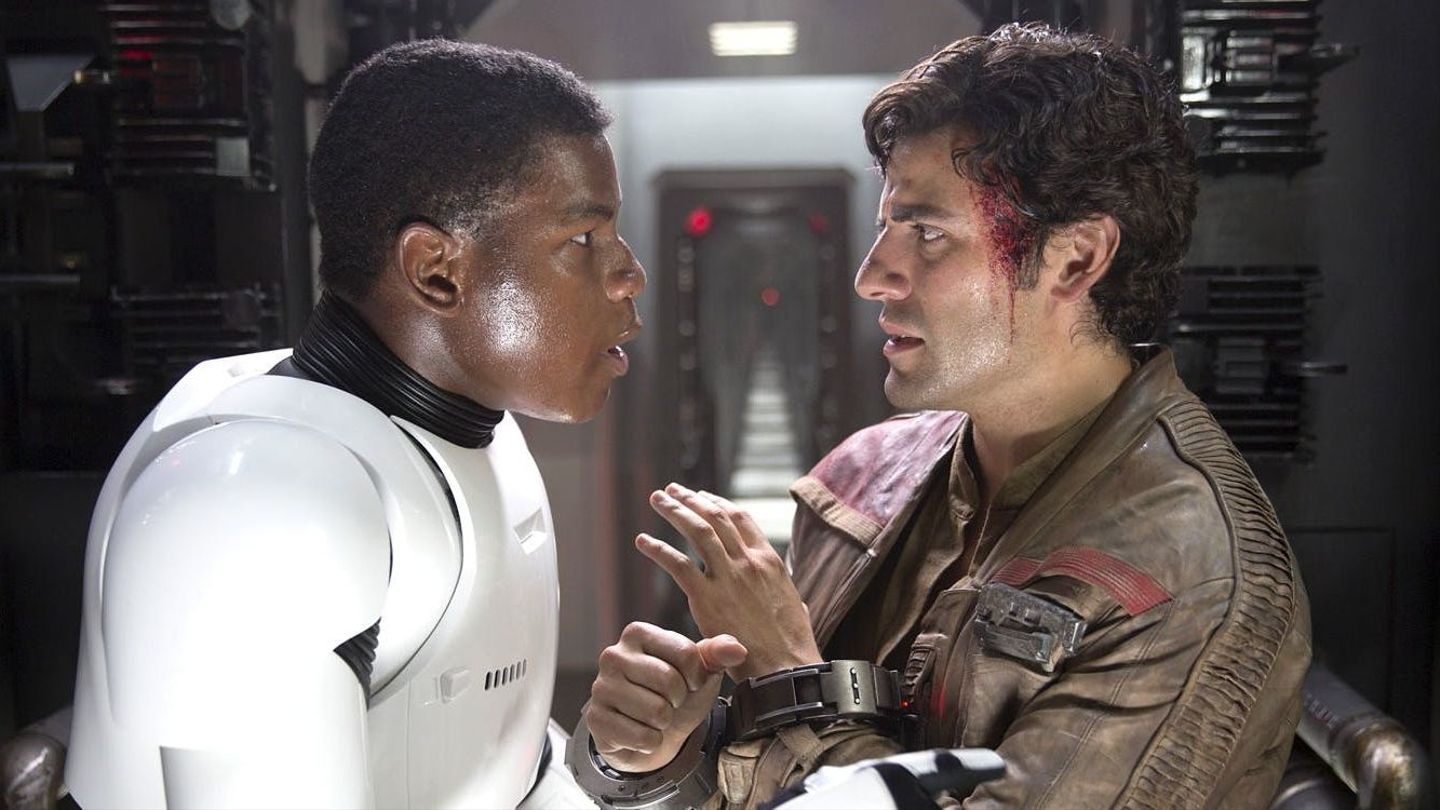
I also appreciated that we got huge snatches of story with Poe and Finn together, building on their relationship in The Force Awakens (which we’ll abbreviate as TFA) and The Last Jedi (TLJ).
First, let’s look at Finn’s journey up until now. While the screenplay of TFA makes it crystal-clear that Finn is sniffing around Rey (asking if she has a boyfriend), in TROS, he wants to confess something to her (his love?) as they are descending into the Sinking Fields. Finn’s overtures go beyond friendly caring for the pretty scavenger, and I’d argue we see that same type of emotional investment in his first interactions with Poe in TFA as well. (Remember: Poe actually came up with Finn’s name. That kind of bond will stick with you.) The shoulder pats and prolonged eye contact between Finn and Poe in TFA sent the queer theorists afire — myself included.
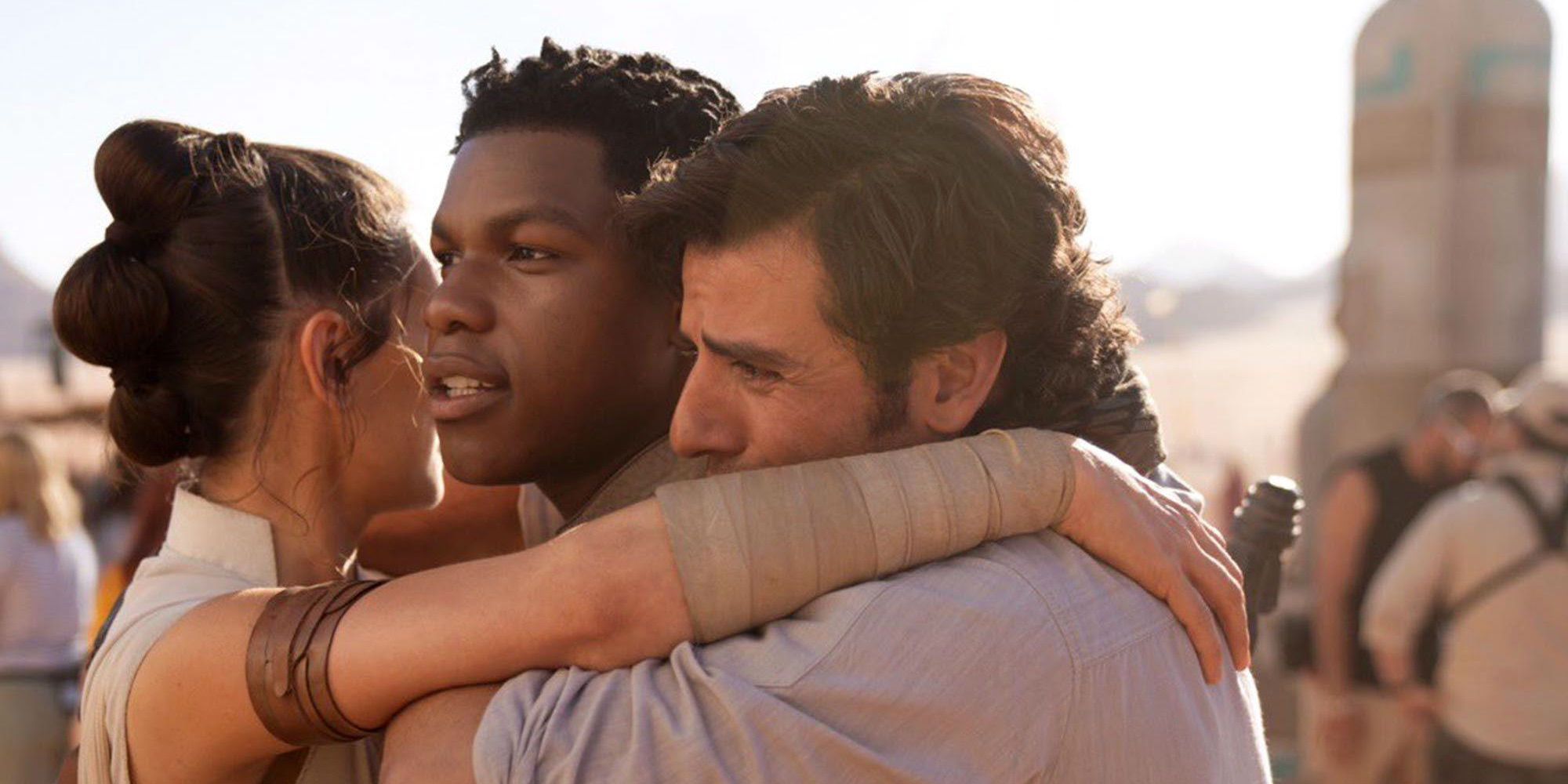
Now let’s take a closer look at the swashbuckling fighter pilot, Poe Dameron. Again, we had absurd levels of chemistry between this renegade and Finn during TFA. For God’s sake, there’s even a scene when Poe looks at Finn’s lips and bites his own lower lip. Now, there is a playful undercurrent to how his character is written, but Poe seems to enjoy a chance to flirt whenever he can. Even his first interaction with Rey at the end of TLJ seemed like a classic set-up for a romance storyline, which seemed to extend into their first scene together in The Rise of Skywalker with a Sam-and-Diane sexual dynamic. And just in case we weren’t sure if Poe was into the ladies, we get the spicy former smuggler Zorii (Keri Russell) thrown into the TROS mix as another romantic interest for Poe, who asks her for a kiss multiple times.
But honestly, the key aspect that cements my queer reading of these two men is their interactions after Poe’s near-confession at the Sinking Fields. Poe just won’t. Let. it. go. He keeps badgering Finn to tell him what he was desperate to tell Rey, even when they are facing down a firing squad and imminent death. That cross-examination doesn’t have idle curiosity written all over it when they’re facing their last breath — that’s jealousy, and a nasty streak of it, at that.
I’m also pretty certain I’m not just seeing what I wanna see, either. This isn’t me whiling away the hours by focusing a queer revisionist lens on a beloved franchise just to piss people off. For one, I’m not the only person in media to see this dynamic — and get pissed they didn’t call a spade a spade. To wit, even the cast, and Oscar Isaac in particular, voiced his frustrations in being able to play the queerness angle, but still not seeing the story just let Poe and Finn be boyfriends. (Honestly, it reminded me of Paul Newman’s take on Brick in Cat On A Hot Tin Roof.)
Speaking of which…
What I Didn’t Like:
HHHHRRRRNNNNGHHHHH!
That’s Wookie for SIGH.
Let queer boys be queer, Disney overlords!
As the Mary Sue article pointed out, it would have been a stronger narrative direction for both Finn and Poe if the creative higher-ups had simply let the two men be in love. It would have raised the stakes considerably throughout both of their emotional through lines. And it would have added a new and exciting dimension to this franchise, one that a massive chunk of the fanbase is already down with.
So why straight-wash them and try to pass them off as just really, really, super-good friends and war brothers? Well, virtue signaling, and money, of course; they needed to make sure they made money in international markets where homosexuality is not embraced. I shouldn’t have expected much, considering that a quick same-sex kiss during the finale got cut out of the film in places like Singapore.
It just gets frustrating out here sometimes, folks. Sci-fi and speculative fiction are genres where we can let our imaginations fly beyond the typical conceits of our world. So to have a cultural tastemaker like Lucasfilm take months to create puppets in scummy cantinas that the camera spots for a second, but then expect us to believe the only romances in these far celestial reaches are straight, is a bridge too far. We can accept images of creatures 20 feet high with 12 mouths, but we’ll refuse anything other than heterosexual relationships? It just goes to show that the only limits we have are the ones we put on ourselves. We can create twenty languages as well as dozens of names for a flick, but no one can use the word “bi” in a galaxy far, far away. It’s a pity, since Lucas & Co. historically love to fill the cinematic canvas to Bosch levels of density, but there’s no room on this silver screen to be queer.
I should note, however, that I don’t necessarily see the queer dynamic between Poe and Finn as entirely healthy, either. The streak of jealousy shows loads of insecurity on Poe’s behalf, which is rich, considering the flyboy tends to flirt wherever he goes without checking in with his “best friend”. I can only hope this is something the two characters talked through together after the climax in a quiet moment off-screen.
The Rating:
So, yeah. That about covers it, fam. Poe and Finn’s relationship is about as close as we’re gonna get to a recognized, queer love story (masquerading as a bromance) in the nine-film saga. We could have had it all. The evidence is there, as clear to me as a Tatooine day with its twin sun system, that Finn and Poe are bi (not perfect representations, but queer nonetheless).
Don’t agree? That’s fine. There’s plenty of room for disagreement. Hell, debates are basically what fuels the fandom, anyway — other than new entries into the franchise, of course.
But, hey: At least we can all agree on one thing: Han shot first.