Netflix’s XO, Kitty (2023-) returns with a second season filled with intrigue, jealousy, and even more juicy bi drama! The series is a spin-off of the popular To All the Boys I’ve Loved Before (2018-2021) franchise, but before diving into the details — if you haven’t watched the first season yet (are you serious?!) — I must warn you that there will be major SPOILERS ahead for Seasons 1 and 2 of the show. So, proceed at your own risk.
Also, if you’re not familiar with the Unicorn Scale, you can check out our metrics here or read our Media Entry on the series if you’re looking for a quick summary!
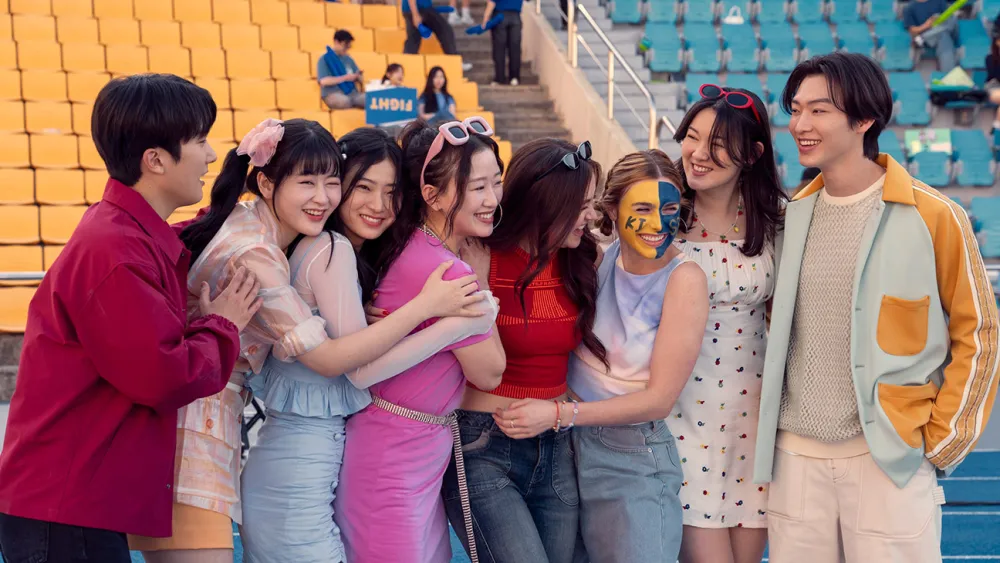
The first season follows the youngest Song-Covey sister, Kitty, as she travels to South Korea. Hoping to reunite with her long-distance boyfriend, Dae, and learn more about her family’s history, she earns a scholarship at the prestigious private school in Seoul where he studies. However, upon her arrival, she’s hit with the shocking news that Dae has a girlfriend — Yuri, the “queen of KISS” (the Korean Independent School of Seoul).
Though Kitty was initially determined to win Dae back, her feelings begin to shift as she grows closer to Yuri. After discovering that Yuri never truly loved Dae — and was only pretending to date him to conceal being in a gay relationship — Kitty finds herself undeniably drawn to Yuri. As their friendship deepens, Kitty is forced to question everything she thought she knew about herself, including her feelings for Dae, who is finally her boyfriend by this point.
By the final episode, Kitty’s emotions reach a breaking point. During a video call with her father, she confesses that she fought with Dae because she has feelings for Yuri — effectively coming out to him in the process. His reaction?
Kitty: I got in a fight with Dae because I have feelings for my friend Yuri, who is a girl.
Dad: Oh. Oh, thank God!
Kitty: Thank God I’m bi? Or pan? Or fluent?
Dad: Whatever pan or fluid it is, thank God you’re safe and healthy.
Kitty: I am safe, and I’m healthy, but I’m also sad, Dad. And I’m really, really confused.
Dad: [..] I’m so sorry to hear you’re so down, Kitty. But you’re one of the strongest people I know […] just like your mom.
The season finale is an emotional rollercoaster. After a bittersweet breakup with Dae, Kitty finds herself unable to confess her feelings to Yuri when Yuri’s ex-girlfriend, Juliana, unexpectedly arrives, and she chooses to leave them instead. To make things worse, Dae’s friend, Min Ho, confesses having feelings for Kitty on the plane ride home, leaving me so anxious to see what could happen next.
What I Liked:
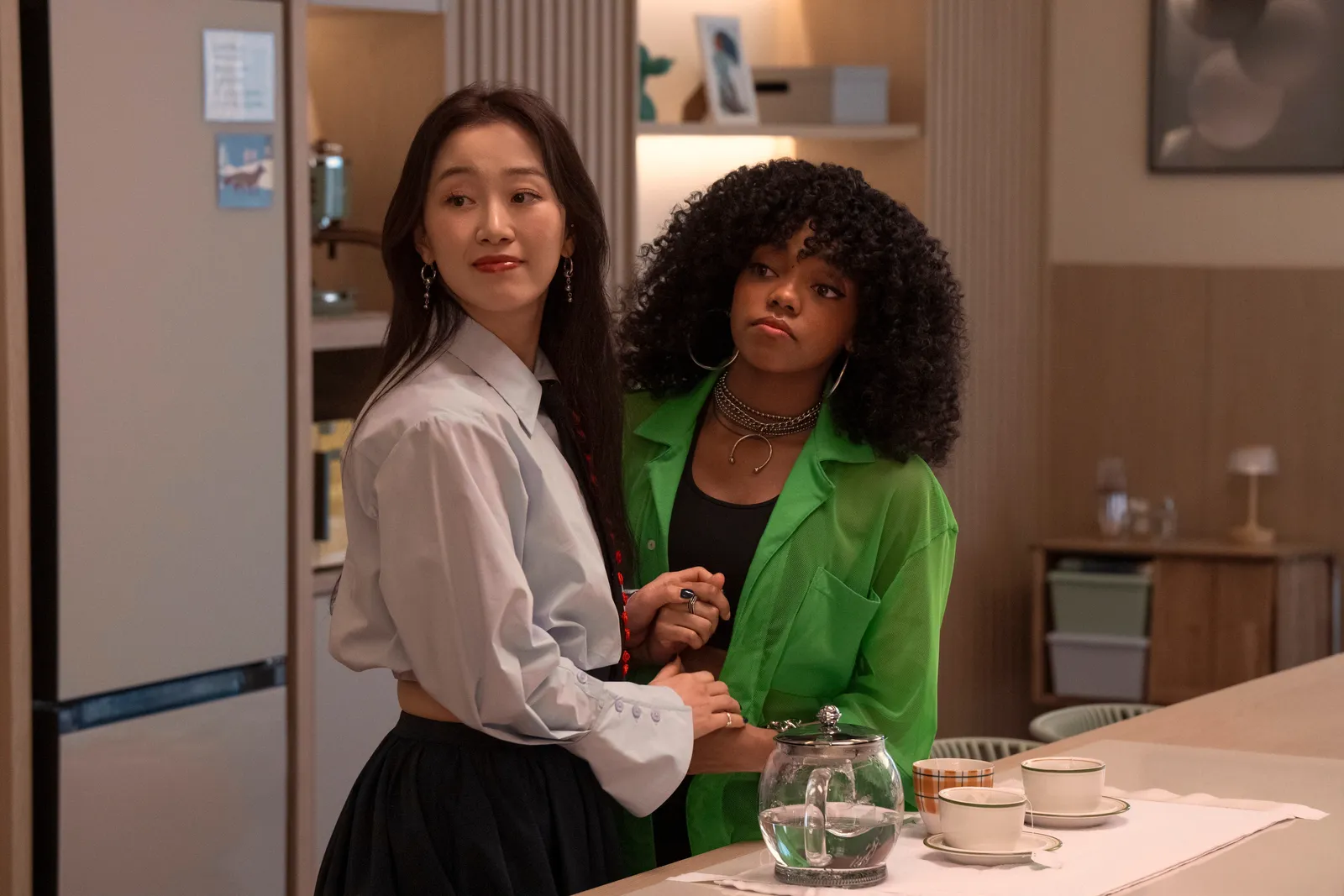
In Season 2, Kitty continues to explore her newly discovered bisexuality from the very first episode. While her initial attraction to Yuri came as a surprise in Season 1, this time she fully embraces it. Instead of reducing her attraction to Yuri to a mere “phase” or fleeting curiosity, the show allows her feelings to develop naturally, giving them the same emotional weight as her previous relationships with men. She doesn’t agonize over labels or wrestle with internalized biphobia — she likes who she likes, whether that’s Yuri or Praveena. This casual acceptance is great to see.
A perfect example of this happens at the end of Episode One, when Yuri confronts Kitty about her sudden distance since returning to school. Instead of dodging the question, Kitty comes out to her directly, explaining that during the school break, she realized she’s bi. Yuri reacts with joy and support, telling Kitty how happy she is for her and asking, with a hint of hope and curiosity, if she had anything to do with the realization. Kitty affirms that Yuri played a part in it, and the scene ends with Yuri reassuring her that she can always lean on her — and that she, too, needs to lean on Kitty.
Also relevant is how XO, Kitty incorporates queer diversity into its storytelling. Unlike other series that rely on subtext or ambiguous narratives, XO, Kitty makes it clear that Kitty is genuinely attracted to both males and females. By including multiple queer characters, the show ensures that Kitty’s journey doesn’t feel isolated but instead becomes part of a broader conversation about love and identity.
Another example from Episode One is how Kitty’s friends discuss her being bi. Q, for instance, gives her straightforward yet meaningful advice:
I think it’s kind of a shame to be swearing off love right after you discover you’re bi.
Or how Yuri casually acknowledges Kitty’s sexuality in conversation:
So, since you’ve had your great bi-awakening, I was wondering if you want to come to this place called Sugar Bar with us tonight?

Additionally, the performances — especially from Anna Cathcart (Kitty) and Gia Kim (Yuri) — bring their stories to life. Their chemistry is palpable, making Kitty’s internal struggles and romantic tension feel all the more real. The show also avoids unnecessary tragedy or melodrama, allowing Kitty’s coming-of-age journey to be joyful, awkward, and heartfelt — exactly as it should be in a teen romance!
What I Didn’t Like:
While XO, Kitty Season 2 remains charming and entertaining, certain elements detract from the narrative and feel out of place within the show’s tone.
One of the most frustrating aspects is the excessive focus on Min Ho’s father. Described as “the Kris Jenner of Korea”, this talent mogul bursts into the story with his reality show and overwhelming presence, feeling like a forced attempt to inject more K-Pop energy into the series. While Korean music is an integral part of the culture and identity of many characters, the way this character is introduced feels artificial and distracts from the stories that truly matter — Kitty’s identity, her relationships, and her connection to her Korean heritage.
Instead of spending so much time on this side character, the series could have further explored Kitty’s family history. Her connection to her mother and her Korean roots offers a rich narrative opportunity to explore themes of belonging and legacy, but these elements are overshadowed by Min Ho’s father’s over-the-top storyline.
Additionally, the introduction of a “villain” in this season feels like a lazy and unnecessary narrative choice. XO, Kitty has always thrived on lighthearted, character-driven conflicts rooted in misunderstandings and miscommunication rather than outright malice. Introducing a character whose main goal is to cause harm feels jarring and disrupts the “found family” atmosphere that the first season built so well.
The Rating:
Despite some questionable narrative choices, XO, Kitty Season 2 retains the charm that made us fall in love with it in the first place. Kitty’s awkwardness, honesty, and vulnerability remain the heart of the show, and her journey of self-discovery resonates with anyone navigating their own identity and emotions.
All things considered, in Season 2 of XO, Kitty, the story sacrifices depth in favor of superficial elements that don’t add real value to the plot. However, her interactions with Dae, Yuri, Praveena, and Min Ho, as well as her friendship with Q, provide genuine and heartwarming moments that remind us of the importance of friendship, love, and self-acceptance.
The term “bi” is mentioned frequently and openly discussed, allowing Kitty to express her bisexuality clearly and naturally. It’s refreshing to see a teen series that normalizes bisexuality and portrays a protagonist who is comfortable and confident in herself.
For these reasons, despite my critiques, I give XO, Kitty Season 2 a rating of four unicorns!