When I was a child, I had crushes on many athletes. Especially during the Olympics: I would watch gymnastics, swimming, track and field, hockey — any discipline — and feel a mix of admiration and fascination that was hard to explain. Yet, within everything society taught me at the time, it never occurred to me that any of those athletes could be queer. The bodies I admired were coded as strictly heterosexual, symbols of an unquestionable and rigid masculinity.
I remember watching sports not only as competition, but also as spectacle: the physical dedication, the emotional intensity, the closeness between bodies. It’s from that memory that Heated Rivalry became a series I had to watch.
Spoiler alert! Before continuing with this review, I want to note that important details will be revealed about what happens both on and off the hockey rink in Heated Rivalry. If you haven’t seen the series yet, it’s best to stop here and come back after finishing it.
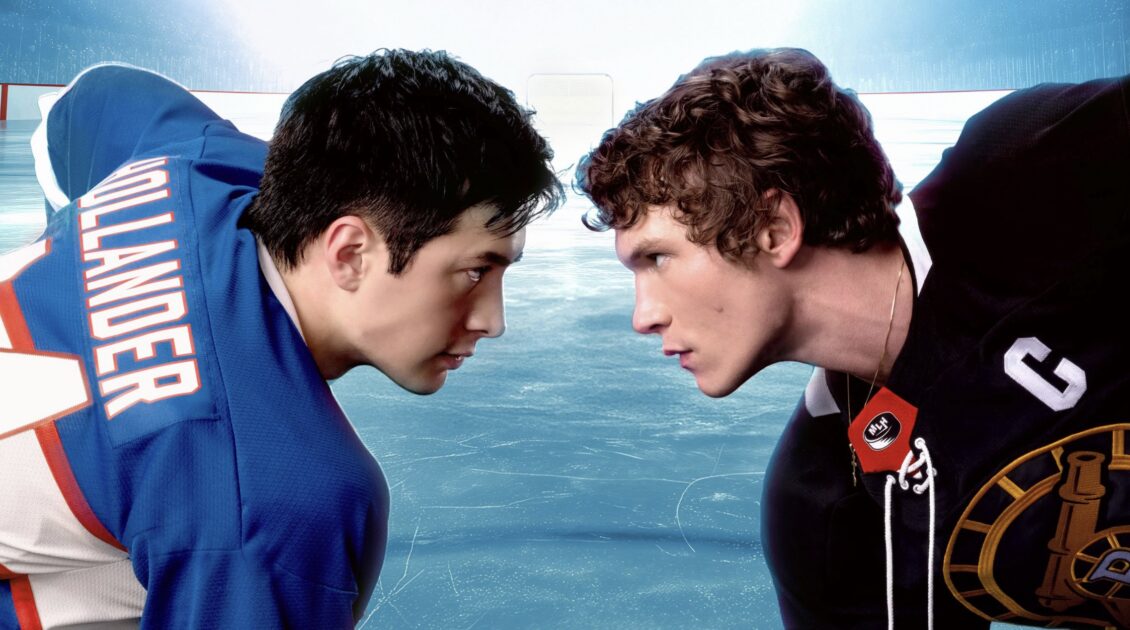
The series follows professional hockey players: Shane Hollander, Canadian star of the Montreal Metros, and Ilya Rozanov, Russian prodigy of the Boston Raiders. In public, they are fierce rivals; in private, they sustain for years a secret sexual and emotional relationship that evolves from casual encounters into something much deeper, as both navigate their careers, public image, and identity.
What I Liked:
What I liked most about Heated Rivalry is that Ilya Rozanov’s bisexuality is established from the very first episode, without hesitation or ambiguity. In the opening minutes, his relationship with Shane is built on rivalry, tension, and barely contained desire, making it clear that Ilya is a character shaped by the pressures of extreme masculinity.
Over the course of the first year depicted, the series shows two sexual encounters between them before offering any other context about Ilya’s intimate life. Desire simply happens, without the need for justification. While Shane appears nervous — his first experience with a man — Ilya is confident and experienced. The moment when Ilya clarifies that this is not his first time is crucial: without labels or speeches, the series establishes that his attraction to men is neither new nor circumstantial, but an integral part of his identity.
What makes Heated Rivalry valuable is that it doesn’t frame Shane as the “awakening” of Ilya’s bisexuality. He is not discovering himself or experimenting with something forbidden for the first time. This becomes clear at the end of the first episode, when Svetlana, a close friend from Russia with whom he has a casual sexual relationship, appears.
Later, in Episode 4, Ilya speaks about Svetlana, presenting her as a close friend with whom he shares an occasional but non-committed sexual relationship. By describing her as “a regular woman” and something comfortable, Ilya attempts to fit his affective life into a functional, almost routine heterosexual logic that reinforces the idea of normality expected of him.
Ilya also speaks with disarming frankness, treating desire as something simple and unproblematic, while Shane responds with sarcasm and emotional defenses. The exchange ends with a provocative line that recharges the scene with sexual tension, making it clear that, even if they try to minimize it, the attraction between them is explicit and constant.
I also appreciate that Ilya doesn’t have to renounce his desire for women in order for his love for Shane to be believable — something few series manage without falling into simplifications. Toward the end of the series, the sexual intensity decreases to make room for a more real and emotional representation of their relationship, which I found deeply rewarding. Episode 6, far from being the “sex fest” some fans expected, shows Shane and Ilya in a moment of calm and authenticity. This narrative choice felt valuable because it demonstrates their ability to build deep and lasting emotional bonds.
What I Didn’t Like:
That said, Heated Rivalry is not a perfect representation, and some of its limitations are worth pointing out. The main issue, from my perspective, is that Ilya’s bisexuality remains too confined to the private sphere — even by the end. We know he is bi; we see him act accordingly, but the world of the series barely acknowledges it.
I was also uncomfortable with how, at certain moments, the narrative brushes — without fully diving in — against the idea that Ilya’s relationship “reveals” something more authentic than Shane’s past relationships with women. While the series doesn’t explicitly invalidate those earlier connections, the emotional and narrative weight placed on this romance risks making the past feel less real or less meaningful. This kind of hierarchy is a recurring problem in fiction: loving someone of the same gender should not retroactively frame previous relationships as mistakes.
Although the series succeeds in conveying that the story is essentially about two people falling in love at a distance and finally finding catharsis when they come together, I find it problematic that many viewers focused only on the intimate scenes. That reception limits the reading of the story and reduces Ilya’s bisexuality to something purely sexual, when the narrative is actually trying to show more complex emotional and affective bonds. What I didn’t like is that the staging, by emphasizing physical tension so strongly, makes it easier for part of the audience to overlook the deeper dimension of the relationship and the bi representation that extends beyond desire.
The Rating:
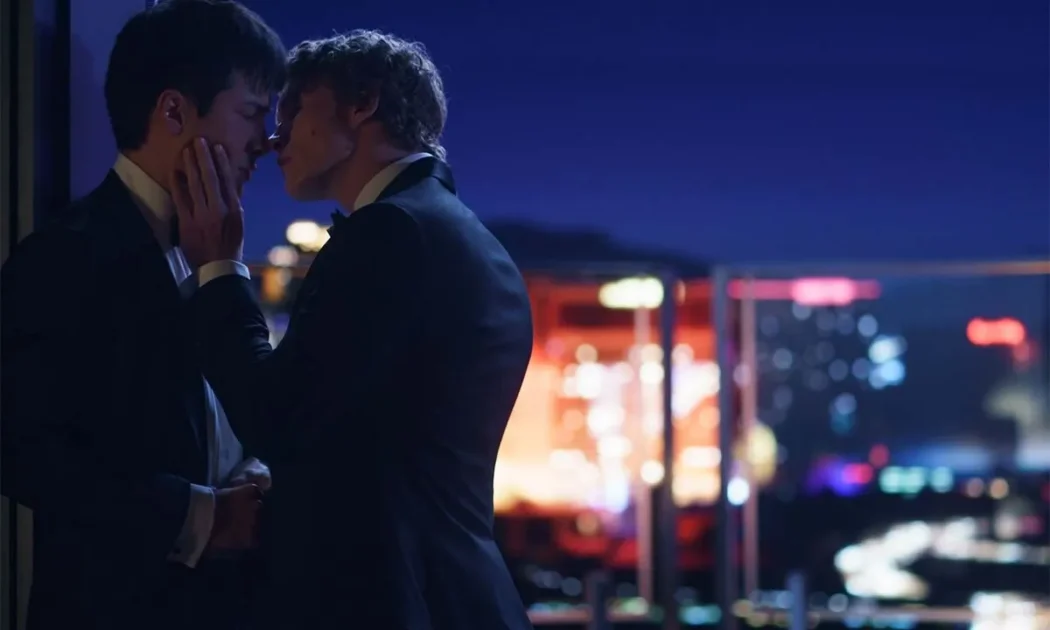
I give Heated Rivalry 3.5 unicorns. The series succeeds in many ways: it explicitly portrays Ilya Rozanov’s bisexuality, presents it without caricature, embodies it in a complex and desirable character, and situates it in a context where everything truly feels at stake. However, it loses one unicorn for its reluctance to bring that bisexuality into the public sphere of the narrative and for not offering more bi voices or perspectives within its universe.
This show has sparked a necessary conversation: many people are queer at some point in their lives, even if they don’t always acknowledge it. I myself spent years presenting — and genuinely believing — that I was heterosexual. Today, I identify as bi, and the more I embrace that, the clearer it becomes that if social constructs and limiting ideas about what men, women, and people “should” do didn’t exist, many more would live their queerness freely. Find our entry on this show in our Bi Media section here.