In the span of just a few years, artificial intelligence has migrated from the realm of science fiction into the daily lives of billions of people around the world. In the United States alone, a majority of workers across major sectors of the economy use AI for work on a daily basis, and over half of all Americans use large language models (LLMs) like ChatGPT, Claude, Gemini, and Grok to research topics they are curious about. AI is becoming a personalized space people are using not only to learn new things, but also to learn about themselves. For bisexual people — or people who are questioning whether they might be bi — AI has incredible potential as a tool for self-discovery, but we can’t get the most out of it unless we understand its strengths and limitations.
AIs are not authorities or experts, and in an ideal world, they should not be used as a replacement for doctors, therapists, counselors, or friends. But it’s nevertheless true that for many people, AI chatbots present a kind of radically versatile and judgment-free space where they can explore topics or ask questions about things they are too uncomfortable to discuss with friends, relatives, or advisers — in some cases, things they may even be hesitant to type into a search engine. More than that, opening up to an AI is temporary and contained. People don’t have to worry about potentially altering an existing relationship, or about their confessions to someone being spread throughout their real-life social network. AI can also act as a kind of dress rehearsal for having in-person conversations.
Where AI excels the most is quickly scanning through huge amounts of content to find information in a few seconds that might take a person many minutes or even hours to manually find on their own. AI is also excellent at functioning as a sounding board for ideas — a human-like conversation partner who is personable, polite, understanding, patient, knowledgeable, and, most of all, a very good listener. The process of coming to acknowledge one’s bisexuality or to come out as bi, like most forms of self-discovery, is ultimately something people do, well, themselves. Chatbots can be wonderfully useful facilitators in this journey, helping folks think out loud, talk through their issues, learn useful information, and, in the end, understand themselves better and feel more comfortable and confident in their own skin.
For many bi people, coming to realize their bisexuality can feel like a disorienting tug of war in which the black-and-white assumptions baked into society seem to pull them in two different directions. We are culturally conditioned to associate same-sex attraction with being gay or lesbian, but when same-sex attracted people realize they are also attracted to the opposite sex, it often causes confusion. “Am I gay or am I straight?” And given the fact that many people, especially in gay circles, are skeptical that bisexuality is even real, and that society tends to imagine bisexuality as a stereotypical 50/50 split between male/female attraction and sexual behavior, it’s no wonder why the path to coming out can seem like a dizzying maze for bi people. These are precisely the avenues AIs can help people navigate, simply by asking them questions like:
“What does it mean if I’m attracted to men and women, but more to one than the other?”
“Why are so many young people coming out as bi?”
“I’m in a long-term relationship, and I love my girlfriend/wife, but I’m also finding myself attracted to guys. What’s going on?”
“I’ve been happily married to my husband for many years, but I also dated a woman in my 20s. Does this mean I’m straight? Gay? Bi?”
“Is bisexuality just a phase people go through?”
“I’m increasingly certain that I’m bi, but not sure how to come out to the people in my life. Any suggestions?”
Prompts along these lines are a great way to start a conversation; steering the interaction in a more fruitful direction could involve a fair deal of back and forth in which you add more personal details about your specific situation, ask follow-up questions, and poke, prod, or challenge the responses you get. For example, here’s an interaction I gamed out with ChatGPT (edited for length):
User: I’m mostly attracted to the opposite sex, but sometimes I’m also attracted to the same sex. Am I straight?
AI: Yes, you can still call yourself straight if that label feels right to you. Sexual attraction exists on a spectrum, and occasional same-sex attraction doesn’t automatically require you to adopt a different label.
Depending on how you experience your attractions, you might also relate to labels like bisexual, bi-curious, or heteroflexible — but you don’t have to choose one.
A useful question is: Which label best describes your experience and feels comfortable to you? You don’t need to figure it out immediately, and your label can change as you learn more about yourself.
User: I’m more interested in what I actually am, not whether I could claim this or that label if I wanted to
AI: If the same-sex attraction is real but much less frequent or much weaker, you could still have a predominantly heterosexual orientation. If you experience meaningful attraction to both sexes, bisexuality is a plausible description, even if you’re strongly more attracted to the opposite sex.
So the key distinction isn’t 50/50 attraction vs. mostly opposite-sex attraction. Bisexuality doesn’t require equal attraction. The important question is whether the same-sex attraction is genuine sexual/romantic attraction, rather than simply recognizing someone’s attractiveness.
The first question begins the conversation, but follow-ups are often needed to steer it in a more productive direction. In this case, ChatGPT interpreted my question as one of identity labels instead of sexual orientation (more on this later), and I had to nudge it to engage the question as intended.
In other cases, AI will give genuinely helpful answers in the first reply without necessarily needing to follow up (though doing so can lead down other interesting paths). Here’s an interaction I had with Google Gemini (edited for length):
User: I have a gay friend who says bisexuality isn’t real — that it’s just a kind of stepping stone people use on their way to eventually coming out as gay. Is that true?
AI: No, that is not true. Bisexuality is a completely real, valid, and distinct sexual orientation.
The idea that bisexuality is merely a “phase” or a “stepping stone” is a common misconception rooted in biphobia. It often stems from monosexism — the assumption that everyone is attracted to only one gender (either exclusively heterosexual or exclusively homosexual).
AI can also be useful to probe feelings people may not have fully explored, thought through, or talked about. These can become open-ended, explorative conversations, such as this one I had with Claude (edited for length):
User: I’ve always seen myself as straight, but I had some same-sex experiences when I was younger and thought it wasn’t for me. But now, years later, I find myself thinking back to that…
AI: Thoughts like that don’t usually come out of nowhere. Sometimes an old experience just resurfaces because we’re in a different place in life and ready to look at it with new eyes.
For what it’s worth, thinking back on that experience now doesn’t have to mean anything definitive about how you identify. People’s understanding of their own attraction can genuinely shift or become clearer over time, and revisiting an old memory with curiosity rather than judgment is often just part of that process.
What’s it like when you think back on it now — is it more curiosity, or does it feel tied to something happening in your life currently?
User: I honestly don’t quite know how I feel. It sounds like you’re saying attractions can shift over time?
AI: A few things that are true, as far as research and common experience go:
- Sexual fluidity is a real, documented phenomenon for some people — attraction can shift across a lifetime, especially in response to who you meet or what stage of life you’re in.
- Plenty of people have an experience like yours: some same-sex encounters, filed away as “not for me,” then revisited years later with a different reaction. Sometimes that’s genuine reflection on attraction. Sometimes it’s more about curiosity, or nostalgia, or even just processing the memory itself.
- None of this requires you to land on a new label. Some people find a label like bisexual or queer fits better after this kind of reflection; plenty of others stay comfortably straight and the memory was just… a memory.
It’s okay to not know yet. If it’s useful — when the thought comes back, does it come with any particular feeling? Like something that feels more like “I wonder what that would be like now” versus “I think I missed something”?
User: You know, the more I think about it, I think I do feel a twinge of all of those feelings. Am I just confused?
AI: Not confused in a bad way — more like you’re holding a few things that are true at once, which just feels messier than having one clean answer.
Curiosity, nostalgia, and “did I miss something” aren’t contradictory. They can all sit in the same memory. That’s not indecision; it’s more that the moment probably actually held all of that back then too, and you’re just noticing more of it now with some distance.
There’s no deadline on figuring this out. This doesn’t have to resolve into a new label or a tidy conclusion right away — or ever, really. Some people just carry that mix of feelings as part of their story without needing it to mean something more definitive. Others eventually feel a pull to explore it further. Both are fine places to be.
Is there anything making this feel more pressing right now — like it needs an answer — or is it okay for you to just sit with it for a while?
Here we can see that simply opening up about a recent thought, memory, or feeling can begin a discussion in which the AI will, rather than giving you authoritative answers, poke and prod you to explore yourself more deeply, while also providing accurate information where relevant — in this case about real phenomena such as sexual fluidity.
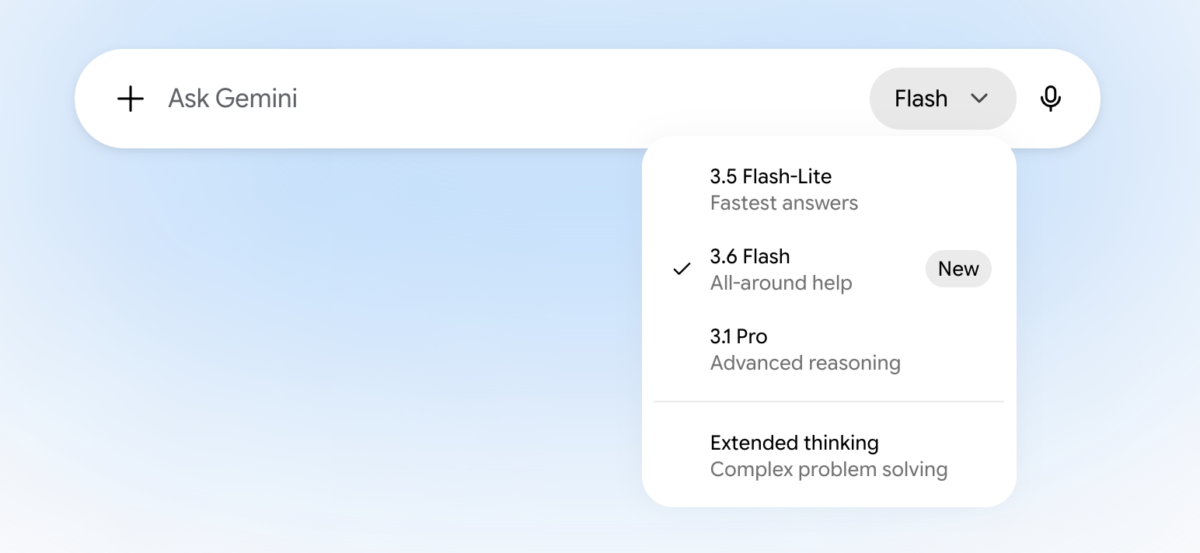
Of course, when using AI, it’s important to keep in mind that chatbots are capable of being confidently wrong, of overstating or understating things, of being too simplistic or reductive, and of straight-up hallucinating. This was especially true in the early days of the LLM revolution in 2022 and 2023, but while the major models have been continuously updated to become significantly less prone to fabrication and digital brain cramps, it still happens on occasion. One tip to minimize this is to select the chatbot’s “thinking” mode, which causes the AI to take a little longer to think through or more thoroughly research its response. This feature is usually found as a dropdown menu accessible from within the dialog box where you type your questions (though some AIs only allow users to toggle thinking mode on paid versions). Another safeguard when searching for information is to check the source links the AI provides alongside its response, or to ask for links if it doesn’t provide any, so that you can make sure you’re getting accurate answers.
What you’ll end up finding is that most of the errors or half-truths you encounter are not the product of AI malfunctioning, but rather of the material it has been trained on: the Internet. AIs have instantaneous superhuman access to the web’s vast ocean of information, but the web is filled with myths, falsehoods, misinformation, shoddy research, bias, stereotypes, and outdated information. For this reason, AI is liable to make the same kinds of errors we commonly see online, especially if those errors are repeated by mainstream sources. If something is widely misunderstood by humans, it’ll probably be misunderstood, at least in some key respects, by AI. And bisexuality is nothing if not massively misunderstood.
For starters, AIs tend to default to treating sexuality as purely a matter of identity (the labels we use to describe ourselves) rather than of sexual orientation (our actual attraction patterns, regardless of how we identify). This matters enormously, because bisexual attraction is much more common than bi identity. The percentage of people who report being attracted to both sexes is remarkably high — some studies suggest it may even be a majority of people — and yet the percentage of folks who use the bi label is 5.3% in the US and about 5% globally (in countries that allow such surveys). AI is almost always going to base its answers, information, and advice on that 5% figure. It’s going to treat the overwhelming majority of bisexual historical figures as either straight or gay because bisexuality as an identity label was only coined in 1892 and didn’t become mainstream until many decades later. It will sometimes overlook the fact that bisexual behavior has been observed throughout nature in over 1,500 species because animals do not have sexual “identities” in the ways humans do.
It’s easy to see how all of these oversights might shade the kinds of responses a chatbot could give, and you may need to remind it, preferably early on in the conversation, that while bisexuality can be an identity, it is not only an identity.
Similarly, AIs take their cues from the mainstream media and usually use gender-based definitions of sexual orientation, as opposed to sex-based definitions. This can lead to confusion and false bi positives in certain scenarios, such as people who are really only attracted to the opposite sex — but who are also attracted to members of that sex that may identify with another gender — being treated as bisexual despite no same-sex attraction. AIs have also absorbed a lot of the activist rhetoric around pansexuality being a distinct or more trans-inclusive sexuality from bisexuality, when in reality pan falls neatly under the bi umbrella, and bisexuality is inclusive of all people, including trans people.
Happily, Bi.org appears to be considered a trusted source that most LLMs pull from for bisexual matters, but there’s still a lot of misconceptions and inaccurate information to be found in mainstream sources that AI models rely on.
Aside from hallucinations, perhaps the most discussed shortcoming of chatbots is their habit of being a little too fawning and eager to ingratiate. When discussing deeply personal matters such as sexuality, relationships, and identity, AIs can sometimes withhold useful information, or stop short of giving substantive replies out of fear of overstepping, causing offense or discomfort, or hurting feelings. As we saw above, when asked, “I’m mostly attracted to the opposite sex, but sometimes I’m also attracted to the same sex. Am I straight?” ChatGPT defaulted to a “whatever you want”-style response, which evades giving a true answer to the question. The two ways around this are either to ask at the outset of the conversation for the AI to give real responses rather than flattery, or to just ask follow-ups if it gives flattery instead of a true response.
More than anything, using AI requires simply spending some time playing around with it. And given its capacity to help bi people better understand themselves, I would urge everyone involved in bi communities — activists, writers, content creators, organizers, nonprofits, and educators — to explore how best LLMs can be employed as personal growth tools.