We tend to paint cats with a broad brush, but there’s truly incredible diversity among felines. From alpine snow leopards climbing icy mountaintops to deadly jaguars prowling the Amazon Rainforest; from two-pound rusty-spotted cats to 900-pound tigers; and from standoffish alley cats to the insatiably cuddly hairless sphynxes, cats come in every imaginable variety. But one thing that’s common across the feline world is bisexual behavior.
Cats, both domestic and many species of wild felines, are polyestrous, meaning they go into heat multiple times a year. During these periods, they’re particularly sexually frisky, but show much less sexual interest during other times. Over the years, researchers, zookeepers, photographers, wildlife experts, and pet owners alike have seen that when felines are in heat, you might say they play on both sides of the fence.
More than 1,500 animal species have been documented engaging in bisexual behavior. Felines are no exception, from domesticated cats like Karim in Russia, whose bisexuality made him a minor internet celebrity in the 2010s, to female cheetahs courting and mating with one another in the African savannas in the 1970s.
But when it comes to the king of bi cats, look no further than the king of the jungle.
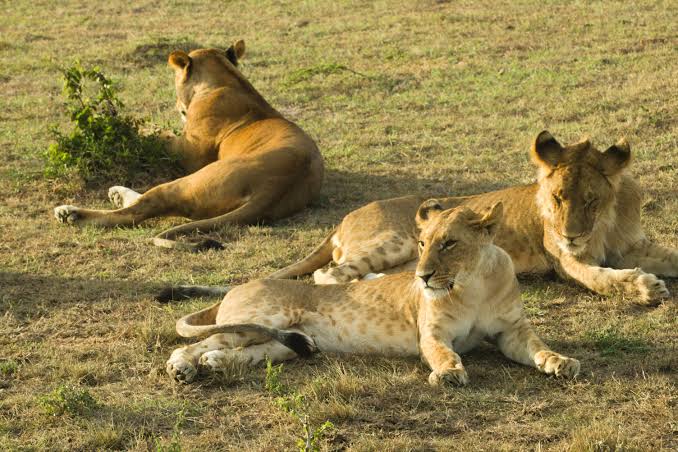
Lions have been known to engage in same-sex behavior, both in captivity and in the wild. Craig Packer, considered the world’s foremost expert on African lions and the founder and director of the University of Minnesota’s Lion Research Center, has noted that same-sex behavior among male lions is not strictly homosexual, and these males also resume mating patterns with receptive females. It gives new meaning to the term “bi pride.” And we’ve known this for decades.
An article from 1981 in the Journal of the Bombay Natural History Society details the observations of the conservator of the Gir Wildlife Sanctuary in Western India, who witnessed lionesses mounting each other and also mating with males. 20 years later, a 2001 paper in the same journal and the same wildlife refuge found same-sex behavior among male lions when they were away from females.
More recently, a pair of male lions in Botswana in 2016 and another couple in Kenya in 2017 made global headlines when photographers caught them in the act. And once you see the photos, it’s immediately obvious why lions have become the face of feline bisexuality. Lions just make everything look majestic. If you’re a regular old tabby, that’s a hard act to follow.
Paul Goldstein, the wildlife photographer who snapped the photos of the Kenyan lions, remarked on the tenderness of the interaction:
When lions mate it normally lasts a few seconds, these two were at it for over a minute and the obvious affection afterward was very evident, as opposed to the violent withdrawal when male and female mate. […] Even as he dismounted he did not back off, as is normal after mating, he crept round to the other male’s muzzle for a nuzzle and threw a conspiratorial wink his way.
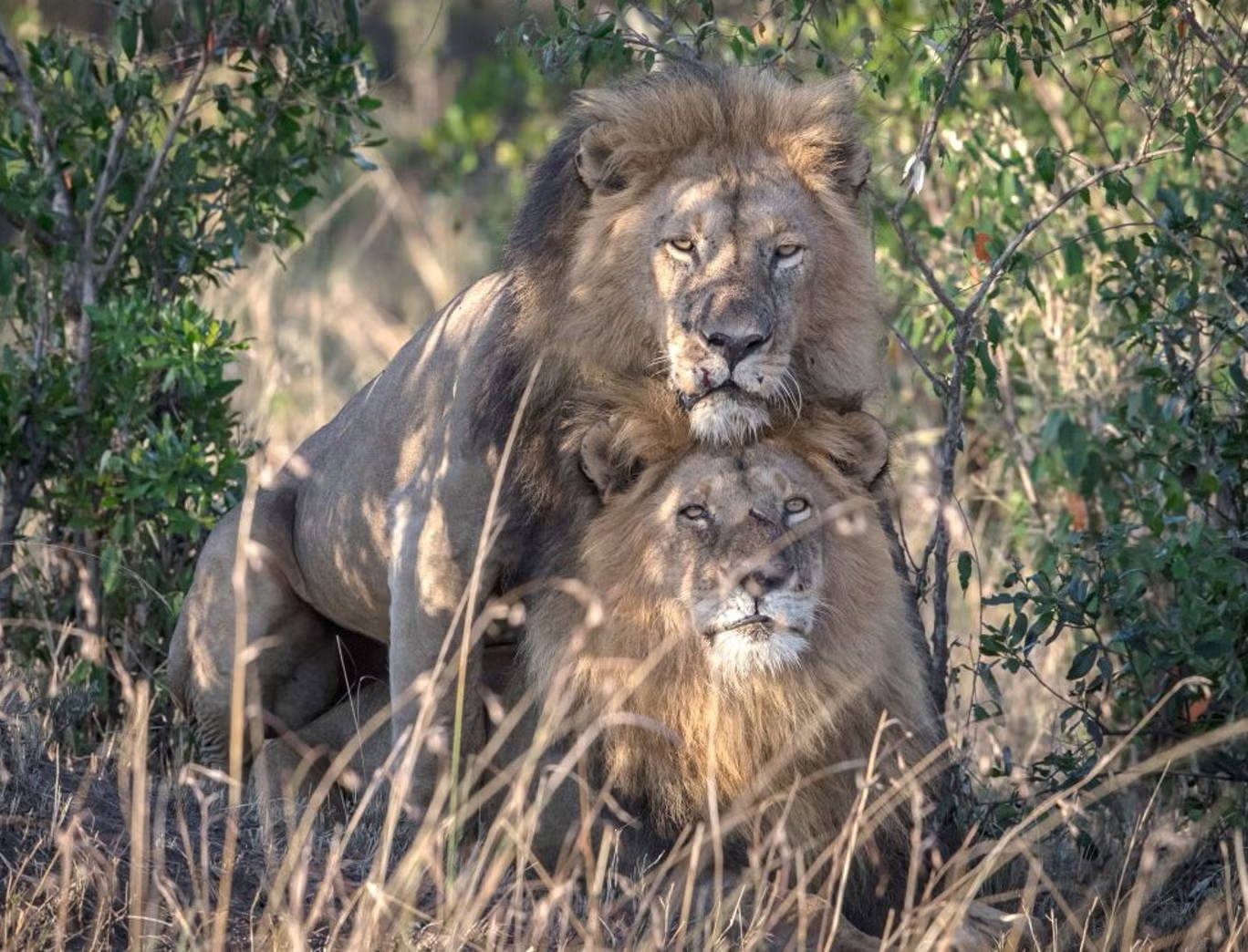
Not everyone was feeling horny on mane, though. Ezekiel Mutua, head of the Kenya Film Classification Board, suggested that these lions had somehow been led astray by bad human influences, or possibly even possessed by demons:
Probably, they have been influenced by gays who have gone to the national parks and behaved badly […] demonic spirits inflicting in humans seem to have now caught up with animals.
As for why felines engage in same-sex behavior, opinions differ among experts. A study from 1999 looking at feral cats on a Japanese island observed frequent same-sex behavior among males and concluded that the most valid explanation was sexual frustration. In other words, male cats in heat who couldn’t find a female mate had sex with other males instead of going home lonely. In a similar study in 2006, this same researcher attributed the male-on-male sex to “mistaken identity” — males mistaking other males for females. Other experts see same-sex behavior as “a form of social bonding”. In the case of male lions specifically, Craig Packer notes that “Male lions form stable coalitions and they are very affectionate with each other, but this affection is expressed by rubbing their heads together, licking each other’s faces and flopping on top of each other.”
Of course, grooming and licking are feline behaviors we’ve all observed, and while it is a form of intimacy, it’s not necessarily sexual among cats. But interestingly, a 2013 study found not just that head rubbing and licking reinforce social bonds among lions, it was much more common among same-sex individuals, specifically males. As the authors wrote: “In the life history of lions, relationships between adult males and females last for the short period of male residency in a pride, while relationships between same-sex individuals last for a lifetime.”
In a way, it’s only fitting that even scientists can’t quite figure out why cats do what they do. After all, felines are enigmas wrapped in a riddle. They are not here for our amusement, but to be worshipped as the gods the ancients believed them to be. They lick who they lick, love who they love, and are that they are.