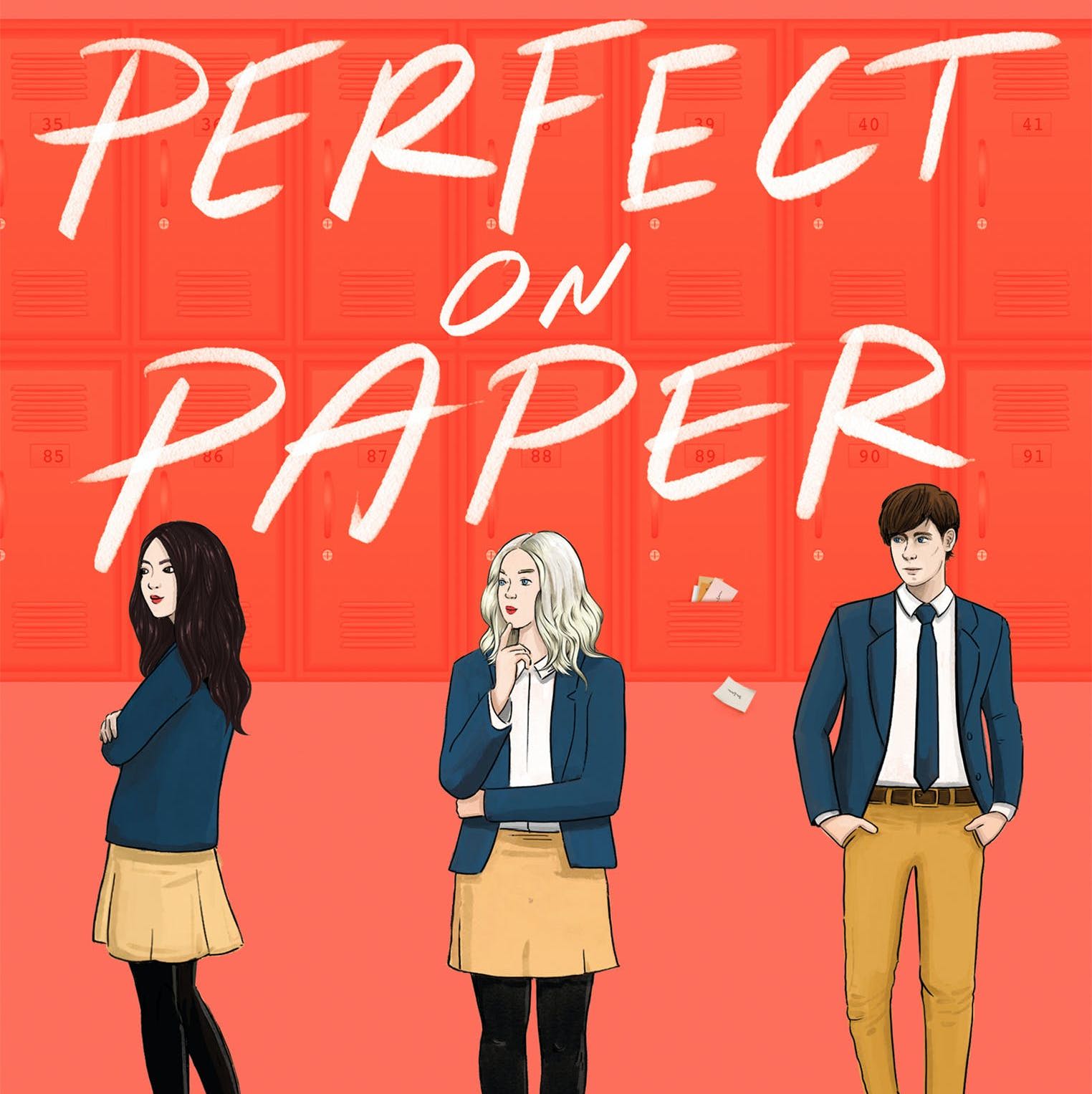
Perfect on paper is the third book by queer young adult romance writer Sophie Gonzales, it was published in 2021 and it was a finalist for a Goodreads Choice Award for Young Adult Fiction in the same year.
The book tells the story of high school junior Darcy Phillips, who has two major problems. The first is that a senior named Alexander Brougham has accidentally discovered her secret relationship advice service. He accidentally catches her one day, just as she’s closing locker 89 (where she runs the service from) and right after collecting the day’s letters. Despite her initial panic, Brougham promises not to tell anyone her secret, as long as she helps him win back his ex-girlfriend, Winona.
Darcy accepts only because of her second problem: she’s in love with her best friend, Brooke Nguyen, who is a lesbian. Brooke can never find out about Darcy’s crush on her or locker 89 since Darcy used her advice service to sabotage Brooke’s almost-relationship with their classmate Jaz. And Darcy will do anything to prevent her betrayal from coming to light.
What follows is the most difficult school year of her life, between running the locker, trying to woo Brooke, and making time for Brougham, all the while getting through schoolwork and attending meetings of her favorite group, the Queer and Questioning Club (often shortened to Q&Q).
The novel features several LGBT characters. The main character is out as bi from the start, as is her classmate and fellow Q&Q member Raina. Darcy’s trans older sister Ainsley, who founded Q&Q, is also out. The club is crucial to the plot, as it serves as a place for Darcy to discuss her struggles with biphobia, which increase as she begins to develop a crush on Brougham that may or may not be requited (further complicated by the fact that he’s still trying to impress his ex, Winona).
Since Darcy has primarily crushed on girls before Brougham, she starts to feel too straight for the club, which sends her hurtling towards an identity crisis.
I feel like if I’m with a guy […] I won’t belong here properly anymore. What if I got a boyfriend? I’d feel weird bringing him to pride events, or even telling queer people I have a boyfriend. I’d feel judged.
This struggle with biphobia, which contains elements of bi erasure as well, is unfortunately common for bi people (see, for example, Melissa Faliveno’s memoir-in-essays Tomboyland, or bi.org’s advice for staying in touch with your bi identity in a straight-presenting relationship). But the Q&Q club comes through for Darcy in this moment of vulnerability: in a beautifully written scene, the club members remind her that she’s bi, whether she crushes on a boy or a girl, and that she belongs, creating a touching moment of queer joy and connection.
In addition to these bi-specific themes, Perfect on paper also discusses toxic relationships in their many varieties: between parents and children, friends, or (potential) partners. It navigates the complexities of these myriad relationships as Darcy, Brooke, and Brougham grapple with growing up and wanting to be better.