Claudine (book series)
Bi MediaWikimedia/Portrait of Colette by Jacques-Émile Blanche, 1905, Museu Nacional d'Art de Catalunya
The Claudine book series (1900–1904) consists of the first four novels published by French author Colette, sold under the pen name of her first husband, Henry Gauthier-Villars. The first three novels adopt the form of a personal diary, while the fourth shifts to the perspective of another character named Annie.
After marrying the significantly younger Colette, Gauthier-Villars, or “Willy”, as he was known, compelled her to draw from personal experiences to write about a fictional ingénue with a similar background to hers, reportedly locking her in a room to force her writing. This resulted in a groundbreaking literary quartet that laid bare the complexities of female and bisexual desire in fin-de-siècle France.
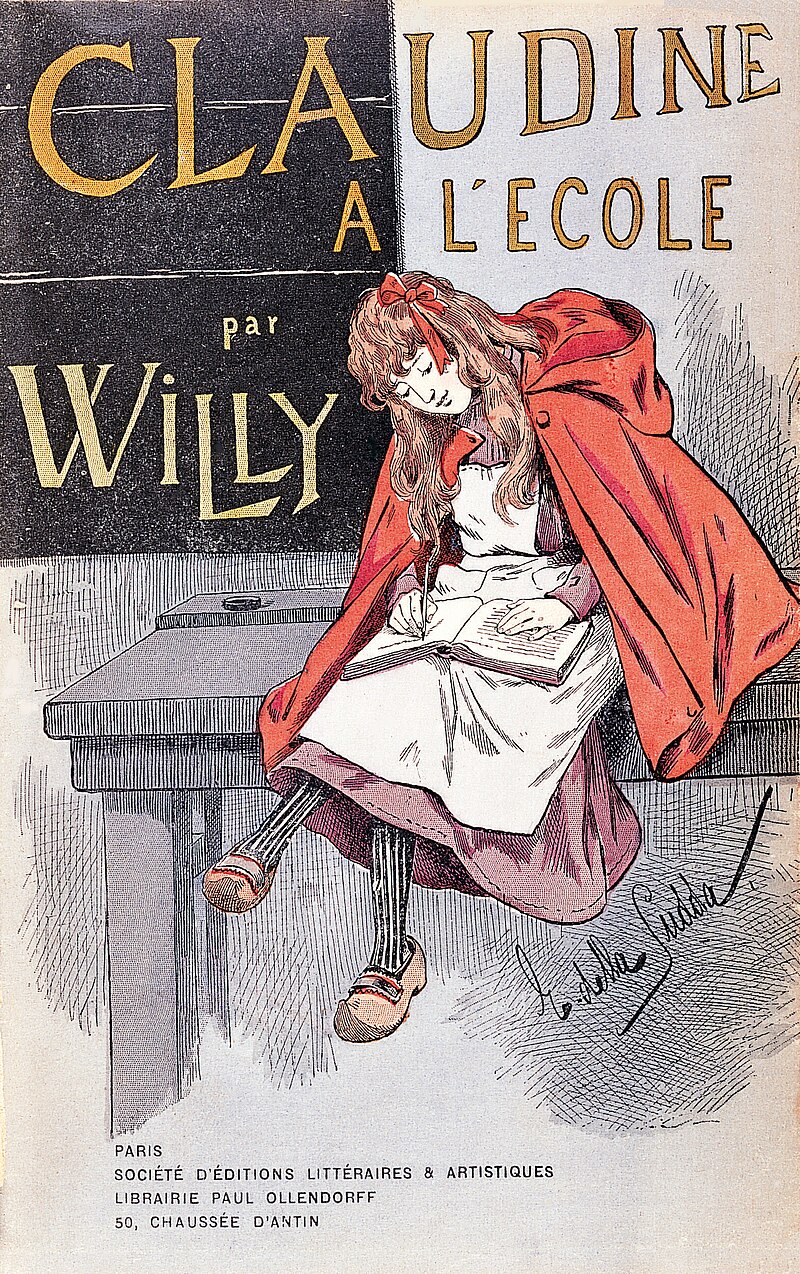
Claudine at School introduces a fifteen-year-old Claudine as she begins an affair with her headmistress’s assistant, Miss Aimée Lanthenay. When the headmistress, Miss Sergent, discovers their relationship, she terminates it, only to pursue Aimée herself. Meanwhile, Miss Sergent simultaneously courts the male school superintendent, while Claudine and her classmates, boys and girls, flirt indiscriminately with each other. We also learn that Aimée’s younger sister, Luce, harbors an infatuation with Claudine, too. The novel was very sought after by Parisian readers, becoming an instant sensation.
In Claudine in Paris, the seventeen-year-old protagonist relocates to the capital with her father, naively exploring her burgeoning sexuality and learning about her desires. Claudine Married sees her wed to Renaud, a much older mentor of sorts. Their sexual relationship is initially passionate but quickly becomes fraught with imbalance, exacerbated when Renaud introduces another woman into their household. Claudine’s attraction to this woman, Rézi, sparks mutual flirtation — possibly more — while Renaud’s pursuit of Rézi traps Claudine in a manipulative triangle. Here, her sexual identity crystallizes alongside her realization of marital oppression: her jealousy targets not her husband, but the woman they both desire.
The concluding part, The Innocent Wife, reframes the narrative through Annie, who marries Renaud after Claudine’s departure. Claudine appears peripherally as a liberated contrast to Annie’s stifled existence. Annie’s disillusionment with marriage fuels her feminist awakening, culminating in her abandoning Renaud after mustering the courage to leave, inspired by Claudine’s joy after marriage.
Collectively, the series constructs a universe full of bisexual characters — whether explicitly labeled or not — who engage romantically and sexually with each other. While the term “bisexuality” remains absent, the text’s fluid eroticism is undeniable. These novels inaugurated Colette’s lifelong literary works, where she continued to explore female sexuality as well as her bisexuality.