Colette
Famous BisColette (born Sidonie-Gabrielle Colette) was a French author, journalist, actor, and cultural icon whose life defied the conventions of her era.
In 1893, at age 20, she married Henry Gauthier-Villars, a writer and editor fourteen years her senior. Gauthier-Villars — known by his pen name Willy — not only encouraged Colette’s sexual relationships with women but also compelled her to channel her youthful diaries into fiction. The resulting Claudine series (1900-1904), narrated in the first person, launched her literary career under his name. The debut novel became an instant sensation in Paris, and followed Claudine’s exploits as a young girl, including a sapphic love triangle.
Though published as Willy’s work, Colette later revealed he would lock her in a room to force her writing, and he allegedly stole from her, refusing to give her any of the earnings from the Claudine series. After a divorce, in need of money, Colette became an actress before turning to journalism to earn a living. She published articles in different publications, including Vogue, Le Figaro, and Paris-Soir.
Her personal life mirrored the boldness of her fiction. Among her notable relationships was one with American writer Natalie Clifford Barney, an openly lesbian salonnière whose Paris gatherings attracted the literary elite. More scandalous was her partnership with Mathilde de Morny (“Missy”), a gender-nonconforming aristocrat who dressed exclusively in male attire. While modern terms like “transgender” didn’t exist then, Missy’s identity (using names like “Max”) challenged binary norms. Their relationship became front-page news when a theatrical kiss during 1907’s pantomime titled Rêve d’Égypte at the Moulin Rouge provoked a riot, forcing the show’s immediate closure. The backlashes drove their romance underground until its end in 1912.
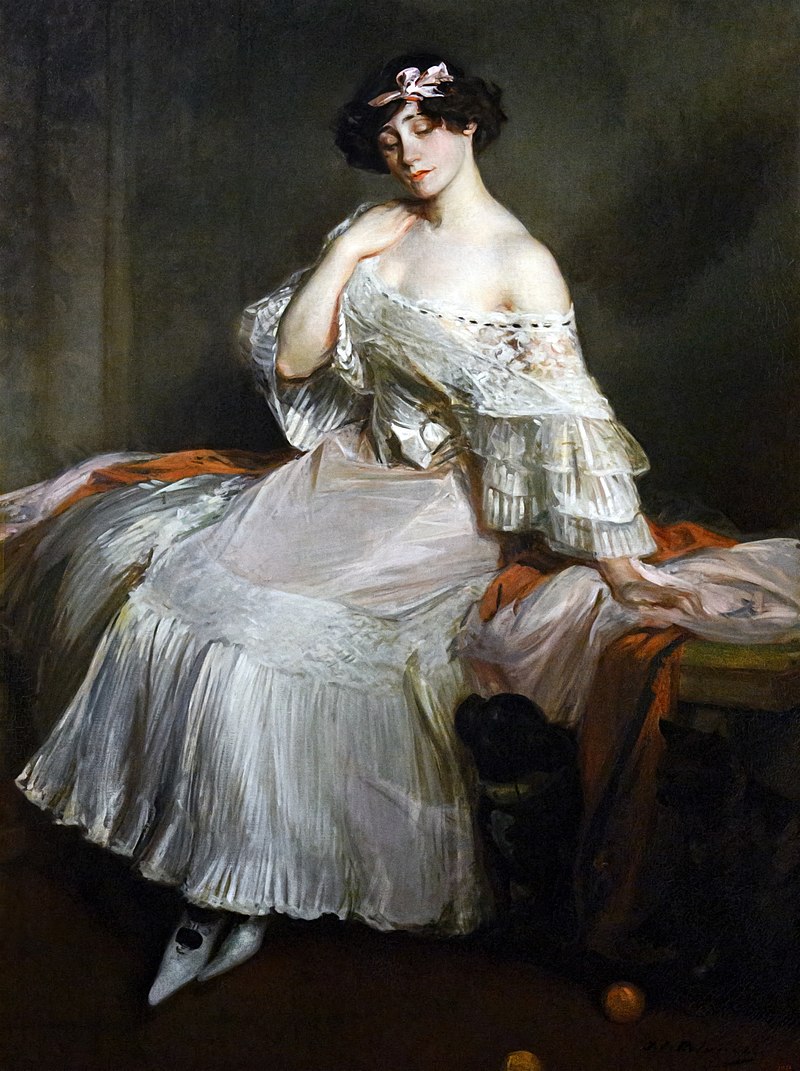
After that, Colette’s marriage to Le Matin editor Henry de Jouvenel proved equally unconventional. Both engaged in extramarital affairs — most notoriously, Colette’s liaison with her 16-year-old stepson, which inspired her 1920 novel Chéri about a May-December romance between a courtesan and a younger man. After their 1924 divorce, her literary star rose through the 1920s and 1930s with works exploring female desire and Paris’s demimonde.
Her third marriage happened in 1925 to Jewish businessman Maurice Goudeket, sixteen years her junior. Years into their relationship, their lives would be upended during the Nazi Occupation and persecution of Parisian Jews. Though she secured his release from a Gestapo detention that lasted weeks, in the year 1941, her wartime publications in collaborationist journals remain controversial.
It wasn’t until 1944 that her most famous work, Gigi, was published. The novella, following a courtesan-in-training who chooses love over financial security, inspired both a 1951 Audrey Hepburn stage adaptation and the 1958 Oscar-winning film musical. By then, arthritis had confined Colette to her Paris apartment, where Goudeket helped compile her complete works until she died in 1954. Denied a Catholic burial due to having divorced her first two husbands, she became the first French woman writer honored with a state funeral.
Her legacy includes membership in the Académie Goncourt and Belgian Royal Academy, the Légion d’honneur, and she was nominated for the Nobel Prize in Literature in 1948. Recent adaptations like Chéri (2009) and Colette (2018), starring Keira Knightley, reaffirm her cultural relevance. Yet her greatest achievement remains her fearless writing — and living — on her own terms.