The Rocky Horror Picture Show (1975) is an independent musical comedy horror film directed by Jim Sharman and distributed by 20th Century Fox. It is based on the 1973 stage musical The Rocky Horror Show, with music, book, and lyrics by Richard O’Brien, who also portrayed the character of Riff Raff. The production is a homage to the science fiction and horror B movies of the 1930s through the early 1960s.
The plot follows a young engaged couple, Brad (Barry Bostwick) and Janet (Susan Sarandon), whose car breaks down near a mysterious castle during a storm. Seeking help, they enter the castle, only to find it inhabited by strange and weirdly dressed characters in the middle of a celebration. The head of the house is Dr. Frank N. Furter (Tim Curry), an eccentric scientist who has just created a living, muscle-bound man named Rocky. Throughout the night, Frank seduces both Brad and Janet, and it is later revealed that he is an alien from the planet Transsexual in the galaxy of Transylvania.
Throughout the movie, Brad and Janet’s sexualities evolve. They begin as an awkward couple, committed to “saving themselves” for marriage. However, upon entering Dr. Frank N. Furter’s castle, they are drawn into a celebration of sexuality, where many characters display same-sex attractions. Dr. Frank N. Furter flirts with both Brad and Janet, eventually persuading them to have sex with him. These interactions highlight both Dr. Frank N. Furter’s and Brad’s bisexual attractions. But other secondary characters in the movie display bisexual attraction, such as Rocky, Magenta, and Columbia.
Initially, the R-rated musical was poorly received by critics and audiences alike, but it soon gained traction as a cult hit during midnight screenings at New York City’s Waverly Theater in 1976. Fans began attending screenings in costume, interacting with the film by throwing rice, shooting water guns, and dancing. Even “live shadow casts” would perform the movie in front of the screen while it played. Today, many cities continue this tradition, with The Rocky Horror Picture Show most often screened around Halloween.
The film’s popularity among queer communities in the 1970s allowed fans to connect, express themselves, and celebrate their sexuality in a space where they felt understood and accepted. This sense of belonging and freedom to explore sexual identity was especially meaningful during a time when LGBT representation in media was limited.
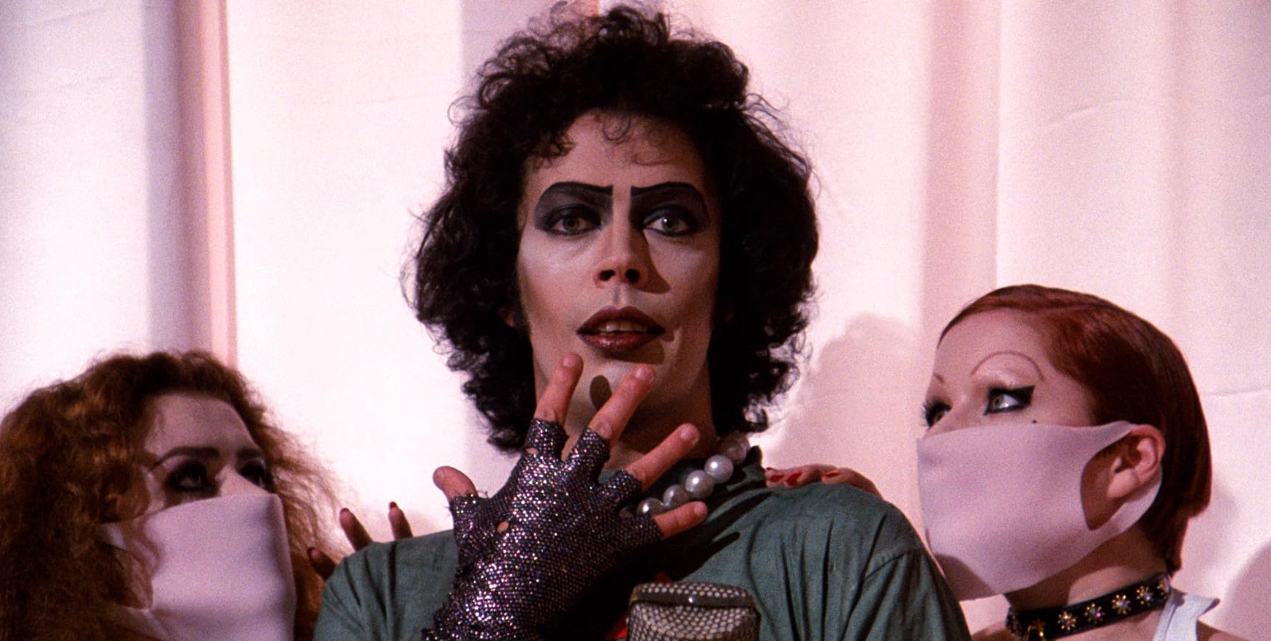
Over time, The Rocky Horror Picture Show has garnered a large international cult following and is widely considered one of the greatest musical films. In 2005, the United States Library of Congress selected it for preservation in the National Film Registry, for being “culturally, historically, or aesthetically significant.”
One of the standout aspects of The Rocky Horror Picture Show is its bi representation, starting with the central character of Dr. Frank N. Furter. It’s important to note that his portrayal is problematic, since he is depicted as manipulative, unable to commit to relationships, and even murderous, despite the film being a satire that exaggerates these traits for comedic and dramatic effect. All things considered, the movie’s portrayal of queer characters, especially in the 1970s, was groundbreaking. Besides Frank N. Furter, several other characters, including Brad, Columbia, and Magenta, can be read as bi; in fact, The Rocky Horror Picture Show is one of those rare films where every character could be considered bi until proven otherwise.
Many queer individuals have also resonated with Brad and Janet’s storyline. Throughout the night, both characters confront their sexual desires and embrace their sensuality, echoing the emotional journey that many go through when coming to terms with their own sexual identities. This parallel has made the film particularly relatable for members of the LGBT community, who see their struggles and celebrations reflected in the story.
The cultural impact of The Rocky Horror Picture Show is massive, influencing everything from fashion, from fishnets and glitter, to music, contributing to the glam rock movement. However, its most significant and lasting influence has been on the LGBT community. In the 1970s, working-class queer people found solace in the film’s themes of individuality and sexual liberation, creating a space for celebration that continues today.