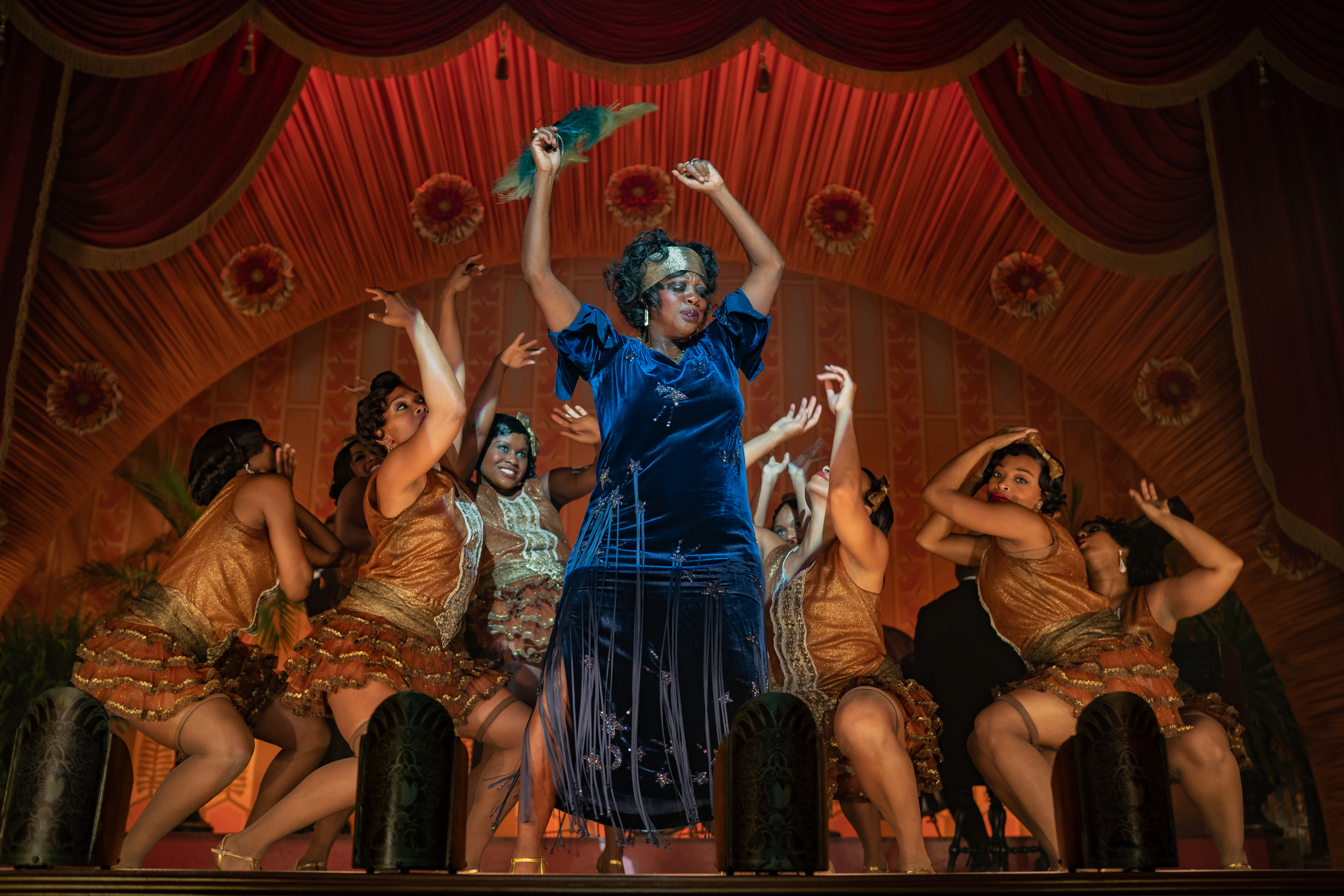
Ma Rainey’s Black Bottom is a historical drama released on Netflix, adapted from August Wilson’s Pulitzer Prize-winning play of the same name, part of his renowned collection of plays known as the Pittsburgh Cycle. The film stars Viola Davis as the eponymous jazz singer and features Chadwick Boseman’s final performance before his untimely death. It depicts a pivotal moment in the life of the legendary Mother of Blues, Ma Rainey, as she battles against white management to have her songs recorded as she intended. As the recording sessions progress, tensions rise not only between Rainey and the management but also among Rainey, her traveling band members, and the cocky yet ambitious new trumpet player (Boseman).
Ma Rainey’s distinct look comes from wearing era-appropriate 1920s long flapper dresses as well as a generous amount of grease paint makeup, which the musician was known to favor both on and off-stage. Rainey is open about her bisexuality from the jump. The film makes room for the queer female gaze, watching as Rainey not only admires and touches her female lover Dussie Mae in front of everyone in the recording studio. That may be the sole physical scene with Rainey touching a woman in the film. Still, the story also follows along as she brings both a male and a female lover into a hotel, daring the management to do anything about it, trusting that her celebrity and visibility will protect her. Rainey also speaks often about her love for her late husband as well throughout the film.
Rainey has a lot of agency in her life, especially for a black woman living and working during the Jim Crow era in the music industry. She successfully fights for and gets her songs recorded the way she wants them done and lives openly as a queer woman both during her recording sessions as well as on the road. Of course, her brazenness did not permit her or her band total freedom in white professional circles, but she was clearly a woman who knew her value and knew what the white recording studio managers around her wanted from her. Her lyrics also often included bi imagery and attractions, and this did not in any way dim their popularity.
While the term “bi” is never used in the film, in a slew of press interviews, Davis never shied away from using the term or talking about how important of an element it was for both the character and how she could access playing the musical legend.
From Vanity Fair:
There’s a sense of confidence with [Rainey] because she owned her sexuality—she was a bisexual woman — and she was a leader. She had her own band that she paid, and she was an entrepreneur in 1927, Jim Crow America.
For The Advocate, and about the responsibility she felt to the character both as an actress and an executive producer:
In researching Ma Rainey, she was unapologetic about her sexuality … This is a woman who went to orgies. She was arrested at an orgy. I felt like Ma always had a woman with her… That was her world. I didn’t want to sweep it under the rug.
In an interview for The New York Times:
If you are a person that has not experienced that comfort, then it’s hard to access … is because people think if you’re a woman and you’re overweight, then you’re not sexy and you should not feel sexy. But the people I grew up with who were big were comfortable in their bodies. It didn’t stop them from getting as many men as they could, from manipulating them, from wearing clothes that showed off their bodies. That’s what I know and what I wanted to inject in Ma Rainey. This is a woman who was unapologetic about her sexuality, unapologetic about her worth. And how do you access it? It’s hard to articulate how you access a character that is functioning on a different level than you personally other than this: Whatever it is that you feel uncomfortable about, you overdo. When I was in Ma Rainey’s padding, I touched my breasts a lot. I twitched my hips as much as I could. When you overdo it day in and day out, at some point, it does become a part of you.
And for a final quote on the matter, Davis in Detroit News:
There are only seven photos that exist of her. I tried to gather everything from what people said about her, how she was described as a mouthful of gold teeth, always dripping with sweat, makeup that looked like grease paint that was melting off of her face, wigs that were made of horsehair. She was bisexual. So that was my way in.
Ma Rainey’s Black Bottom stands out in modern cinema for showing a powerhouse, bi woman of color who stands firmly in her identity and will brook no argument from anybody, either on her talents, how she uses them, or the relationships she develops. Ultimately the movie is a standout of bi representation in modern filmmaking.