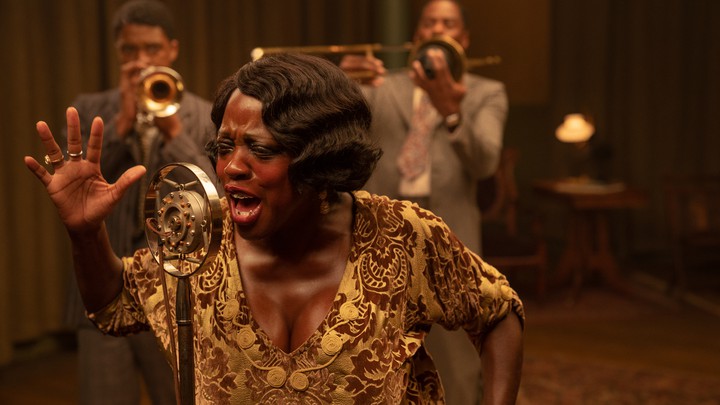
Let’s travel back in time to a dizzyingly hot Chicago in 1927, where Netflix has staged their film adaptation of August Wilson’s landmark play, Ma Rainey’s Black Bottom. Among many of the important themes of race, musical exploitation, and agency, Viola Davis explores the sexuality of her titular character in this 2020 film. So why don’t we join her on this trip into an important chapter of blues history?
Before I go any further, I should note that from here on out, my review will contain SPOILERS. So if you haven’t borrowed a password for the streaming service and/or aren’t familiar with the original play from the Pittsburgh Cycle, now is the time to rectify that.
I should also offer a few content warnings, particularly about violence and the use of racial slurs (which is crucial to the themes explored in the piece, but some people may want to be forewarned). Finally, if this is your first time joining me in this column and you have little idea what I am referring to, it would be a good idea to quickly hop over here to know what I’m going on about, or check out our Media Entry on the film here.
Got it? Good, now why no listen to the song in question while reading my review?
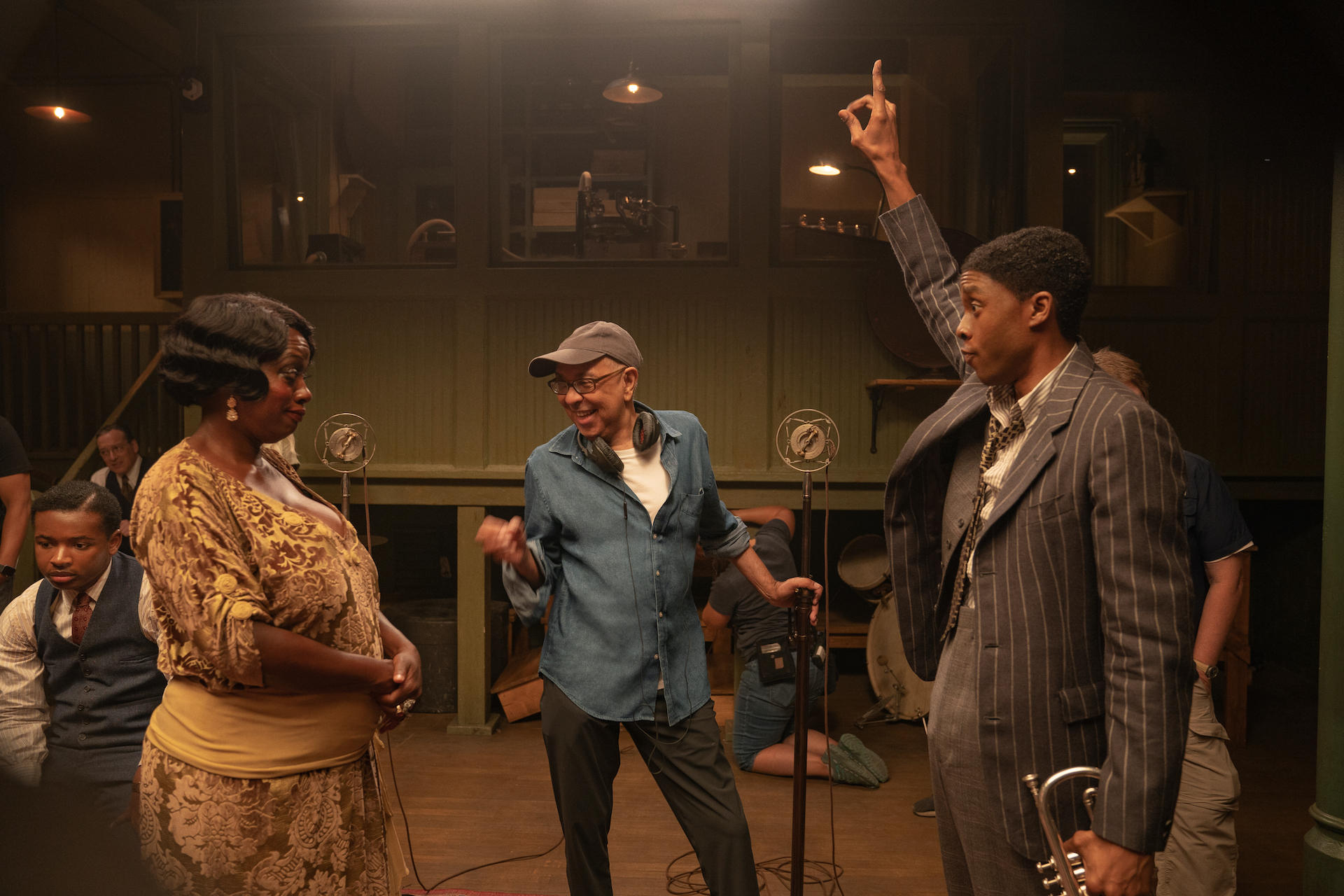
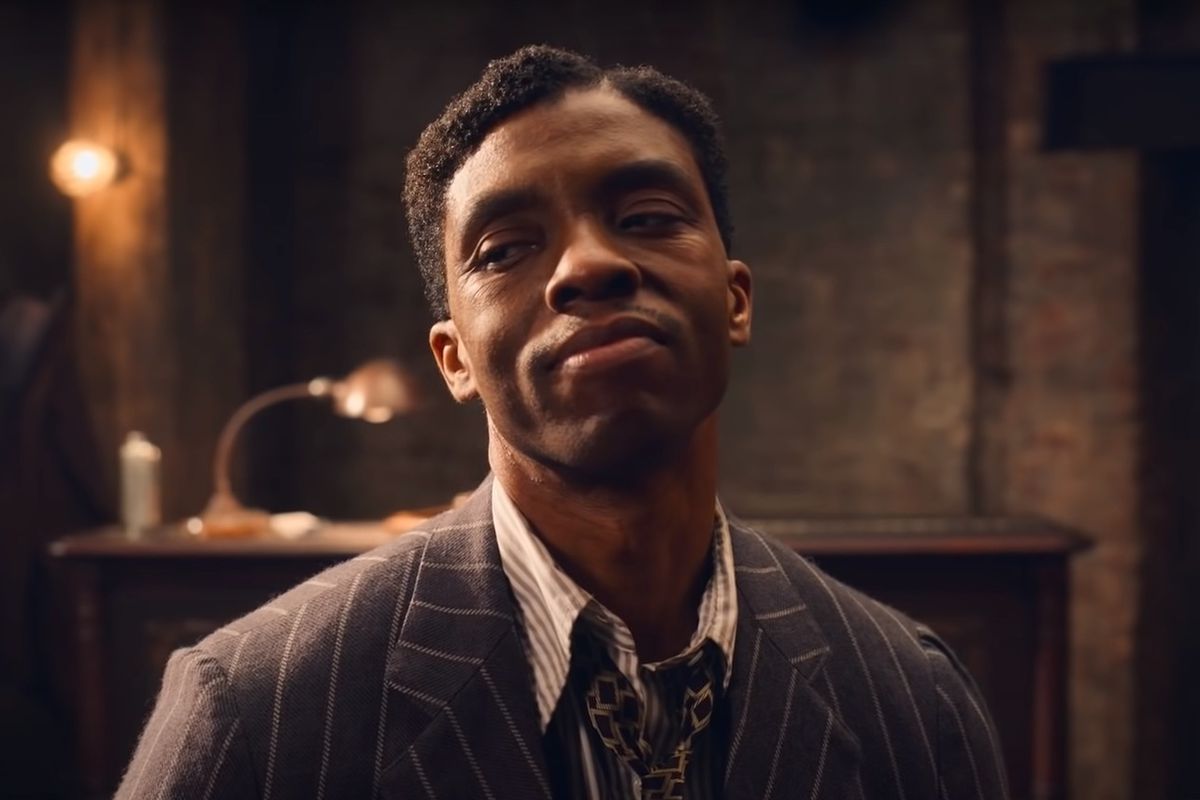
Ma Rainey’s Black Bottom focuses on a day from the Roaring ‘20s when “Mother of Blues” Ma Rainey (Viola Davis) and her traveling band land in a music studio on break from her tour for her to lay down some tracks for some records. But as the rehearsals and recordings drag on, tempers flare between the musicians — including ambitious trumpeter Levee (Chadwick Boseman, RIP) and the singer.
What I Liked:
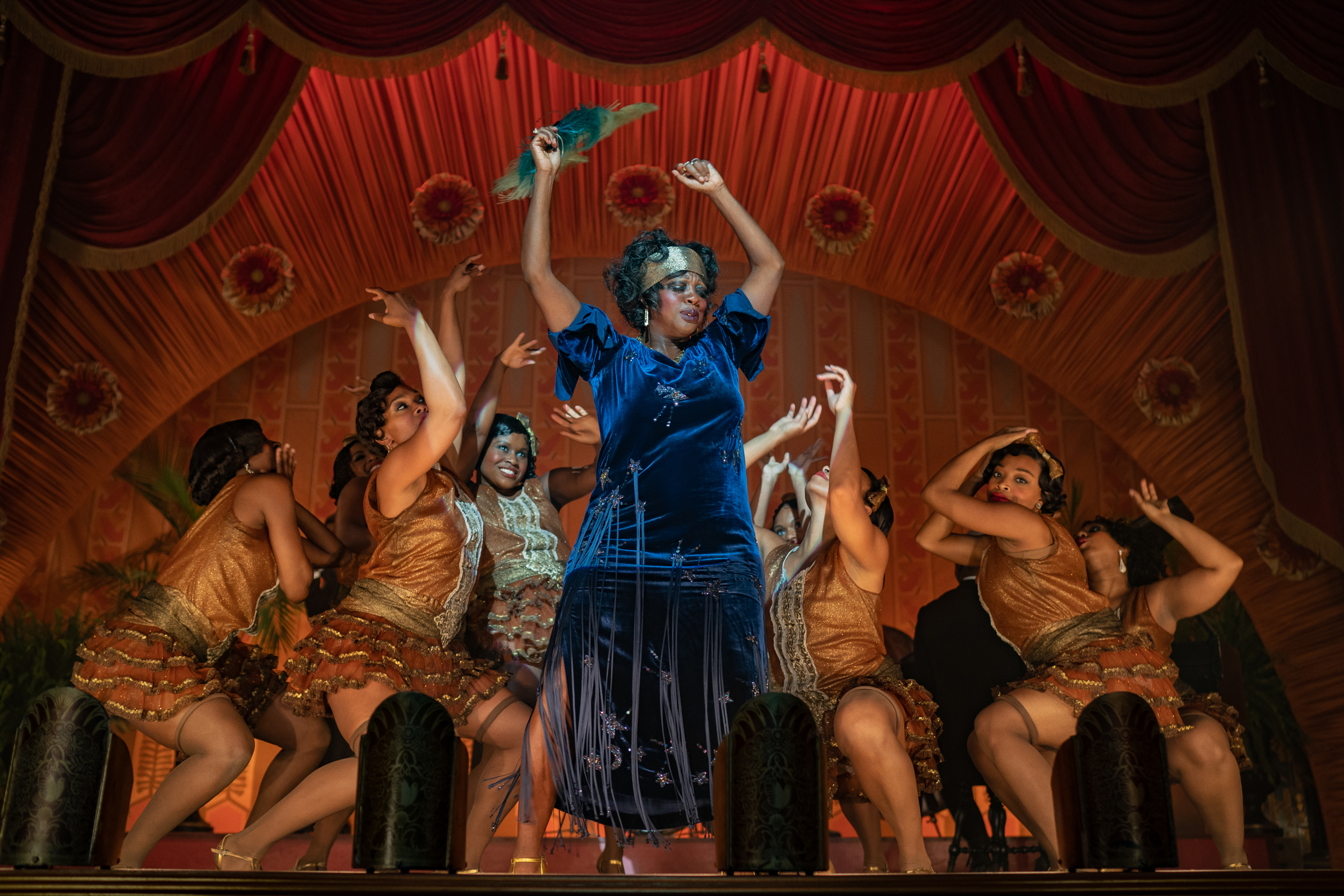
I’ll start off the way Ma started off — after scenes of her legendary performances in theaters, and under tentpoles alike, Ma Rainey staged one of the most defiantly queer entrances I’ve seen on film in recent memory. Seeing such a beautifully unapologetic claim to black queerness on-screen, daring the white patrons in her hotel to say something, sets the tone for the amount of agency Rainey displays over her queerness.
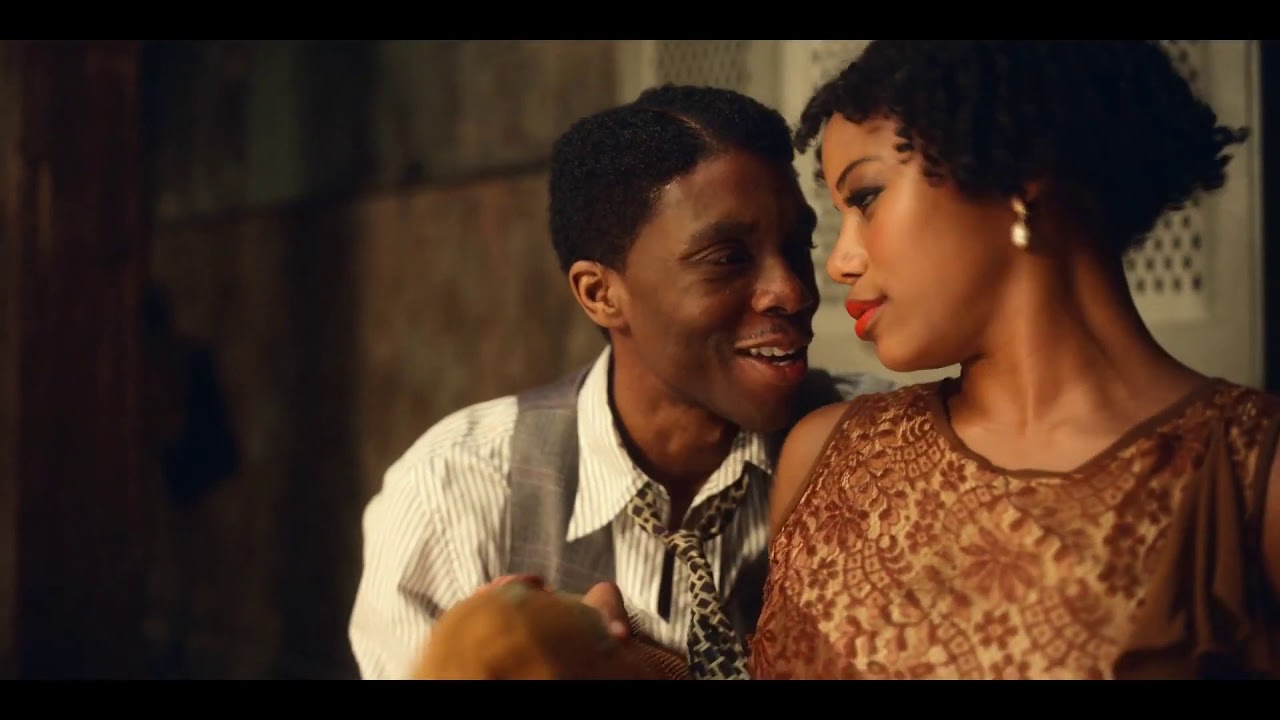
I appreciate that the film also isn’t afraid to work in a female gaze as we follow Rainey’s glances (and hands) over her lover, Dussie Mae (Taylour Paige). And to make it clear that Ma is bi, not only does she later mention her late husband, but the songs she is recording (and wrote) have bi lyrics on full display. There is not only a bisexual appreciation on display in these early scenes but a declaration of queer agency that is rarely afforded to people of color on the silver screen, even in our modern times.
There is also another tricky balance that both Wilson and screenwriter Ruben Santiago-Hudson manage to achieve, which sometimes I have trouble articulating. However, that element came up when I was reading an older article on this site earlier this week (See? I don’t just write for bi.org — I also read everyone else’s content.) That balance is between both elegantly (and not boisterously) demonstrating a character’s queerness while also having their bisexuality not be the only factor that drives this story. Wilson’s plays are well-known for putting complex, unforgettable female characters at the forefront, and Ma Rainey is no exception to that motif.
What I Didn’t Like:
What do I always not like? Returning readers know this, so don’t speak up, let the new students have a chance. I’ll give some hints: we see Rainey love on Dussie, we hear her mention her husband. So normally, when someone is attracted to more than one gender, what is the label that leaps to mind? It’s even in the name on this site.
You guessed it. No one uses the term “bi.”
But I will say that due to the importance of other discussions and themes on display in this film, on MY scale of “does-it-bother-me,” it’s not nearly as high as normal. I would feel a bit idiotic pleading to the ghost of August Wilson to insert the word in post-mortem when he was already breaking so much ground not backing away from Rainey’s sexual fluidity when the play premiered even before I was born. That feels like giving Shakespeare notes — I’m not worthy.
The Rating:
Here we have a nuanced, rich portrayal of an important musical figure who both gets lionized and humanized in the same work of art. Rainey (and Davis) get to explore every corner of human emotion in this piece and know her worth and hold out for what she is owed smack dab in the middle of the Jim Crow era. And through it all, she was unafraid to put her bisexuality on display. Ma Rainey’s Black Bottom deserves to be venerated for what it is — a new high-water mark in black queer cinema. To me, it didn’t miss a note.