The Boys is a satirical and gritty series, developed by Eric Kripke for Amazon Prime Video, set in a world where superheroes, known as “supes,” are not the paragons of virtue they appear to be. Instead, they are controlled by a powerful corporation called Vought International, which markets and monetizes their heroics while covering up their flaws and misdeeds.
The first season premiered in July 2019. The second season followed in September 2020, and the third in June 2022. The series was renewed for a fourth season, which premiered in June 2024, and a fifth and final season, which premiered in April 2026. The show’s universe expanded with the spin-off web series Seven on 7, the animated anthology Diabolical, and the live-action series Gen V.
The story follows two main groups: The Seven, Vought’s premier superhero team, and The Boys, a vigilante group determined to expose the truth about the corrupt supes (superheroes).
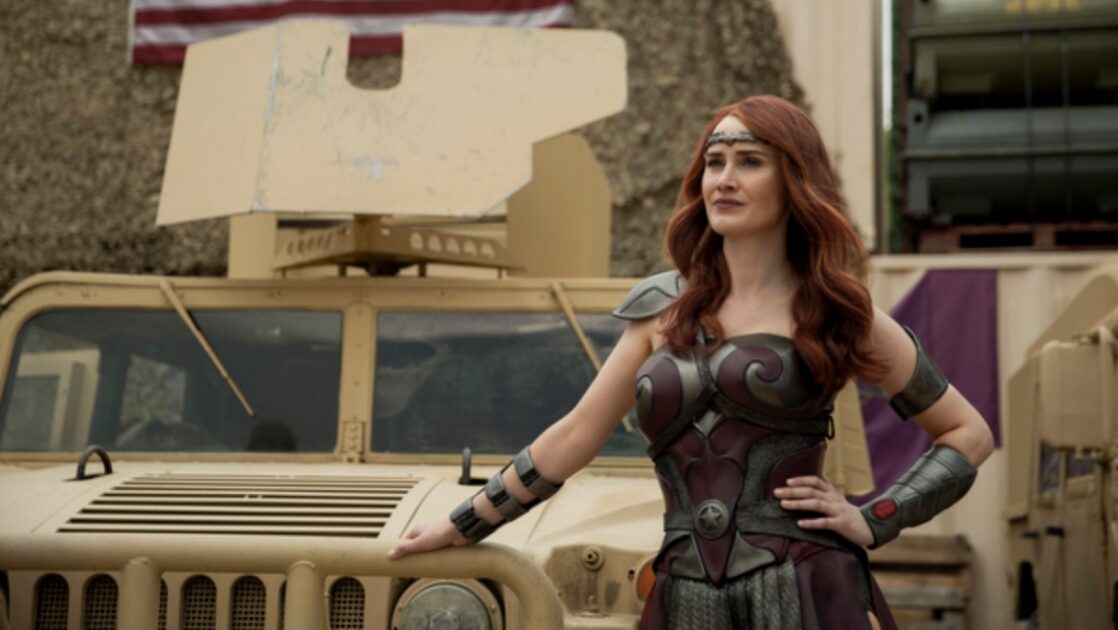
The Seven are comprised of Homelander, the ruthless and narcissistic leader with Superman-like powers, Queen Maeve, a disillusioned warrior who struggles with the dark reality of her role, A-Train, A speedster whose drug abuse leads to reckless actions, The Deep, a superhero with aquatic abilities who grapples with his fall from grace, Starlight, the newest member, whose idealism is shattered by the team’s true nature, Black Noir, a silent, deadly enigma, and Translucent, an invisible supe with a perverse streak.
The Boys are made up of Billy Butcher, the charismatic yet brutal leader with a personal vendetta against Homelander, Hughie Campbell, a mild-mannered young man who joins The Boys after his girlfriend is accidentally killed by A-Train, Mother’s Milk (a.k.a. MM), a former Marine with a strong moral compass and a dedication to his family, Frenchie, a volatile but brilliant arms specialist with a complicated past, and Kimiko (The Female), a mute and deadly superpowered woman seeking vengeance for her traumatic past.
The series begins with Hughie’s life being upended by his girlfriend Robin’s death at the hands of A-Train. This tragic event pulls him into Butcher’s orbit and convinces him to join The Boys. As they begin to uncover the dark secrets behind Vought and The Seven, they encounter numerous obstacles and ethical dilemmas.
Starlight’s journey within The Seven highlights the internal corruption and moral decay of the “supes”. Her growing disillusionment aligns her with The Boys’ cause, leading her to live a dangerous double life as she navigates the treacherous waters of Vought.
The first season introduces viewers to a world where superheroes are idolized yet deeply flawed. Hughie Campbell’s life is shattered when his girlfriend, Robin, is accidentally killed by A-Train, a member of The Seven whose power is superspeed. This tragedy propels Hughie into the orbit of Billy Butcher, the leader of The Boys, who harbors a personal vendetta against Supes, particularly Homelander, the leader of The Seven. Butcher’s disdain for Supes stems from the mysterious disappearance of his wife, Becca, whom he believes was harmed by Homelander.
Parallel to this, Annie January, known as Starlight, is a fresh recruit to The Seven. Her initial enthusiasm is quickly dampened as she confronts the team’s moral bankruptcy and the manipulative machinations of Vought. Annie’s journey from naivety to disillusionment is poignantly portrayed, highlighting the chasm between public perception and private reality.
Throughout the season, The Boys uncover Vought’s clandestine operations, including the distribution of Compound V, a substance responsible for granting superpowers. This revelation challenges the public’s perception of superheroes as divinely gifted beings, exposing a manufactured process driven by corporate greed. The season culminates in a tense confrontation where Homelander reveals to Butcher that Becca is alive and raising Homelander’s son, adding a layer of complexity to Butcher’s vendetta.
The second season delves deeper into the ramifications of the Compound V revelation. Vought faces public scrutiny, yet adeptly manipulates narratives to maintain its dominance. A new member, Stormfront, joins The Seven, bringing with her a façade of progressive ideals that mask a sinister agenda rooted in a white supremacist ideology. Her relationship with Homelander adds a disturbing dimension to the story, as they collaborate to propagate their supremacist views.
Queen Maeve’s personal life becomes a focal point this season, as is shown in Episode 5, “We Gotta Go Now”. Her bisexuality, previously a private matter, is thrust into the spotlight when Homelander publicly outs her during a televised interview. Vought seizes this opportunity to craft a disingenuous narrative, branding Maeve and her partner as lesbians to fit a marketable image, thereby erasing her true bi identity.
The Boys continue their crusade against Vought, grappling with internal conflicts and external threats. Butcher’s relationship with his wife, Becca, becomes strained as they navigate the complexities of her son, Ryan, who possesses Homelander’s powers. The season builds to a climactic battle where Stormfront’s true identity and past are exposed, leading to her downfall. This victory is bittersweet, as the political landscape shifts with the revelation that Congresswoman Victoria Neuman possesses lethal abilities and harbors her own agenda.
A year after the tumultuous events of Season 2, the landscape has ostensibly stabilized. The Boys now operate under the purview of the Bureau of Superhero Affairs, ostensibly holding supes accountable through legal channels. However, this order masks underlying tensions. Homelander, grappling with public relations setbacks and personal losses, becomes increasingly unstable, his mask of benevolence slipping to reveal a more unhinged persona.
The discovery of a potential weapon capable of killing Homelander sets the stage for a high-stakes quest. This weapon is linked to Soldier Boy, a legendary Supe thought to be dead. As The Boys delve into this mystery, they confront the dark history of Vought and the origins of Compound V.
Frenchie’s backstory is further explored, shedding light on his past affiliations and personal demons. His complex relationship with Kimiko evolves, highlighting themes of redemption and the search for identity beyond violence. The season also addresses the commercialization of dissent, as Vought attempts to co-opt social movements for profit, reflecting real-world corporate strategies.
Six months after the defeat of Soldier Boy, the world of The Boys is fraught with political and social upheaval. The Boys, now working closely with the CIA, aim to thwart Victoria Neuman’s ascent to power, aware of her lethal abilities and duplicitous nature. Homelander, having consolidated his influence, exerts pressure on Neuman, creating a precarious balance of power.
Butcher grapples with his mortality, having been exposed to a fatal dose of Temp V. His impending death adds urgency to his mission, but also strains his relationships with his team, who grow weary of his relentless pursuit of vengeance at the cost of their well-being.
As the tensions between The Boys and Vought escalate, the season introduces new power struggles, alliances, and betrayals. Homelander’s growing instability reaches dangerous new heights, especially as he cultivates his son, Ryan, into a potential successor. Ryan’s development as a character becomes pivotal, as he is torn between the influences of his father, Homelander, and Butcher, who sees the boy as both a potential weapon and a chance at redemption.
Frenchie’s arc continues to explore his personal journey away from the life of a contract killer. His bisexuality, previously hinted at in earlier seasons, becomes more explicit as he struggles with his past relationships and his deepening bond with Kimiko, while also grappling with his romantic feelings for Colin, mentioned in Season 4, Episode 1, “Department of Dirty Tricks”. His character expresses themes of atonement and the difficulty of breaking free from cycles of violence. His fluid sexuality is not treated as a dramatic reveal but rather as an intrinsic part of who he is, further enriching his character.
As the season progresses, Neuman’s political ambitions bring her closer to the presidency, making her an even greater threat than Homelander in some ways. The Boys must navigate shifting alliances, including potential support from disgruntled supes who have turned against Vought. However, Butcher’s declining health and reckless decision-making put the team at risk, forcing them to confront the moral question of whether their fight against Vought has made them just as ruthless as the people they oppose.
The final episodes of the season build toward an explosive confrontation where the balance of power in the world of superheroes is once again thrown into chaos. Ryan’s allegiance remains uncertain, setting up the possibility of an even darker future. Meanwhile, Homelander’s unchecked narcissism threatens to push the world into authoritarian rule, leaving The Boys with a dwindling number of options.
The Boys stands out for its fearless social commentary, satirizing corporate greed, political corruption, and the dangers of unchecked power. The show consistently subverts traditional superhero tropes, presenting its characters in morally complex and often deeply flawed ways.
It has also been lauded for its LGBT representation, as Queen Maeve’s bisexuality is an integral part of her character, and the show effectively highlights the way corporations exploit queer identities for profit while erasing actual bisexuality from mainstream narratives. Her arc explores themes of survival, autonomy, and resistance against an oppressive system.
Similarly, Frenchie’s bisexuality is treated as an organic aspect of his character rather than a forced plot device. His queerness is subtly woven into his backstory and interactions, providing much-needed representation for bi men, who are often underrepresented or mischaracterized in media. In addition, The Boys critiques the way real-world corporations co-opt progressive movements for branding purposes. The way Vought commercializes social issues — whether it be LGBT rights, feminism, or racial equality — mirrors how real corporations often use activism as a marketing tool rather than a genuine push for change. If you want to read more about this show, check out our Unicorn Scale review of it here!