The more time I’ve spent writing this Bi Science Fridays column, the more convinced I have become that bisexuality is so pervasive in nature as to be nearly universal. From the sea to the sky to the forests, jungles, plains, and even the frozen polar regions, bisexual behavior is everywhere we look. Name me a vertebrate animal species for which we have no evidence of same-sex behavior, and I’ll show you an animal that simply hasn’t been studied enough. Case in point: In June of 2025, we covered bi behavior among whales and cetaceans as a whole (dolphins got a separate article the previous month), covering humpback, beluga, and killer whales, among others. Narwhals, the relatively small toothed whale species notable for their impressive, spiraled tusks (technically an incredibly elongated, horn-like canine tooth), were not among them. There simply wasn’t any evidence. But an eye-opening research study published later that year changed everything, giving new meaning to narwhals’ nickname as “the unicorns of the sea.”
Published in November 2025 in Behavioral Ecology and Sociobiology, the study, “Same-sex socio-sexual interactions among male narwhals,” offered what the researchers described as “the first documented case of same-sex behaviors” among these fascinating sea mammals. In fact, so little was previously known about narwhal mating that even heterosexual behavior has only been reported a single time in the scientific literature, back in 1950. Why such sparse data? As the authors write: “Sexual behavior, of any type, has not been well characterized for narwhals given their remote and logistically challenging habitat.” Narwhals inhabit some of the most isolated backwaters of the Arctic, and to make matters worse, they range over vast areas and spend most of their time underwater, diving to spectacular depths of up to 1,500 meters! No wonder these critters are so hard to study!
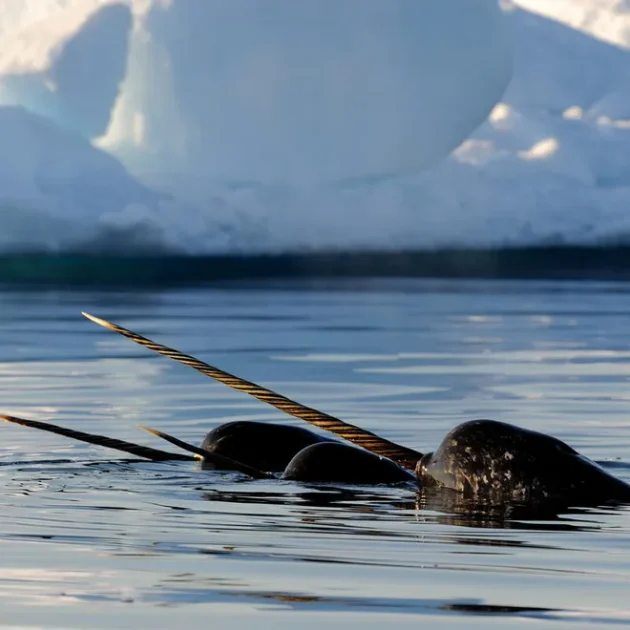
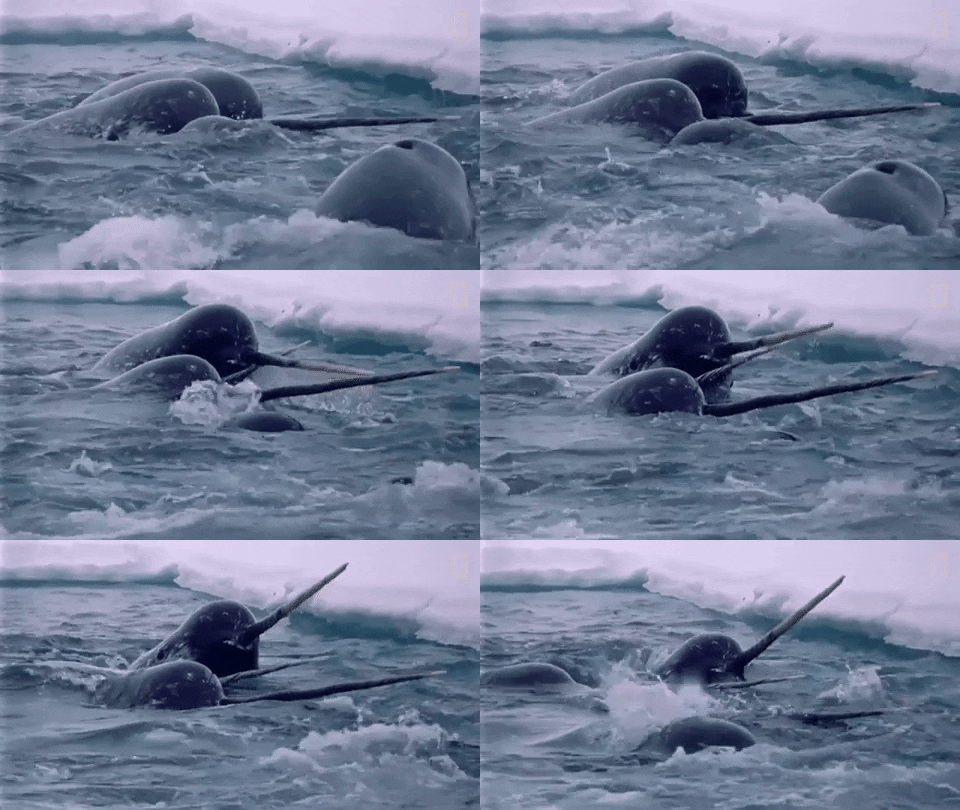
This paper, though just published in 2025, is based on rare footage of these elusive whales captured back in 2017. Using aerial drones off the coast of northern Baffin Island in Canada’s far north, researchers happened upon a group of eight male narwhals on the water’s surface and managed to record over eight minutes of video. Identified as male by their tusks, the group was engaged in what was unmistakably some kind of group sex. As the authors wrote, all eight males were close to one another, physically entangled, and presented their undersides to at least one of the other narwhals present. Five of the eight had visible erections, four of which engaged in genital rubbing with other males. One even appeared to attempt to penetrate another. It’s pretty telling that of the only two times narwhal mating activity has been documented, one involved heterosexual behavior while the other was, by any other name, a same-sex orgy. If you spend any appreciable amount of time researching animal sexual behavior, this becomes less surprising and more expected.
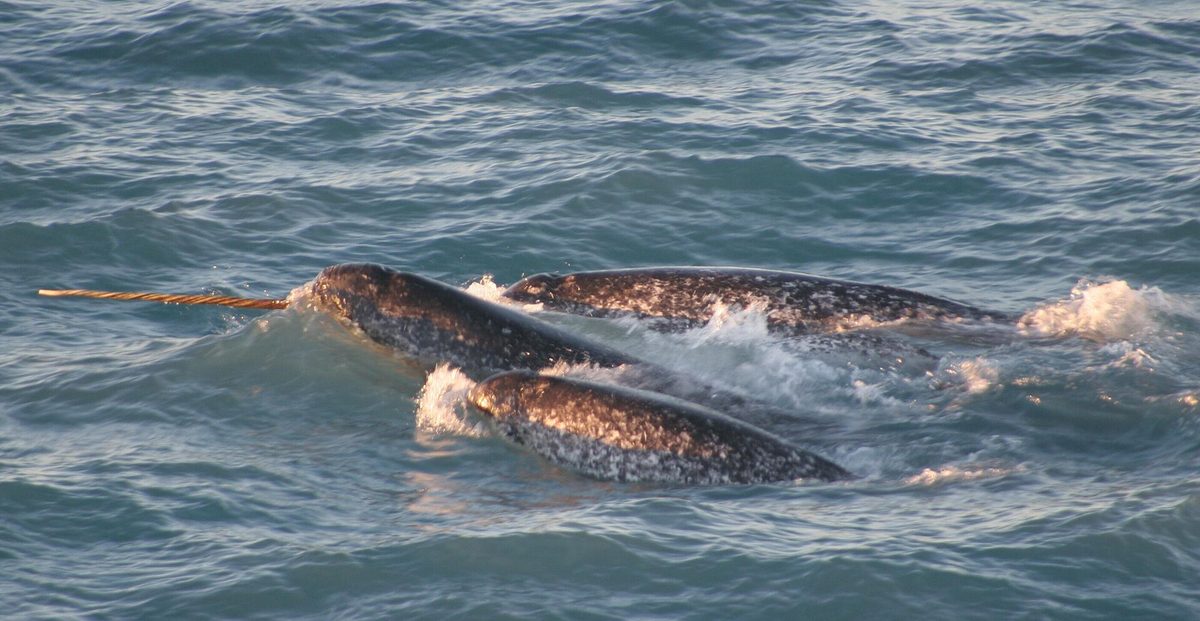
What’s particularly interesting about this study is that the observed conditions rule out most of the usual explanations for animal same-sex behavior, including those that tend to dismiss these behaviors as not being truly sexual in motivation. Often, same-sex behavior is attributed to dominance displays, but the researchers “did not observe any aggressive or combative tusk contact nor did there appear to be ‘dominance’ in the context of one male mounting or ‘forcing submission’ of another subordinate male.” Same-sex behavior can also be common among younger animals thought to be “practicing” for the real thing by horsing around with one another. Aside from the fact that such horseplay could still have a clearly sexual component, all of the narwhals in this footage were identified as adults. Similarly, this was not the result of males lacking access to females, as there were females observed in the surrounding area.
Ultimately, the study’s authors did not offer a definitive explanation for the purpose of these homoerotic shenanigans other than suggesting it may play a role in social bonding — another common mechanism zoologists tend to invoke, especially when they can’t point to anything more specific. Of course, when we zoom out from this narwhal study to regard the literature on animal behavior as a whole, the answer could be even simpler. Maybe bisexuality is nature’s default not because there’s some compelling evolutionary reason for animals (including humans) to do it, but because there’s no compelling reason not to do it.