Well hello there, my beautiful bi cinephiles! Do you ever find yourself just… longing for something, cinematically? Maybe you miss the run of rom-coms from the 2010s, or yearn for movies with a forgotten star who deserves a comeback. Lately, I’ve found myself longing for… well, more grown-up movies. Don’t get me wrong — Marvel is fun, and you’d be hard-pressed to find a bigger Lord of the Rings fan than me (I basically have the extended editions memorized). But as I’ve gotten older, sometimes I really want to see a movie that addresses the day-to-day issues I’m dealing with rather than an escapist fantasy. Which is why I was excited to see The Invite come to theaters — and ooh, baby, I’d heard there was a bi character or two worth exploring. Did that prove to be true? Read on to find out.
But first, I need to go over a few disclaimers. First things first: there will be SPOILERS for this 2026 dramedy, including but not limited to: discussions of death, gaslighting, and drug use. Finally, if this is your first time at the Unicorn Scale (if so, welcome!) or you’d just like a refresher on the metric, you can check it out here.
All set? Then let’s pop the cork on a good bottle of special wine and settle in.
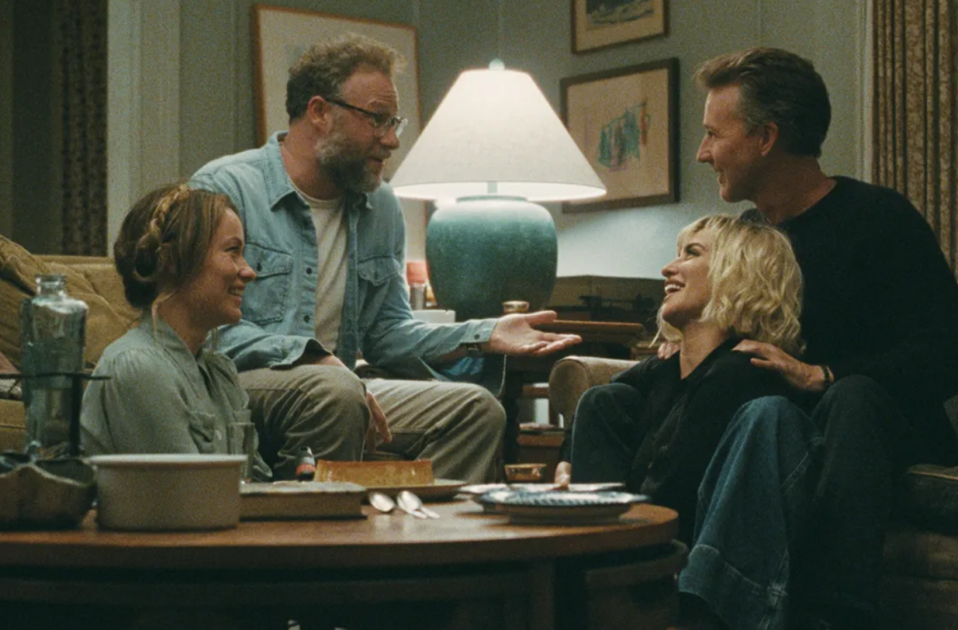
The Invite focuses on a San Francisco couple, Angela (Olivia Wilde) and rocker-turned-music-professor Joe (Seth Rogen), whose marriage is on thin ice. The pair have taken issue with the excessive sex noises from their upstairs neighbors, retired firefighter Hawk (Edward Norton) and his girlfriend, therapist/sexologist Piña (Penelope Cruz). Angela invites the couple over for dinner to discuss the matter, leading to a night of discoveries and hidden truths.
What I Liked:
In particular, I want to focus on Piña’s character. Yes, she is, by her own definition, “bi-curious,” but clearly explains that she is attracted to and has sex with more than one gender when asked about the lewd noises coming from her apartment. She embraces her bisexuality and her poly dynamic and sex with men and women with pride and self-possession as she discusses her alternative relationship style. These are things rarely seen on the big screen or embraced with any level of maturity, and even more rarely given to a female character. A quick quote of Piña talking about her sexuality, as well as the joy in her polyamory.
I’ve always been bi-curious. For me, the pleasure I get from a woman is different… We [as a couple] practice compersion. And for me, there is nothing better than watching my partner in the hands of another.
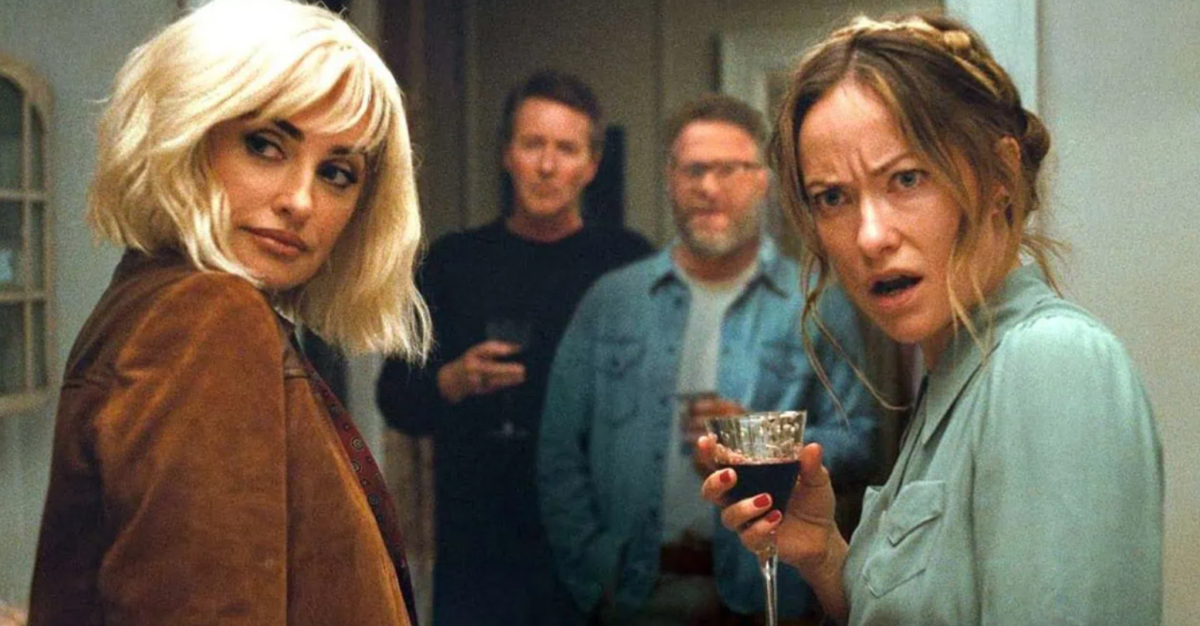
But Piña is much more than just her bisexuality. She is incredibly smart, brimming with self-esteem, insightful (almost painfully), observant, kind, and good about maintaining her own boundaries as well as defending Hawk’s when someone is glib after he shares a painful memory. She also has a whole inner life separate from the crux of the plot, clearly dealing with a past that shows up in her flaws. Piña is coping with middle age through anger and rebellion rather than acceptance. She also doesn’t always have a clear sense of herself — even when she can see others’ problems with the precision of a marksman. She doesn’t have a perfect relationship, either — we see some cracks with Hawk correcting her English in public, but she points out that she never corrects his horrible Spanish except in private. But throughout all of this development, Piña still somehow remains both aspirational and accessible, in part thanks to Cruz’s stellar performance.
Although not as well developed as Piña, I do think it’s fair to say Angela is also bi-curious. Part of the things she mentions she admires about Piña, and why she invited her, is “she is so… so pretty” (said in a flustered way), and clearly has heart eyes for her right up through the second act.
What I Didn’t Like:
I wish Piña used a firmer label than “bi-curious.” I mean, we see her kiss Angela right on the mouth after some light flirting before she heads off to pair with Joe at one point, for God’s sake. Maybe she was using a softer term as she was guiding Joe and Angela through discussing her and Hawk’s poly lifestyle. But the major sticking point for me was that Piña met Hawk when he was her client. That’s a major ethics violation for therapists, as far as I know. Maybe they broke up as patient/client and then started dating, and it’s not discussed, but still… that’s sketchy. It’s not in the line-up of “bad bi” issues we typically see, but it doesn’t exactly go in the win column, either.
The Rating:
With four stellar performances of this quartet of well-rounded characters — including a bi character with hopes, dreams, fears, and flaws — The Invite is indeed one of the all-too-rare movies for grown-ups these days. Sure, there are no lasers or swords, but there are far more cutting things in this world, and The Invite deals with those directly. It reminds me of some of the great human dramedies from the New Hollywood era, and is one of my favorite bi movies of the past few years.