One of the most interesting questions in the science of sexuality is exploring why bisexuality is so common in the animal kingdom. In more than 1,500 animal species, scientists have observed bisexual behavior. By contrast, not a single animal in the wild is exclusively homosexual. The only species found to engage in strictly same-sex behavior were bred by humans: domesticated rams (about 8%). And it’s not just that bisexuality is widespread among animals — for some, including our primate cousins according to a recent study, it’s more common than strict heterosexuality!
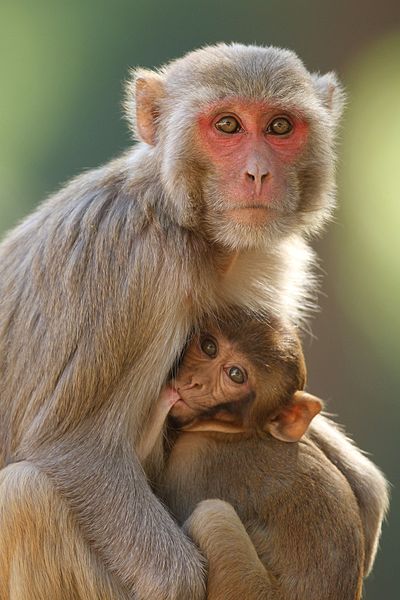
A 2023 study, which was the first long-term look at male same-sex behavior in a single species, researchers at Imperial College London found that 72% of male rhesus macaque monkeys on the Puerto Rican Island of Cayo Santiago had sex with other males! Just as remarkable, all but one were also seen mating with females! In other words, the findings show that nearly three-quarters of these male monkeys are bisexual, giving new meaning to the phrase “swinging both ways.” Only 28% of the macaques were strictly heterosexual. The question is, why?
The scientific explanation for why a specific individual, whether human or animal, is gay or bi, is hard to pinpoint. We know from this monkey study as well as from human research that genes are involved when it comes to bisexuality, but it’s complicated —there is no one “bi gene” that, if inherited and activated, makes someone bisexual. We also know from the work of sex researchers like Lisa Diamond and Fritz Klein that sexuality can be fluid, shifting over the course of people’s lives. The boring answer to almost every “nature vs. nurture” question is usually “both.” But that doesn’t explain why bisexuality arose to begin with and why it has been and continues to be fairly common in nature. It’s easy to see how this could seem baffling to experts and non-experts alike. After all, you don’t need a PhD to figure out that, in a state of nature, two males or two females getting it on in the bushes is never going to result in offspring. So how the hell does bisexuality persist? What is its evolutionary benefit?
The Imperial College London researchers tried to reconcile all of the usual explanations for same-sex behavior. Was it a response to not having enough mates? An adaptation to unusual circumstances? Maybe a way to assert dominance over other members of the group? They found that none of these applied to the macaques. The explanation that did fit their observations was that bisexual behavior was linked to strong bonds, where male partners would have each other’s backs, literally and figuratively. Given the dangers of predators and in-group fights, these bonds provide a clear survival (read: evolutionary) benefit. It turns out, that male monkeys that lay together stay together. More recent research in human genetics has also found a link between male bisexuality and risk-taking behavior that results in having more children compared to males without those genes.
So as society becomes increasingly tolerant, and more and more people continue to come out as bi, don’t be surprised, and don’t assume it’s folks jumping on some kind of trendy bandwagon. Science shows that bisexuality is both natural and beneficial. It makes perfect sense that it’s probably buried in a whole lot more people than we think.