Everything about flamingos is queer in every sense of the term — from their stilt-like stick-thin legs, to their penchant for sleeping while standing on one leg, to their flamboyant neon pink plumage, and their freewheeling bisexual group mating. Flamingos are what you’d get if a Pride Parade came to life as a bird or, more likely, if nature was simply very, very queer.
Just within the past few years, a number of flamingos in same-sex bonds have made international headlines for raising young chicks together in zoos, including in San Diego, USA, and in Paignton, England, where two males, Arthur and Curtis, became proud papas.
“Being in a same-sex pair is a relatively common occurrence in captive flamingos,” biologist Paul Rose told CNN in 2024.
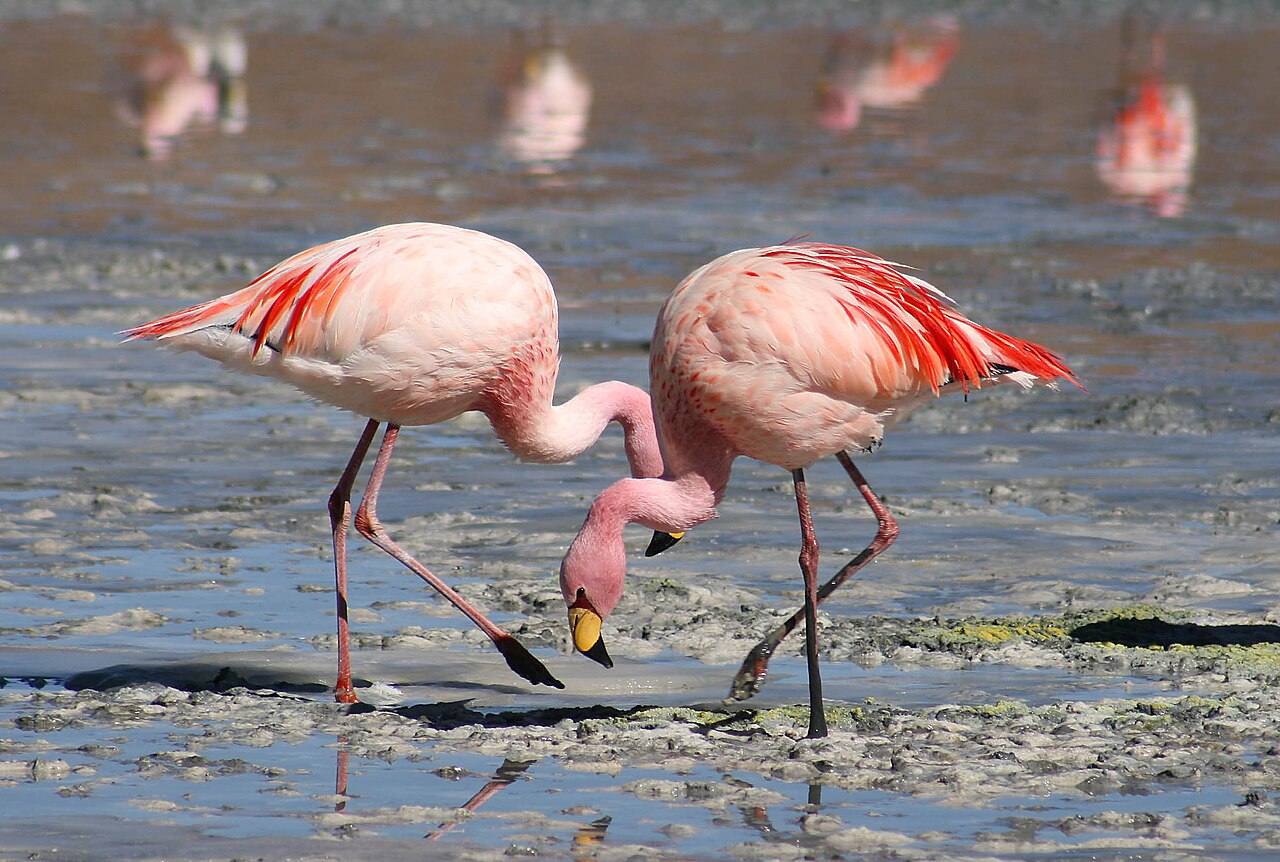
In fact, even in biologist Bruce Bagemihl’s 1999 opus Biological Exuberance, flamingos doing gay things was old news. And it wasn’t just male same-sex pairs raising chicks. As Bagemihl put it, “Males in homosexual pairs sometimes try to mate with females who are themselves in homosexual pairs.” In a Peacock documentary, Queer Planet, scientists explain that as many as 35% of flamingos aren’t in traditional male-female relationships. Discussing his 2006 flamingo mating study in the documentary, ornithologist Martin Stervander said, “It might have been two males pairing up, two females pairing up, two females and a male, two males and a female, or even four of them together.” All they need are some laser lights, EDM music, and mollies to make their own bird Coachella. At the same time, flamingos aren’t always partying — they’re also known to form long-term same-sex bonds.
Researchers note that one reason for the same-sex flamingo behavior we see in captivity is that these populations usually have unbalanced sex ratios. It’s a common explanation that scientists use, at least in part, to account for the same-sex behavior seen across the natural world. But it’s rarely the whole picture. This raises the question: are flamingos also bi in the wild?
The simple answer is that the data is scarce, and we can’t say for sure. Same-sex behavior has yet to be substantially and directly observed outside of captivity, but some indicators have been seen. As Bagemihl wrote:
Although homosexual pairs have not yet been observed in the wild, oversized nests similar to those built by male pairs are found in most colonies and may in fact belong to homosexual pairs (especially considering that most field studies have not systematically and unambiguously determined the sexes of all paired birds).
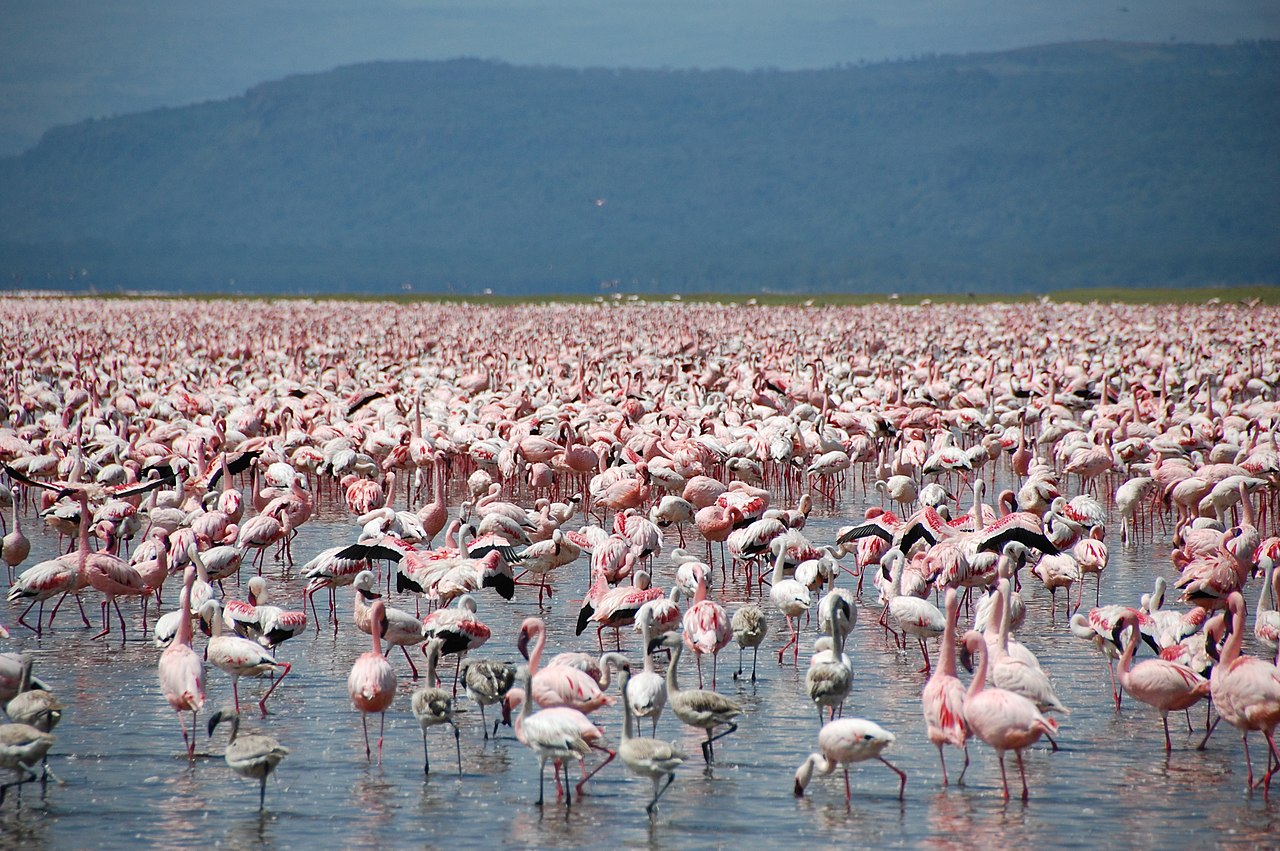
Although Bagemihl’s book is now 26 years old, the state of the research remains much the same. Aside from the fact that telling the males from the females is difficult to determine, flamingos in the wild tend to be studied somewhat less than many other bird species, due to the often remote, harsh, and difficult-to-access places in which they flock. More than that, flamingo behavior can be erratic and downright weird. From Bagemihl:
Breeding in wild Flamingos can be irregular, with entire colonies sometimes forgoing reproduction for three or four years at a time — one colony in France failed to produce chicks for 13 out of 34 years (38% of the time).
Of course, as bi people know, there’s no one way to be bi. Even if it turns out to be the case that nature’s most fabulous hot pink birds are only bi in captivity (which seems unlikely, given what we know of the animal kingdom), that wouldn’t make them any less bi.