Frances Ethel Gumm was born on June 10, 1922, in Grand Rapids, Minnesota. She began her career as a performer in a dance act with her two younger sisters, Mary Jane and Dorothy Virginia. They called themselves “The Gumm Sisters”. After the troupe changed their name to the Garland Sisters (according to some versions of the story, this was because their manager, theater legend George Jessel, remarked that they “looked prettier than a garland of flowers”), Frances changed her name to Judy, probably inspired by a popular Hoagy Carmichael song.
Judy got her first big break in 1935, at the age of thirteen, when she was signed by Metro-Goldwyn-Mayer Studios (MGM). At first, the studio bosses were unsure what to do with her: Garland was too old for traditional children’s roles and too young for adult ones. Her appearance was unconventional by the Hollywood standards of the day: she was short and pear-shaped, while most leading ladies were tall, blonde bombshells with hourglass figures. The studio execs made her wear caps on her teeth and rubber disks to reshape her nose, which fueled her insecurity about her appearance. Charles Waters, who directed Garland in several films, including Easter Parade and Summer Stock, once commented, “She was the ugly duckling … I think it had a very damaging effect on her for a long time. I think it lasted forever, really.”
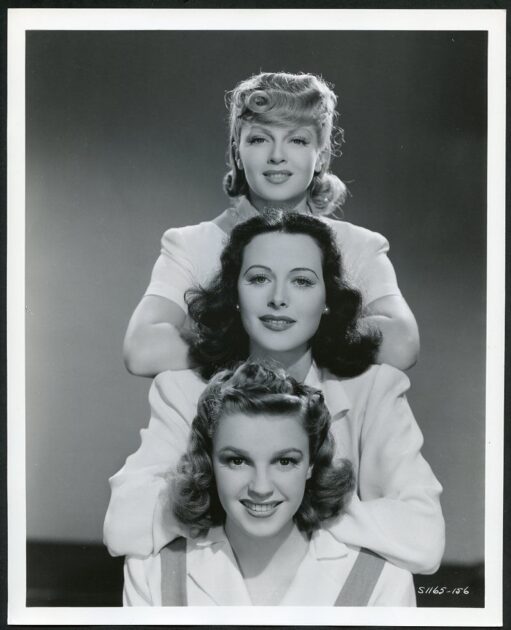
Although MGM helped launch Garland’s career, the mental and physical damage the studio inflicted would haunt her for life. Even though she was at a healthy weight, they put her on a strict diet, feeding her only soup and dosing her with amphetamines to keep her awake during the long hours of filming. Garland had already experienced similar treatment from her own mother, who restricted her eating and made her take diet pills from the age of seven, so she never questioned this behavior, which led to years of addiction and, tragically, to the overdose that killed her in 1969.
In her late teens, Garland had a love affair with jazz clarinetist and bandleader Artie Shaw, Hollywood’s resident bad boy, and was heartbroken when he eloped with Lana Turner. MGM’s head of publicity, Howard Strickling, did not approve and ordered Betty Asher, the sister of the director William Asher, to keep an eye on her. Instead, Garland and Asher not only became very close friends but are rumored to have had an affair. In his book, Judy Garland: The Secret Life of an American Legend, David Shipman reports that Garland and an unnamed woman, probably Asher, “were often seen together in MGM’s Arthur Freed unit, nicknamed ‘the fairy unit’ due to speculation of what occurred there behind closed doors”.
Historian Alan Royle has claimed that Garland “was bisexual and preferred oral sex to intercourse. She preferred women in bed because, in her opinion, they were better at oral sex than men”. Writer Emalie Marthe has speculated that when Garland married gay men Vincente Minnelli and Mark Herron, she was aware of their sexual attraction to men, but, being bisexual herself, she assumed that this homosexual attraction was not exclusive.
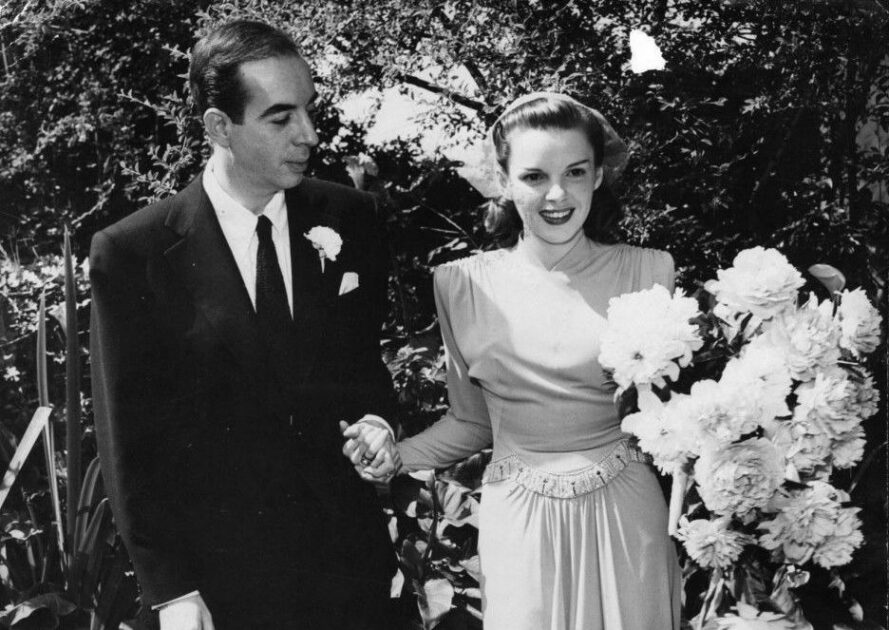
Garland’s turbulent love life often made the headlines. The star married five times. Her first marriage, in 1941, at the age of nineteen, was to composer David Rose. In 1945, just a year after the marriage to Rose ended, she married director Vincente Minnelli, with whom she had a daughter: the actress Liza Minnelli. They divorced in 1951, and in 1952, she married show business mogul Sidney Luft, with whom she had two children: Lorna and Joey. In 1965, she divorced Luft and married actor Mark Herron, and finally, in 1969, she and Herron were divorced, and she married musician Mickey Deans just months before her death. On their wedding day, she told the press,
Finally, finally, I am loved.
Despite her own struggles, Garland was a genuinely loving mother who cared about her children deeply. “One of the biggest misconceptions about my mama is that she didn’t provide me with a happy childhood,” Liza Minnelli told Vogue in 2019. “There were highs and lows for sure, but I can say I was very happy.”
On the basis of the accounts of family and friends and of her often extreme behaviors (drug addiction, suicide attempts, and impulsive decisions), biographer Gerald Clarke has speculated that Garland probably suffered from bipolar disorder. All her life, she searched for a way to overcome her personal turmoil and find peace. As she commented shortly before her death,
I tried my damnedest to believe in the rainbow that I tried to get over and I couldn’t.
But her daughter, Lorna Luft, has cautioned against viewing Garland as a tragic figure. As she told The Guardian in 1999:
We all have tragedies in our lives, but that does not make us tragic. She was funny and she was warm and she was wonderfully gifted. She had great highs and great moments in her career. She also had great moments in her personal life. Yes, we lost her at 47 years old. That was tragic. But she was not a tragic figure.
Garland was an icon for the LGBT community of her time. Many viewers interpreted Dorothy’s journey in The Wizard of Oz as a metaphor for the gay experience. Her personal life was relatable, too. In a 1969 piece for Esquire, William Goldman writes that “Homosexuals tend to identify with suffering. They are a persecuted group, and they understand suffering. And so does Garland. She’s been through the fire and lived.” Ever an advocate for the underdog, Garland loved and supported her LGBT audiences. Luft explains,
She never thought of people as being gay or straight — she thought of them as people.