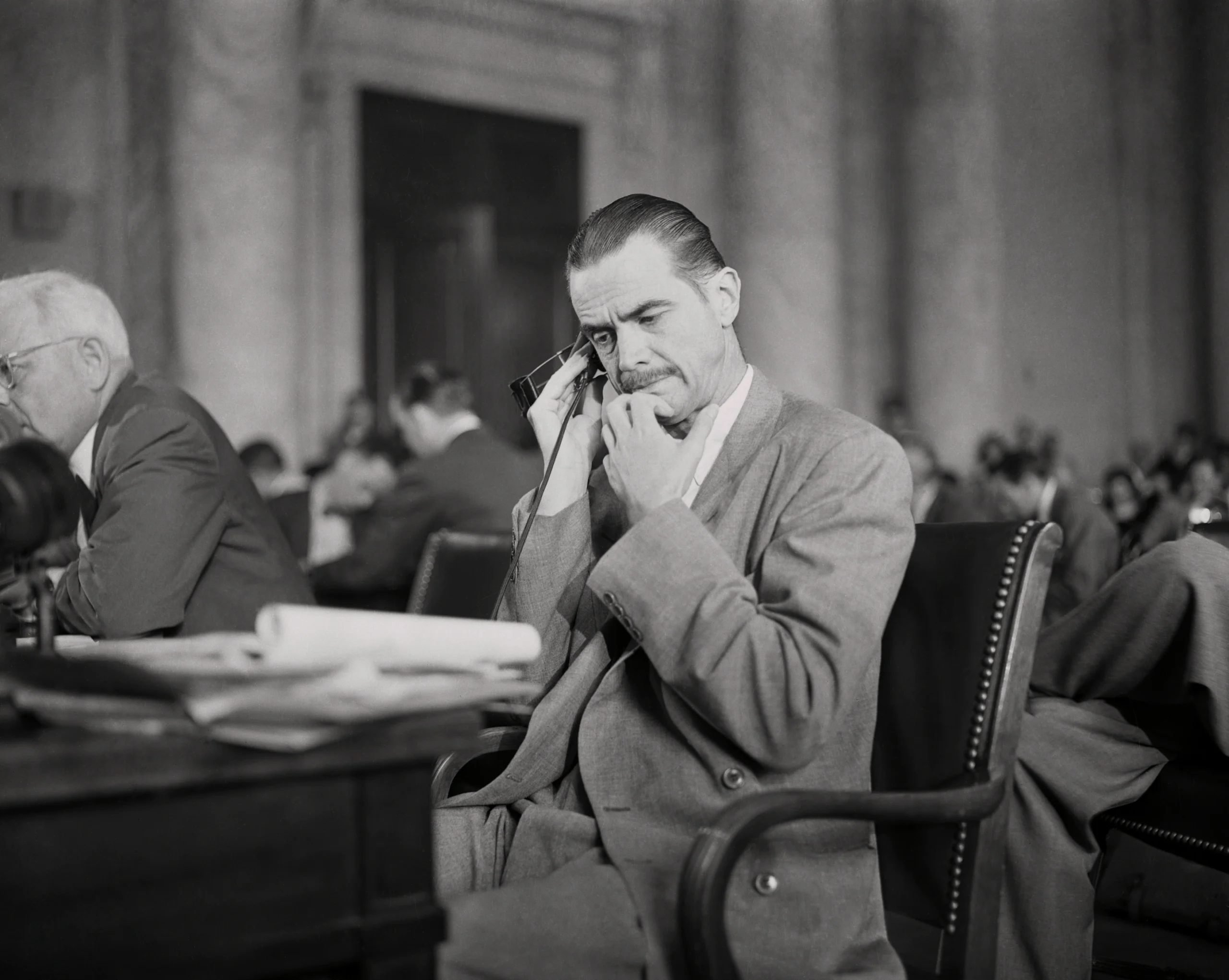
Howard Hughes
Famous BisHoward Robard Hughes Jr. was an American film producer and director, business tycoon, real estate developer, pilot, and engineer.
As a young child, Hughes’s father, Howard R. Hughes, Sr., invented an oil drilling bit whose usage he leased to petroleum companies for enormous sums. During his teenage years, however, both Hughes’s mother and father died two years apart, leaving young Howard, who was studying engineering at Caltech, to run the family’s tool business.
Shortly after, Hughes moved to Hollywood and made a name for himself as a movie producer. He produced such films as Two Arabian Knights (1927), Scarface (1932), and Sky Devils (1932), as well as Hell’s Angels (1930) and The Outlaw (1943), which he directed and produced. His projects, in film as in later endeavors, became characterized by running over time and over budget. The Outlaw, in particular, generated tremendous controversy over the salacious wardrobe of the female love interest, which Hughes rode to box office success. In the late 40s through the mid-50s, Hughes was also an off-and-on investor and owner in RKO Pictures, a major 20th-century film company.
Despite his 20-year sojourn in the movie industry, Hughes never lost his love of engineering and was particularly interested in aviation and aerospace. In 1932, he founded the Hughes Aircraft Company, and in 1935, flying in an airplane he designed himself, Hughes set the world’s landplane speed record of more than 352 miles per hour. In 1938, he flew around the Earth in record time. During World War II, Hughes set his sights on developing military aircraft, but none were completed in time to see action.
Hughes was known to be highly eccentric and reclusive. That, combined with his worsening paranoia, obsessive-compulsive disorder, and other health problems, led him to go into total — and infamous — seclusion in 1950. From his penthouse in Las Vegas’s Desert Inn, which he bought after being told to vacate, Hughes’s life in near-isolation was eventful. He invested in medical research, pursued several business ventures, and purchased vast amounts of land in Las Vegas. Hughes was instrumental in developing Las Vegas from an obscure city run by organized crime into the entertainment metropolis it is today.
In his later years, Hughes became increasingly deranged, rarely dressing himself and letting his hair, beard, and nails grow wildly long. This image of a disheveled Hughes was depicted in Martin Scorsese’s 2004 biopic The Aviator, starring Leonardo DiCaprio. It was also parodied in a 1993 episode of The Simpsons (1989–). Hughes died in 1976 of kidney failure at age 70.
Howard Hughes’s love life was as fascinating as any other aspect of the man. He was married twice, first to socialite Ella Botts Rice and then to actress Jean Peters. Both ended in divorce. As reported in Hughes’ biographies, such as Howard Hughes: The Secret Life (1993) and Howard Hughes, Hell’s Angel: America’s Notorious Bisexual Billionaire (2005), Hughes was bisexual. His affairs included Hollywood actors and actresses such as Bette Davis, Katharine Hepburn, Rita Hayworth, Cary Grant, Gary Cooper, Randolph Scott, and Tyrone Power.
Hughes was awarded the Congressional Gold Medal in 1939 and was inducted into the National Aviation Hall of Fame in 1973.