Fred McFeely Rogers was born in Latrobe, Pennsylvania, in 1928 to James, the president of a brick company, and Nancy, a hospital volunteer who often knitted sweaters that would later appear on his show. While the boy grew up in a brick mansion with a well-to-do family and a sister, Elaine (whom the family adopted when he was young), Rogers had a lonely, isolated childhood. Schoolmates bullied him for being overweight and called him names. He had few friends until he overcame his shyness in high school. In the meantime, introverted little Fred kept to himself at home, taking up the piano at five and often playing with puppets in his room.
In the 2018 biography, The Good Neighbor: The Life and Work of Fred Rogers, author Maxwell King refers to a conversation Rogers had with Dr. William Hirsch, an openly gay friend of his, where he explained that if sexuality was measured on a scale of one to 10:
Well, you know, I must be right smack in the middle. Because I have found women attractive, and I have found men attractive.
Perhaps the television personality wasn’t intimately familiar with the Kinsey Scale, but this self-assessment, in which he acknowledges being attracted to women and men, categorizes Mr. Rogers as bisexual by any definition.
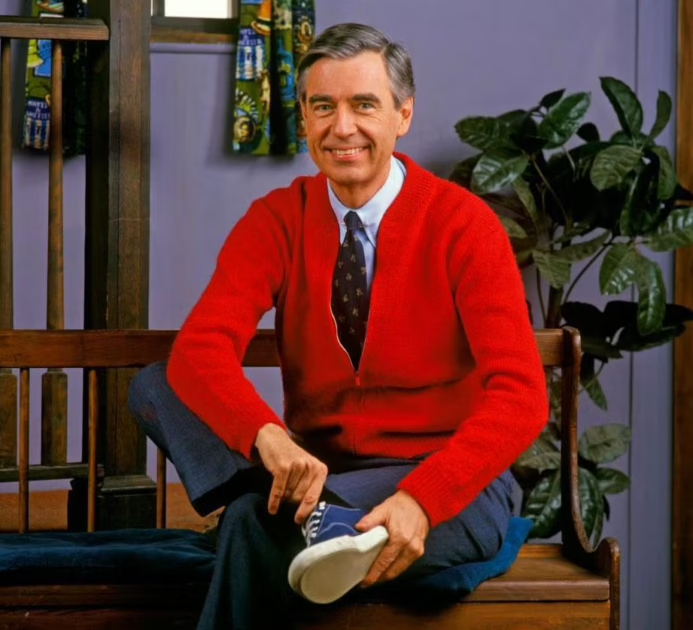
After graduating from high school, Rogers went off to college — first a year at Dartmouth, then finishing his degree with a music composition from Rollins College in Winter Park, Florida. While there are no reports of Rogers engaging in same-sex exploits (and, at any rate, one doesn’t have to prove their bisexuality with experiences — sexual orientation is defined by one’s attractions), Rogers met and soon married Joanne Byrd in 1952, who would be his wife for 50 years until his death.
However, it was one visit home during college that changed the trajectory of Rogers’s life forever. During his senior year at Rollins, he came home and saw the arrival of a television in the family living room. Intrigued by this still-emerging technology, Rogers flipped it on excitedly but was disappointed when he saw most of the shows offered for children’s programming were pie-in-the-face slapstick like The Howdy Doody Show (1947–1960). Convinced that television could offer more as an educational tool, Rogers decided against going to seminary (which had been his plan) and instead pursued a career in television.
It took him a while to find the right fit in the television industry, though. At first, Rogers moved to New York and put in hours working as a floor director on a handful of shows, but commercial production wasn’t quite what he was looking for. Not losing faith, Rogers moved back to Pennsylvania and settled in Pittsburgh. He landed at WQED, a community-funded public education station where he started work as a program director in children’s programming. Rogers was content to work behind the scenes, continuing his childhood hobby of building and bringing life to puppets, as well as composing music for The Children’s Corner (1955–1961). It was during this time that Rogers also went back to studying religion, attending Pittsburgh Theological Seminary, and eventually becoming ordained as a Presbyterian minister.
After several years working on programs in Toronto (sometimes on camera), the head of children’s programming noticed how attentively Rogers engaged with children and encouraged him to develop his own program. Even though he had a solid setup with Canadian programming at the CBC, Rogers returned to Pittsburgh with his family (now including two sons) and developed a concept with his old friends at WQED.
That was how, in 1968, Mister Rogers’ Neighborhood was born.
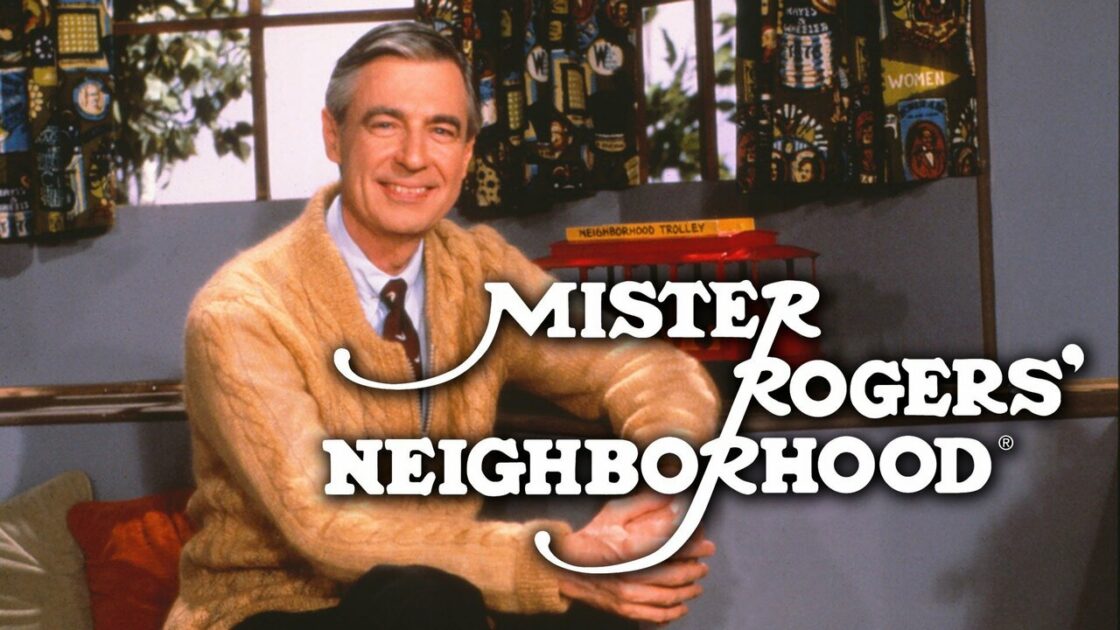
Rogers worked closely with his friend from seminary, child psychologist Margaret McFarland, focusing the program on the emotional needs and growth of preschool children and how to handle the many trials and tribulations of growing up. The host covered everything from divorce to dealing with a newborn sibling to smaller subjects like pets and joining a new school. Rogers’ approach to validation of kids’ feelings and managing emotions flowed seamlessly into his production style — a slow pace, gentle voice, and reliable programming structure with a kind and approachable demeanor. Rogers was involved in every facet of decision-making on the program — including writing, editing, song composition, puppeteering, hosting, singing, and producing.
Mister Rogers’ Neighborhood got picked up and distributed nationally on the then-new Public Broadcasting System (PBS). But it was not smooth sailing for the program, even out of the gate. The nascent PBS itself came into jeopardy. In 1969, Congress was deciding whether to give $20 million to PBS or to cut that funding in half. After two days of Senate hearings, Rogers was asked to speak in defense of the new program and the importance of shows like his in contributing to children’s mental health.
At the end of the speech, Senator John Pastore, who was initially skeptical, found himself moved and expressed admiration. PBS got its necessary funding. Mister Rogers didn’t just win the hearts and minds of tens of millions of kids; he marched into Washington and won over some of the most powerful people in the world — a feat as impressive as it was heroic.
Other than a brief hiatus to focus on adult programming, Rogers continued to produce and host Mister Rogers’ Neighborhood for decades, receiving worldwide acclaim and popularity for his gentle but affirming programming for children. He received a Peabody Award for his work, as well as induction into the Television Hall of Fame. Throughout his life, Rogers was given dozens of honorary degrees and was one of the most sought-after commencement speakers at colleges around the US.
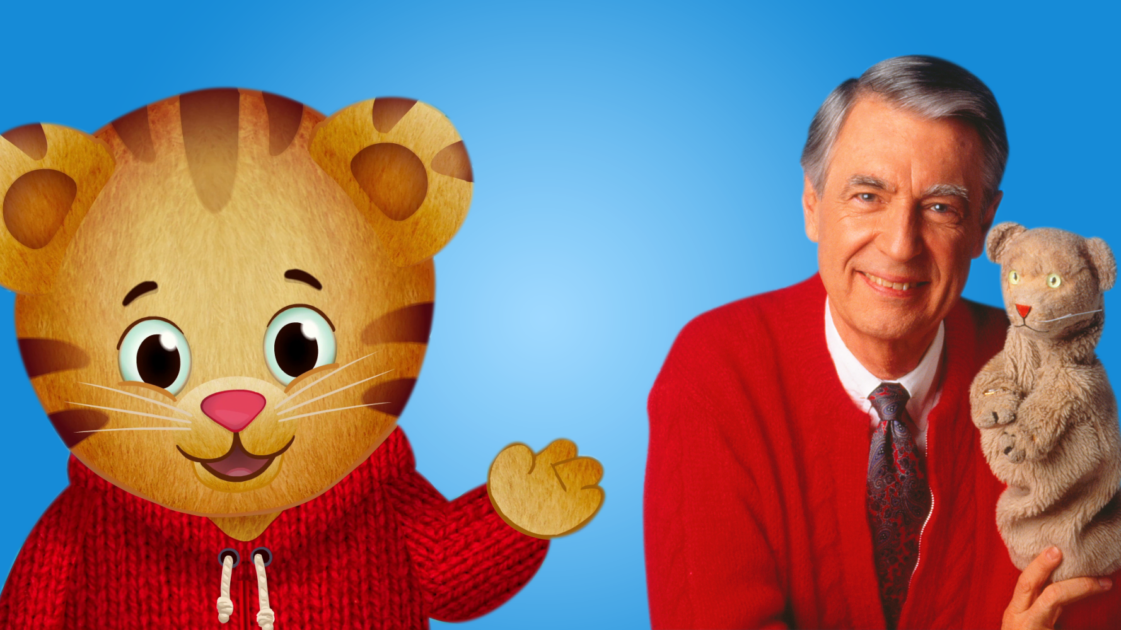
While Rogers sadly passed away from stomach cancer in 2002, his death was mourned globally in newspapers and other media, and his legacy lives on. His trademark red zipper sweater is now part of the permanent collection at the Smithsonian, and his show can still be seen in syndicated reruns decades after it left the air.
The legacy of his show continues to reach new generations of children. In 2012, PBS Kids introduced the animated series Daniel Tiger’s Neighborhood, inspired by the original program and featuring four-year-old Daniel Tiger — the son of Daniel Striped Tiger — sporting Mr. Rogers’ iconic red zipper sweater.
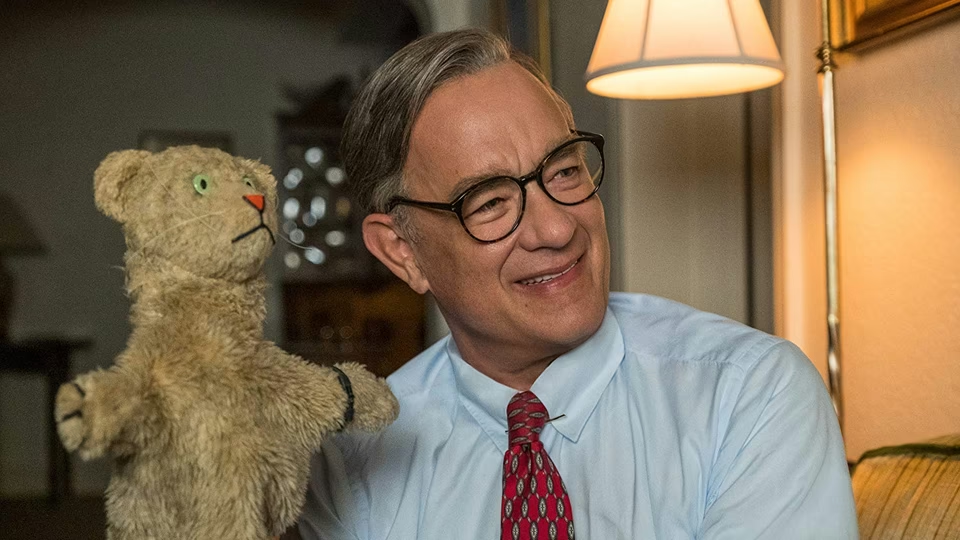
Rogers’s life and work have not only inspired a well-regarded documentary on his life, Won’t You Be My Neighbor? (2018), but also the 2019 biopic A Beautiful Day in the Neighborhood, starring Tom Hanks, who earned an Oscar nomination for his portrayal of Mr. Rogers.
With his gentle demeanor and passion for children’s emotional education, Rogers was a pioneer in public television, an educator in his own right — and a bi man who changed the world, one zip-up sweater at a time.