“Habits (Stay High)” (2014) is a dark pop manifesto by Swedish artist Tove Lo, laying bare the self-destructive spiral of post-breakup escapism. The three-and-a-half-minute track follows its narrator through substance abuse, reckless sex, careless eating, as she’s trapped in a Dionysian haze to mute heartache. In the music video, Lo alternates between performing in a silver lamé jacket and embodying the protagonist on a black nylon top, her light brown hair framing scenes of visceral spiraling.
The lyrics chart a refusal to grieve: “You’re gone and I gotta stay high/all the time to keep you off my mind”. Lo’s narrator drowns in “play-pretend”, which notes the immaturity of these extreme and often reckless outlets, instead of facing her pain. Although the track never specifies the ex’s gender, Lo herself has noted that the song reflects some of her own emotional experiences. In a 2014 Untitled Magazine interview, she defended her raw honesty:
A ton of people do drugs, but don’t necessarily admit to it. There’s definitely a taboo about actually admitting to doing them, versus what everyone does behind closed doors. So, the fact that you were open about that, some people might consider that a bit controversial.
[Lo:] That’s true. Well, it’s way easier for me to sing about things than to talk about things. I’ll say something in a song, and then people will confront me about it. I’ll be like, “Well, just listen to the song”, because it is harder for me to talk about it. All I can say is that I’m always going to be honest and upfront in my music. Some people are going to be offended and some people are going to relate, and I think that’s just how it’s going to be.
The music video amplifies this duality, splicing extreme close-ups of Lo snorting pills, binging on junk food, and entangled with strangers — both men and women — between shots of her singing directly to the camera. The dalliances include Lo starting off the video waking up first from a group sex scene in someone’s living room, and her making out with both men and women in clubs and cabs. We follow along from Lo waking up from the aftermath of one bender and going through the ups and downs of another reckless bender before collapsing onto her bed, likely to start the whole cycle again the next day.
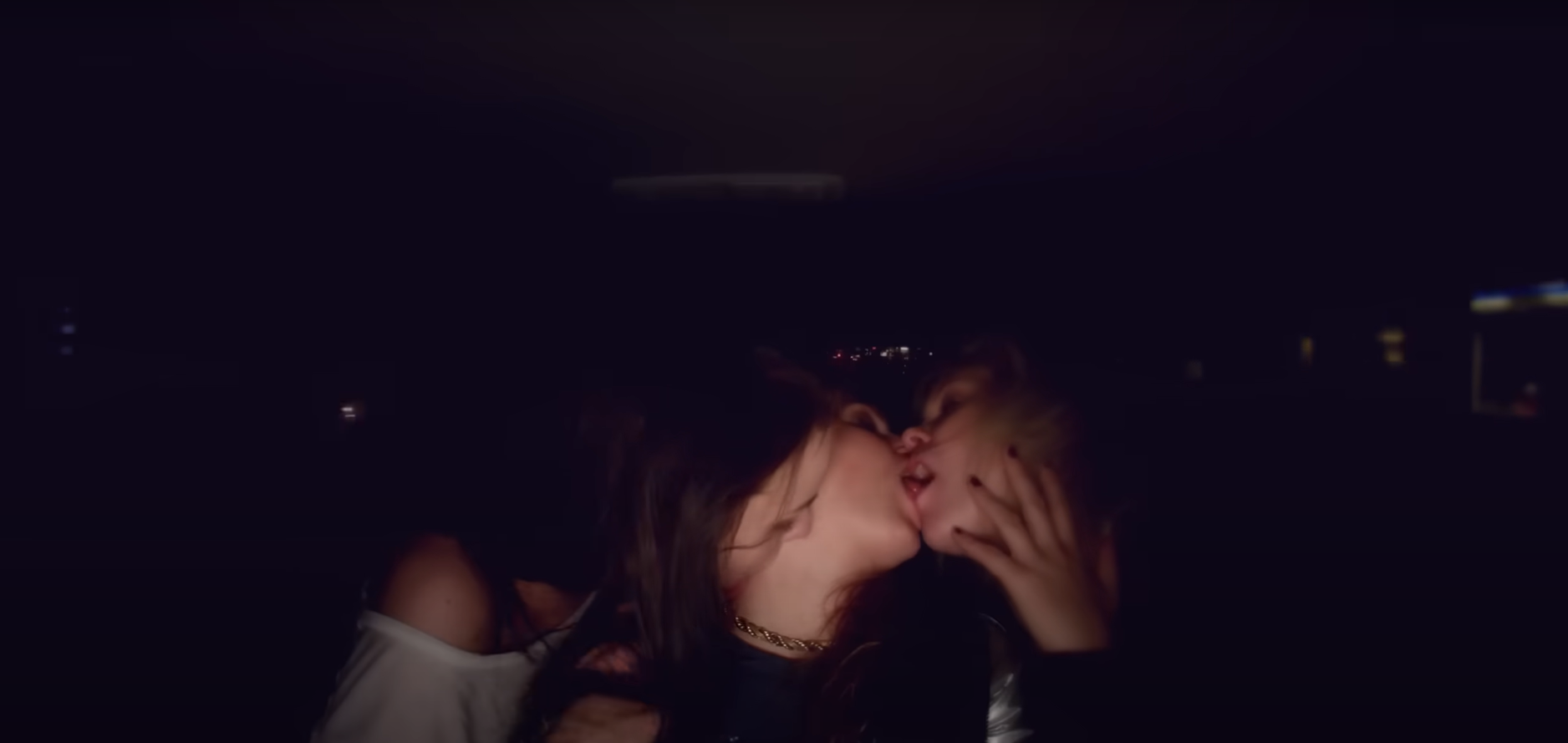
Initial accusations of queerbaiting (given the same-sex scenes) ignored Lo’s decade-long openness about her bisexuality. Her 2018 Billboard Pride letter clarified:
I’m a bisexual woman, who grew up in liberal Sweden with very liberal parents. I was lucky. I always felt free to explore my sexuality as little or as much as I wanted. Heterosexuality was still the norm around me, so I remember when I first thought, “I look at girls a lot too, not just boys”. I remember the first time I made out with a girlfriend. I remember fantasizing about girls. I remember the first time I had sex with a girl. I never came out to my parents or my friends. I just kinda did what I wanted with whomever I wanted. I always felt different (for various reasons), but I never felt ashamed or guilty or like there was something “wrong” with me. Like I said, I was lucky… The support I have gotten from the [LGBT] community has meant the world to me. Every show I play, every time someone throws a rainbow flag up on stage, I pick it up, I wave it around and the whole crowd cheers so loudly I cannot even hear the music anymore — I feel freer than ever. I thank you for that.
Lo has also gone on the record about the queer erasure she has to fight since she has entered into a marriage with her partner, Charlie Twaddle, in 2020. She has also discussed in other interviews how her sexuality is fluid.
With 500 million YouTube views, more than a billion for the Hippie Sabotage Remix, and a staggering billion Spotify streams, “Habits” endures as Lo’s greatest hit. While its lyrics never say “bi,” Lo’s identity and the video’s unapologetic queer scenes cement its status as vital bi representation —a portrait of grief where gender matters less than the ache itself.