Scott Pilgrim vs. the World (2010) is a romantic-comedy based on a comic of the same name written by Bryan Lee O’Malley. The full-length cult film stars Michael Cera as Scott, a Canadian 20-something bassist who becomes enamored of an American girl named Ramona Flowers (Mary Elizabeth Winstead). However, as the two get more involved, Scott discovers that in order for the two of them to be together, he must first defeat her seven evil exes. The film also features the bi actor Aubrey Plaza in a supporting role.
This entry will focus on Ramona, whose clothes have an alternative, 2010s hipster bent to them (Doc Martens, black tights, skirts, jackets, etc) and a bob haircut whose color runs the gamut of the rainbow throughout the film.
Ramona is a fascinating and frustrating example of bi-character in the 2010s. We clearly see her eventual attraction to Scott (though he does have to wear her down a bit) and that most of her evil exes are men. Though the film is now dated, she still has a lot of charisma and style (such as her fashion-forward look and Winstead’s natural charisma). It’s good to see Ramona continuously stand up for her queerness, correcting Scott whenever he tries to assume all of her exes were men.
At the time of its release, there was very little bi representation in film and television, so it makes sense why a large generation of youth would glom onto Ramona as a role model of queer coolness. However, looking back many years later, her bisexuality is paper-thin at best — and the film attacks it from every possible direction. Ramona is even dismissive of her own queerness, calling it a “phase.” Scott interprets it as a “sexy phase”, not a legitimate part of her sexuality. The list goes on. It’s worth noting that, thankfully, the original comics do a better job of portraying bisexuality, and with more characters, than what ends up on the celluloid.
All of that said, Scott Pilgrim remains an entertaining movie. Ramona is funny and cool, gets some good fight scenes, and eventually grows a spine to defend herself. So, the film is not without its merits. And it is, after all, a satire of video games and anime, so we can’t take it too seriously.
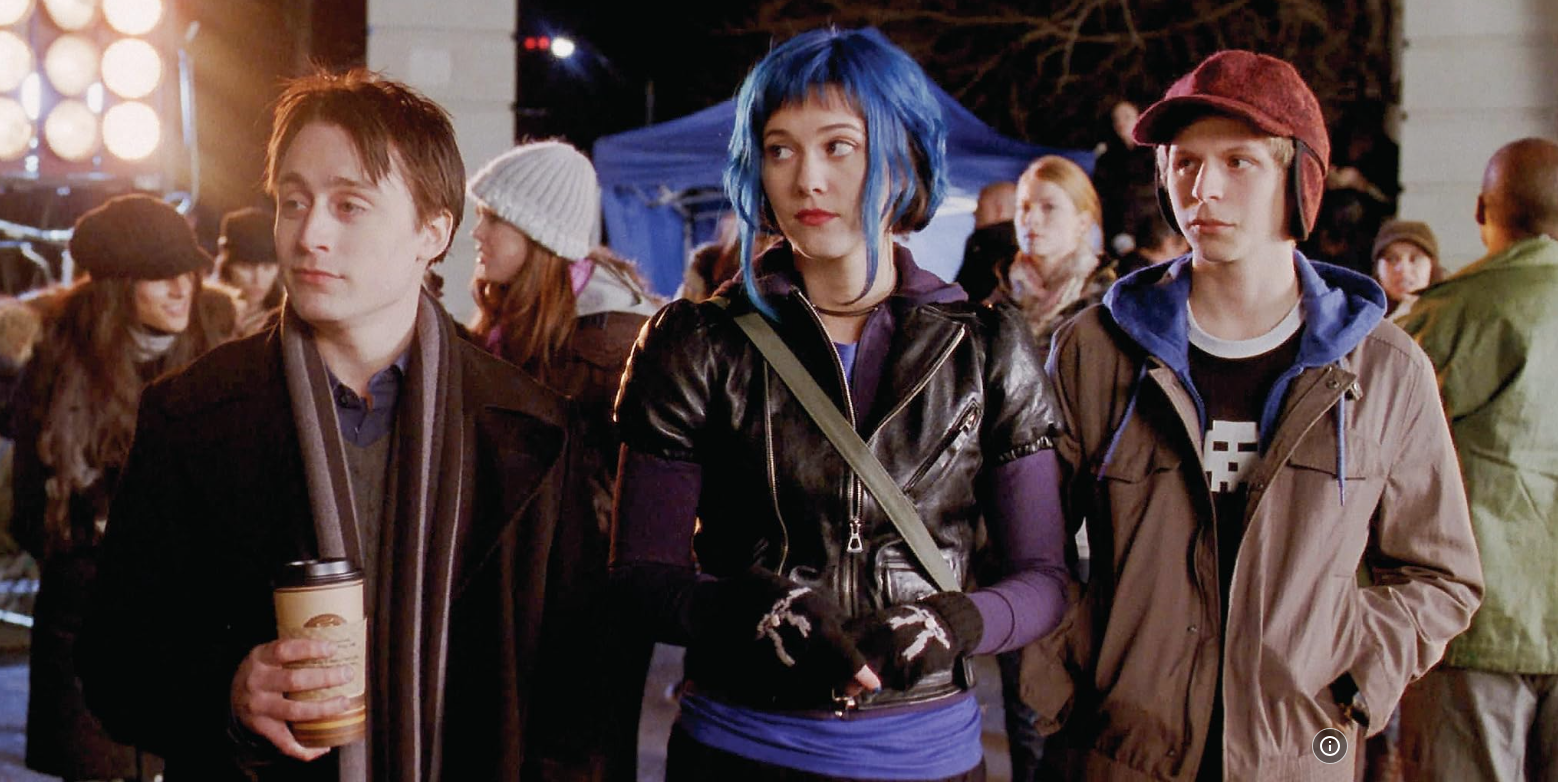
Is Scott Pilgrim vs. the World a great example of bi representation in film? Not at all. But it does serve as a good bridging piece between the broad stereotypes that started up in the 2000s and the more nuanced characters that emerged in the mid-2010s. Plus, it’s just fun. Give it a go, don’t take too much umbrage — just note that it’s a product of its time and enjoy it for what it is.