Eve Polastri is the eponymous protagonist of BBC America’s Killing Eve, adapted from Luke Jennings’ Villanelle novels and brought to life by Sandra Oh’s groundbreaking performance. As a brilliant, ambitious MI5 officer (later MI6 consultant) of Korean American heritage, Eve possesses an almost supernatural ability to profile criminals —a skill that becomes dangerously personal when she fixates on Villanelle (Jodie Comer), the unpredictable assassin whose murders blend artistry with brutality.
Though married to sweet but conventional schoolteacher Niko (Owen McDonnell), Eve has an uncontrollable fascination with Villanelle, with at times erotic tension — from analyzing the assassin’s perfume in crime scenes to their charged physical confrontations. Her attraction to Villanelle appears to be like a mirror reflecting her own suppressed volatility.
Although Eve is neither indecisive nor defined solely by her desires. If anything, Sandra Oh’s Golden Globe win (the first for an Asian American actress, in 2019) underscores how Eve’s identity intersections elevate the role. Whether dissecting a corpse or dancing alone to Cry Baby, she’s wholly realized: flawed, funny, and ferociously human.
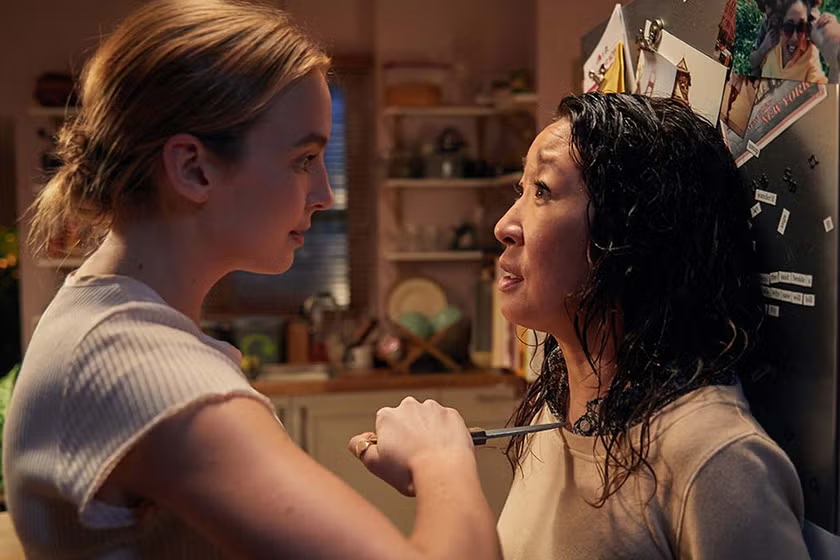
Crucially, the show avoids fetishizing her queerness. While Villanelle sends Eve designer dresses as twisted love letters, their most intimate moments are psychological, like Eve masturbating while listening to Villanelle’s voice via earbud, or their knife fight that veers into near-kiss territory. This restraint makes Eve’s bisexuality feel authentic.
By the series’ end, Eve’s journey — from rule-follower to someone who wants to understand how people work, even if it means taking them apart — solidifies her as one of television’s most compelling queer antiheroes. Her relationship with Villanelle isn’t a “phase” but a transformative force, something that takes over her whole life and leads her to face her own darkness, challenging audiences to sit with the discomfort that love and violence can ultimately coexist.