Hello my lovely readers one and all! To those who are new: welcome! And to those who are returning — welcome back! I made some tea for you; the pot’s just around the corner. Don’t worry, newbies, I’m just joking! There’s enough tea for everyone. I got some decaf for you, too, Janet. Trust me, you need it.
Readers, I’ve always been an insatiable student with a diaspora of interests. And something I learned about myself and my study habits is when I either wasn’t supposed to study a subject or didn’t need to, that always left me all the more fascinated with it and rabid for knowledge on the matter. (Kind of like kids and banned books, right?) To point: When I was going to city college, my state’s requirements for the first two years of general education in order for me to successfully transfer to a state college or private university had a few different paths to get there. The one I chose, coincidentally, my advisor pointed out would not require me to take any classes on art history, philosophy, or psychology. I was fine with it at the time, but ever since then I’ve become riveted with finding out some of the basics of those subjects. As such, things like my TikTok “For You” page are riddles with accounts by art historians and therapists offering information and tools of their trades.
I guess this is a long-winded way of saying I’m not an expert on the subject of today’s film, Caravaggio. I don’t know how historically accurate much of the plot is. But what I am an expert on is queer representation in media. So when someone in a queer support group mentioned this one to me, I knew I had to give it a looksie!
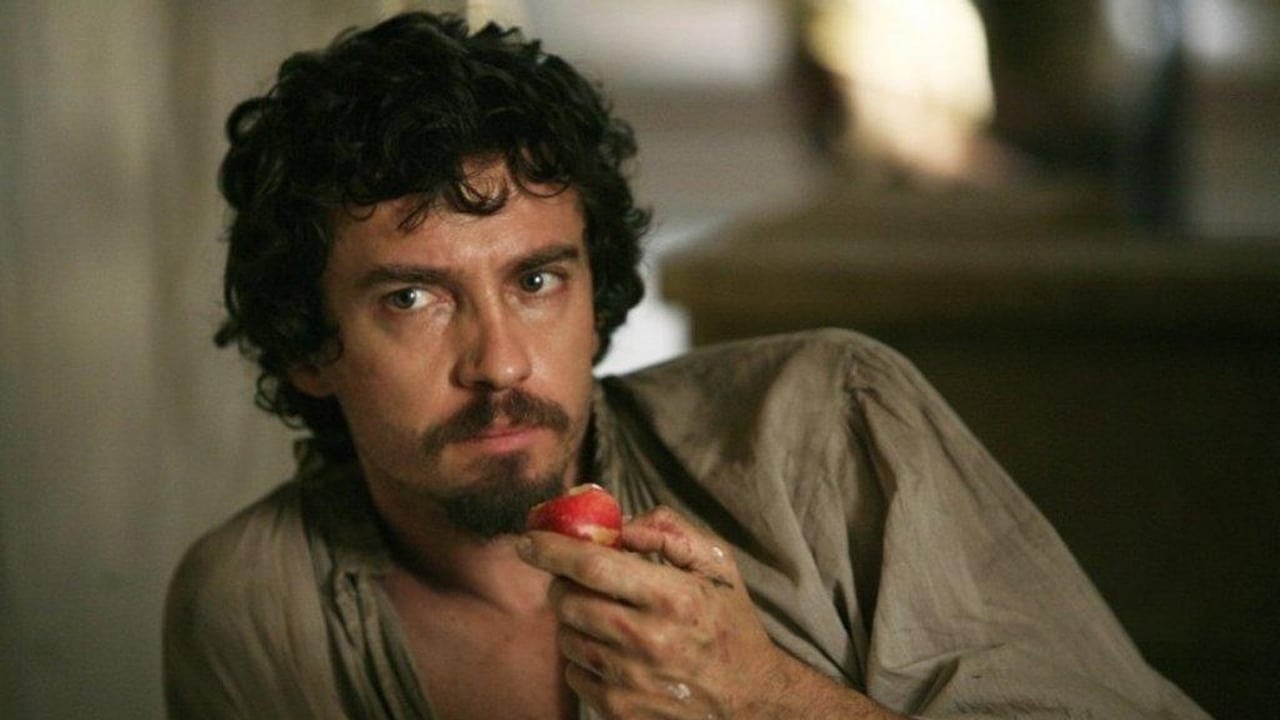
Before I dive into my analysis, I should go over a few disclaimers. First and foremost, this review will contain SPOILERS for the 1986 historical drama. Second, I should note a few content warnings: murder, blood, violence, and implied child molestation by a cleric in the Catholic church. Finally, if this is your first time around here, I highly recommend you take a look at our metric here LINK so you’ll know what we’re discussing as far as the level of bi representation.
Got it? Huzzah. Now let’s grab our paints and get going. (Watch out for the ones mixed with lead, though. Nasty way to go.)
Caravaggio is an art-house drama focusing on the life and works of Merisi Caravaggio (Nigel Terry), a temperamental but exquisite Italian painter during the Baroque movement around the turn of the 17th century in Rome. Known for his irascibility as much as his daring and dramatic work, writer/director Derek Jarman’s portrayal uses the artist’s mysterious death as a framework for his reflection on the events of his sordid and fascinating life.
What I Liked:
The film wastes no time establishing and establishing Caravaggio’s time as a youth as a sex worker — and not judging him for it or what he needed to do to survive. I appreciate that because this is a sex-positive column, and that includes the work and tribulations of sex workers past and present. In fact, the main hustler scene in question brought to mind Cardi B (#Bi2) and her famous story of how she needed to escape previous clients during her past as an exotic dancer.
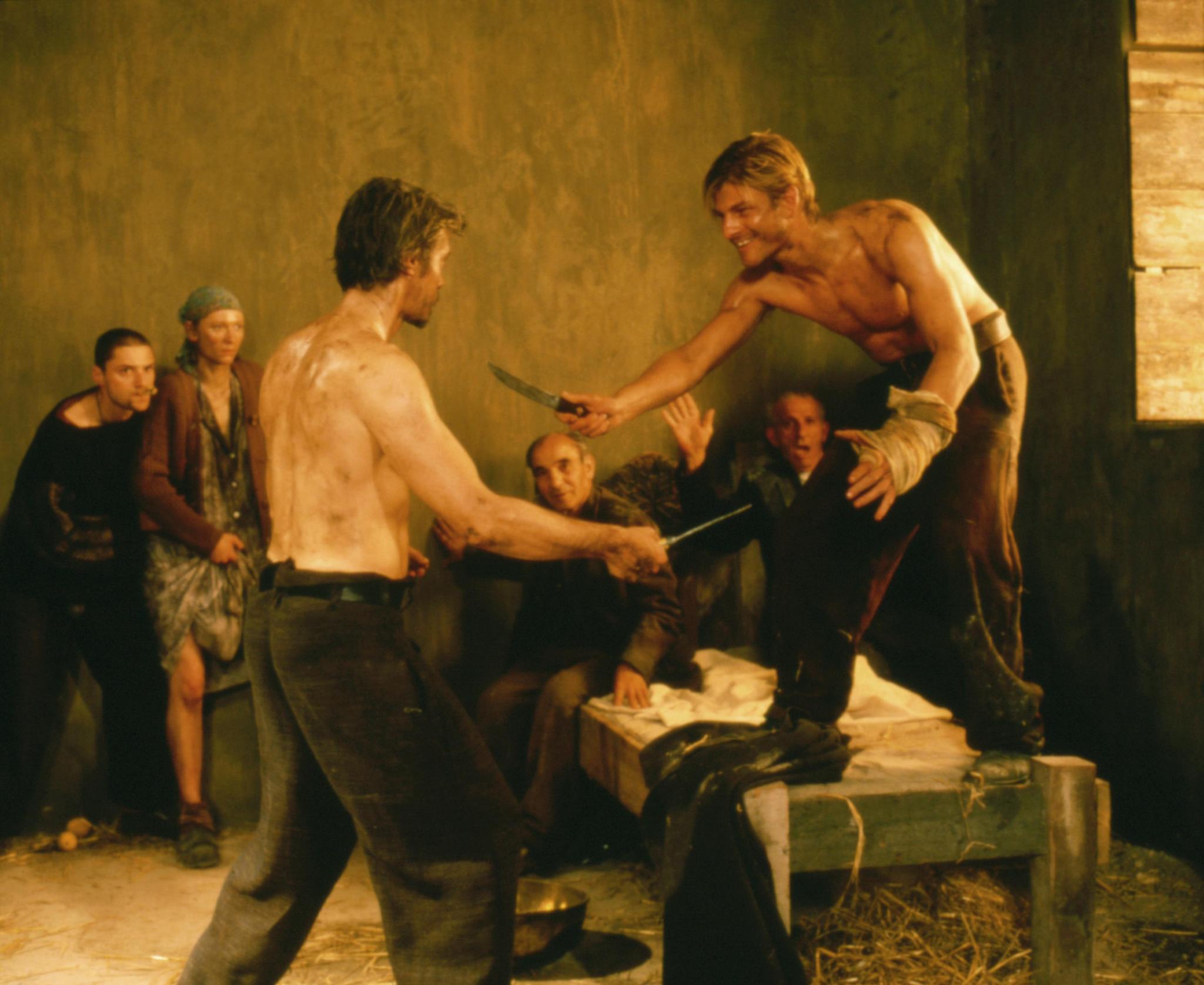
I also appreciated the power of the queer gaze felt throughout the film. It’s clear from the second act on that Caravaggio feels sexual attraction to street fighter (and his future model), Ranuccio (Sean Bean in his film debut) — so much so that his childhood friend comments on how hard he’s staring at him in public and that he thinks that will lead to a sexual encounter. But Jarman also makes sure to pay equal attention to the painter’s attraction to Lena (Tilda Swinton, also in her cinematic debut here), a sex worker and partner of Ranuccio. But the buck doesn’t stop there — in the narrative, it’s made clear that queer jealousy is running through Ranuccio as he sees Caravaggio engage with Lena as both model and lover. So the fact that we get not one, but two bi+ lead male characters is a real treat — and a rarity in much of 1980s cinema.
What I Didn’t Like:
Unfortunately, while the writer/director works hard to establish the moody nuances of the title character, Jarman twists the story so that in the final act we discover that Ranuccio both murdered Lena and used Caravaggio and his connections with the Pope in order to get his release. He may claim he did this all for his romantic love for Merisi, but it does make him fall into the bi villain trope that we all know and hate around here. And apparently, while Caravaggio was, indeed, accused of murdering Ranuccio in real life, debate still rages over whether it was over a bet or due to jealousy. It seems like the Baroque painter had more than enough drama going on in his actual life that we did not necessarily need to twist this dramatization into the story.
The Rating:
Queer gazes as far as the eye can see? I’m here for it. A detailed examination of one of the most pivotal painters in Western art? I’m here for that, too. But stereotypical bi murdering characters? Man, I know it was the ‘80s and there were certain obstacles in the way, but it was disappointing to watch that reveal.