Everybody has a Goth phase. Whether it’s a full cape-and-ankh, Bauhaus-loving, living like a vampire period, or just dabbling in Anne Rice and Wicca for a semester, everybody goes through some sort of period of time where darkness, creepy stuff, and eeee-vil, to quote Mermaid Man, appeals to them. For me, Joss Whedon’s Buffy the Vampire Slayer (1997–2003), based on his original concept for a cult 1992 movie with Kirsty Swanson and Donald Sutherland (and Pee-Wee Herman!) was kind of a late addition to my goth phase.
Buffy follows Buffy Summers, played by Sarah Michelle Gellar, a young cheerleader and stereotypical horror movie victim, who discovers that she is, in fact, the Slayer, the once-in-a-generation Chosen One entrusted to battle vampires and the forces of darkness that plague our world. Lucky for her (from a certain perspective), her town is situated on a Hellmouth, so demons and vampires and other creepy-crawly whatnots are a normal feature, alongside Spanish roofs and beach access.
From here on out there will be SPOILERS for several seasons of the show. If you are unfamiliar with our rating system, be sure to check out the original article here.
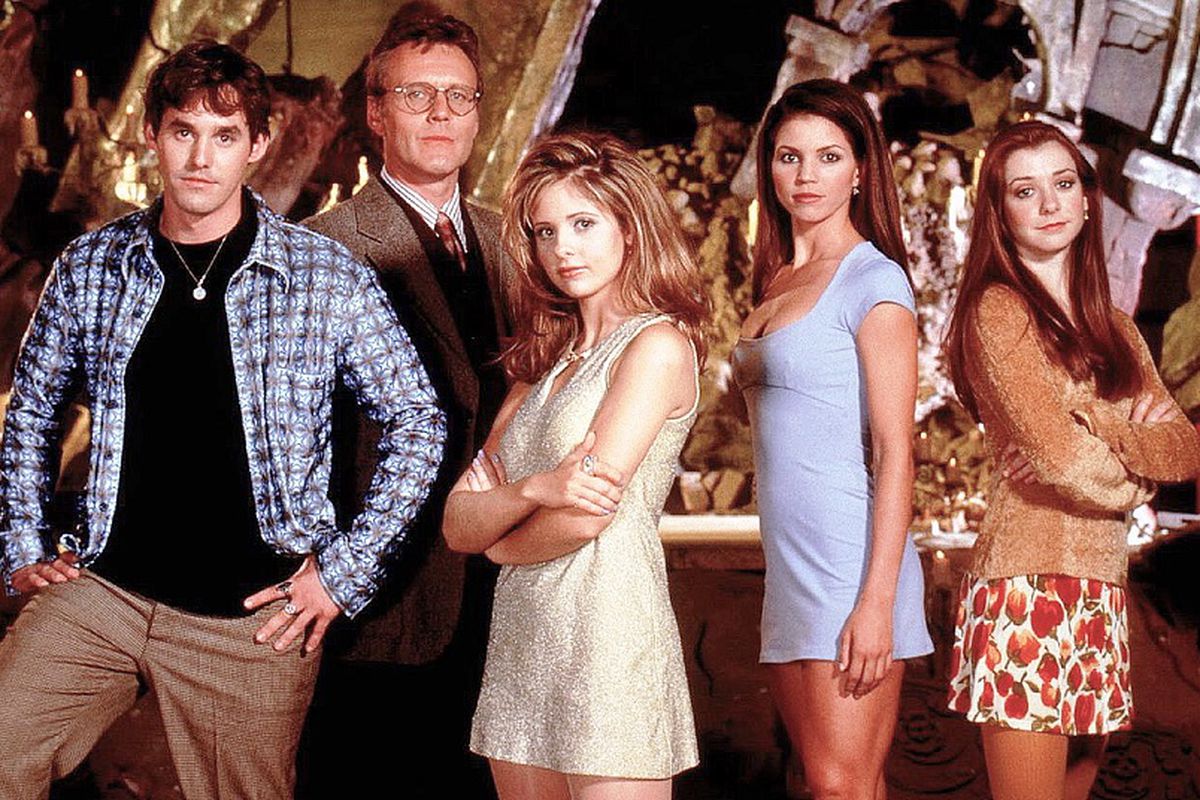
Here’s the thing: we aren’t (necessarily) here to talk about Buffy. She’s great and all, but the main focus of this article is the character I consider to be the real hero’s journey of the series, that of young apprentice witch Willow Rosenberg, (Alyson Hannigan). Willow is introduced as the Scooby Gang’s (the name they give themselves) resident Velma — nerdy, awkward, ridiculously computer savvy, and smart. She falls in love with the moody, guitar-playing werewolf Oz (Seth Green) and becomes interested in magic while trying to help Buffy’s vampire boyfriend get his soul back. Did I mention this was basically a paranormal soap opera?
Eventually, Willow and Oz break up, and her college Wicca group introduces her to Tara, a quiet, possibly demonic lesbian witch. They fall, first tentatively, then madly in love. It’s remarkably progressive for a 90s CW show to be so queer-positive. With only a few “Huh?” moments from her friends before Tara is accepted as a new Scooby, no different from Xander’s (Nicholas Brendon) demon lover Anya (Emma Caulfield Ford), or any of Buffy’s revolving door of hunky, broody boyfriends.
What I Liked:
The show is a lot of fun to watch. For those of us who grew up in the 90s–00s, there’s a lot of nostalgic slang, decent music, and… passable acting. More important though, queerness is consistently shown in a positive light throughout the series. Aside from Willow and Tara, we also are given the gift of season four, which prominently features a new Slayer. Death and resurrection are a fairly common device on this show. You come to accept it, like the tides, or awkward slang coming out of the mouths of 20-something “teenagers” on a basic cable soap opera.
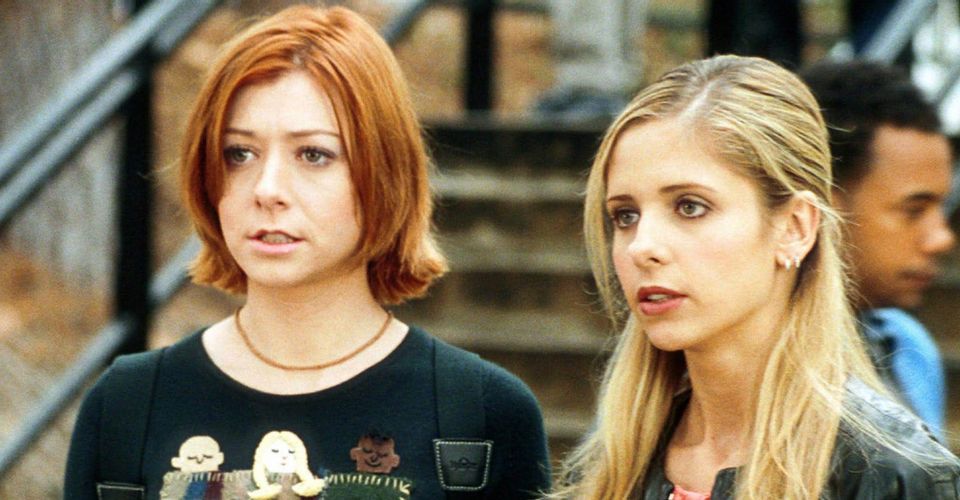
Faith. Faith is the diametric opposite of Buffy’s squeaky-clean badass. She’s all leather and menace to Buffy’s helpful cheerleader. The bi energy that comes off of Faith is practically its own character, and she and Buffy’s interactions have a strong queer subtext that is truly something to behold. Aside from that, watching Willow come into her own as a witch and person alike, capable of decisiveness and nurturing an abiding love for Tara, is truly empowering to watch. The way the end of Tara and Willow’s relationship is handled also shows a lot of sensitivity for such then-taboo subject matter.
Queer kids should certainly see themselves in Willow, or Tara, or Xander, or someone in the show’s cast. The inclusiveness is what initially drew me to the series, and what kept me going through some of the earlier, less-than-stellar episodes.
What I Didn’t Like:
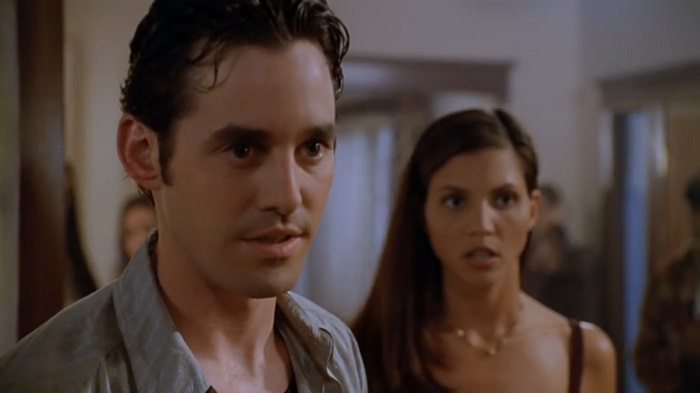
For all of my previous trumpeting about inclusion and openness and all that, this is still a teen show from the 90s. So, it has a tendency to fall into certain patterns. For example, there’s a bit of gay panic, especially in the early episodes dealing with characters like Xander, the sensitive, slightly jock-y, but pretty nerdy Scooby. This same thing happens with Spike, a blond, British vamp who is sort of a Billy Idol caricature, and eventually Buffy’s second vampire boy-toy. The vampirism-as-disease trope is sometimes a little tired, and the writing is sometimes not great.
And don’t get me started on the “suddenly Buffy has a little sister” plotline in season five. Also, given the allegations that have surfaced in recent years about creator and showrunner Joss Whedon being abusive on set, that could tinge how some folks see the show. But if one can separate the art from the artist, the series still has value as some people’s introduction to bi-ness (myself, for instance), and as a fun and goofy show in its own right.
The Rating:
While Joss Whedon’s extracurricular activities and onset behaviors have tarnished his reputation, the overall quality and impact of the show that made him famous remains. Remarkably open-minded and progressive, while still being a slightly cringey time capsule of its era, Buffy has a lot to offer newbies and repeat watchers, and did some solid work to normalize queer characterizations on television.