The other night, my mom was visiting, and I was looking for a movie to stream with her. We landed on Arthur’s Whisky (2024) because the trailer looked cute, and the cast featured actresses from her generation — and, as a 90s kid, I felt a little nostalgic seeing names like Patricia Hodge, Diane Keaton, and Lulu pop up.
Arthur’s Whisky is a whimsical British comedy about three older women who discover that drinking the titular whisky temporarily restores their youth. What starts as a mischievous romp quickly becomes a reflection on life choices, regrets, and second chances.
Along the way, the movie also includes some sweet, understated bisexual representation through the character of Joan, played by Patricia Hodge. As the friends relive their youth, literally and figuratively, Joan opens up about her first love and the path she might have taken if the world had been more accepting.
If you’re new to our Unicorn Scale, you can learn more about it here. Fair warning: there will be a few SPOILERS about this movie ahead. For a quick overview, check out our Bi Media Entry about it as well.
What I Liked:
The movie thoughtfully explores memory and possibility as the women revisit their past decisions, and Joan’s bisexuality is woven into the story in an organic, refreshing way. It never feels forced, preachy, or shoehorned in. Instead, Joan’s reflection about a woman she once loved arises naturally from the friends’ conversations about marriage, regret, and lost opportunities.
One of the friends, Patsy (played by Lulu), confesses that she never married because she fell for a man who turned out to be married himself, leaving her heartbroken. The other two reassure her she didn’t miss out on much. Then Linda (played by Diane Keaton), who married a man she didn’t even particularly like, jokes that at least Joan’s late husband, Arthur, was a good man. This leads Joan to share that while she did love Arthur, he wasn’t her only great love—and that, had it been possible at the time, she would have chosen a woman instead.
It’s the kind of positive, lived-in bi representation that resonates more deeply than a hundred “very special episodes” ever could, precisely because it doesn’t reduce Joan’s sexuality to her entire personality or treat it as a “very big deal”. It’s simply one thread in a larger tapestry of memories, just like Patsy’s lost love and Linda’s regrets.
There are other lovely moments too: one character getting cheeky revenge on her ex-husband, another rediscovering flirtation after decades of feeling invisible. Joan’s bisexuality is treated the same way — as just another part of her full, complicated, and worthy life.
Beyond the representation, the film has plenty to offer. The writing is sharp, the acting (unsurprisingly, given the cast) is excellent, and the slightly eerie metaphysical effects, paired with Christian Henson’s charming score, lend it a whimsical, bittersweet tone that works beautifully without tipping into saccharine sentimentality.
One small but meaningful moment that stayed with me was when Joan came out to her son. In delightfully clunky language that only a woman of a certain generation could use, she simply declares:
I’m a bisexual… your generation didn’t invent everything.
It’s a touching, funny exchange. And it hints at a deeper healing between them, the kind that often comes when parents and children finally share who they are.
Without giving too much away, Joan’s story doesn’t end with reflection alone. She gets a beautiful opportunity to reconnect with her past and honor the love she once had but couldn’t fully pursue. It’s handled with grace, a little magic, and a lot of heart.
What I Didn’t Like:
Arthur’s Whisky follows in the tradition of true classics like Death Becomes Her (1992), a darkly comic fantasy about women chasing eternal youth and beauty. But it never quite reaches the same heights. That’s not to say it isn’t enjoyable — it’s charming and well-made — but it doesn’t achieve the delirious brilliance that might have made it a standout.

I found myself wishing for more scenes with the women in their youth. Freya Parks, Olivia-Mai Barrett, and Tamla Kari, who played their younger versions, all had terrific screen presence and fantastic chemistry. Some of the wittiest humor came from their generational confusion, as the women’s old souls clashed with a youth culture they didn’t understand. While I appreciate the focus on the veteran actresses, a stronger balance toward the younger versions could have elevated this from a good movie to a great one.
It also would have been wonderful to see Joan explore her bisexuality more fully during the “youth regained” portion of the story, given the social constraints she faced in her actual youth. Still, the emotional beats land, and the film never loses its heart.
The Rating:
When it comes to bi representation, Arthur’s Whisky earns a full 4 out of 4 unicorns — the highest rating we give on The Unicorn Scale. As a general work of entertainment, I might rate it 3 out of 4 stars (mainly for those small, missed opportunities), but I can’t fault its bi representation at all. It’s everything we hope to see: organic, respectful, joyful, and affirming.
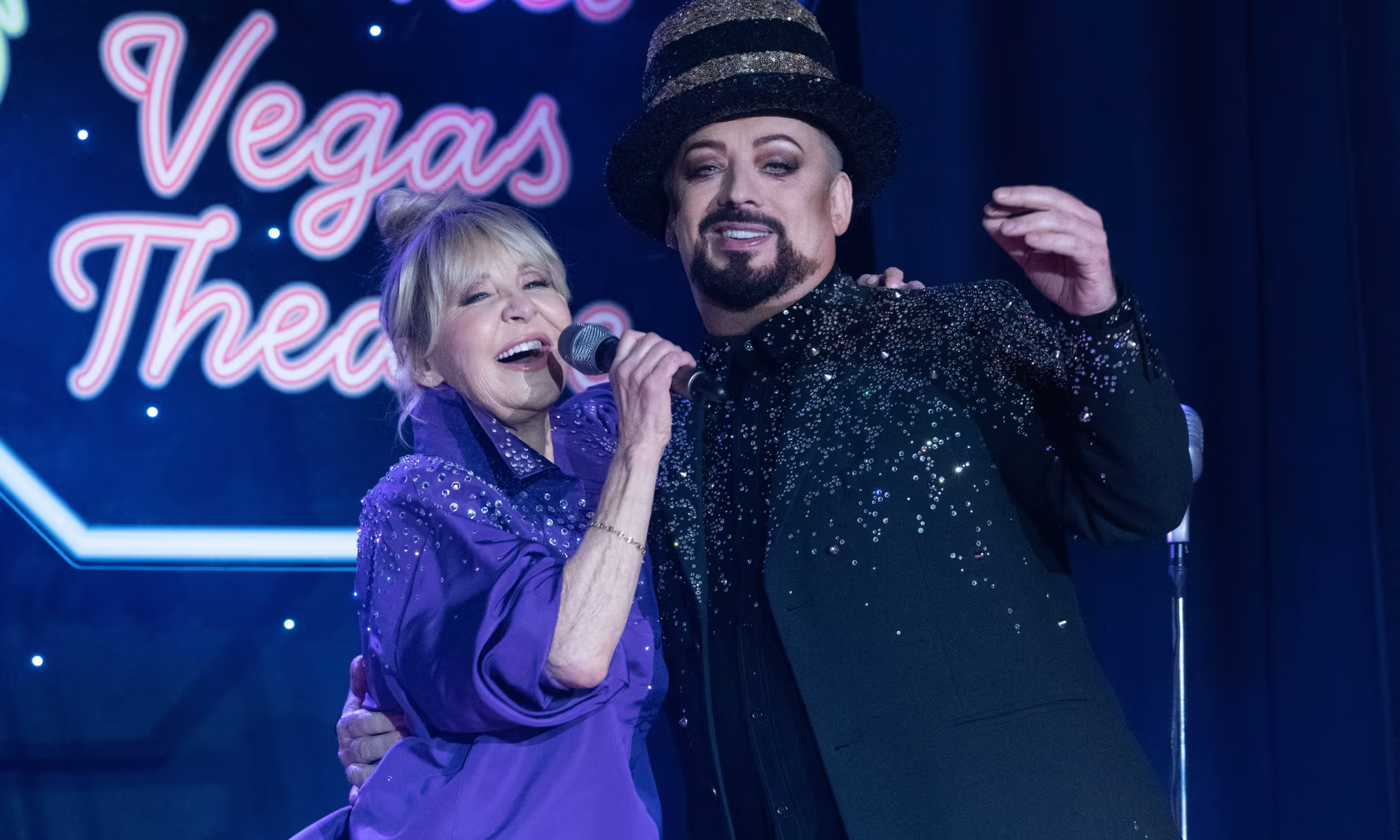
Because of its warm, authentic portrayal of bisexuality — and because it treats bi characters as full, complex people rather than stereotypes or plot devices — I wholeheartedly recommend Arthur’s Whisky to anyone looking for lighthearted, family-friendly fun with genuine contemporary bi representation at its center.
And my mom loved it too!