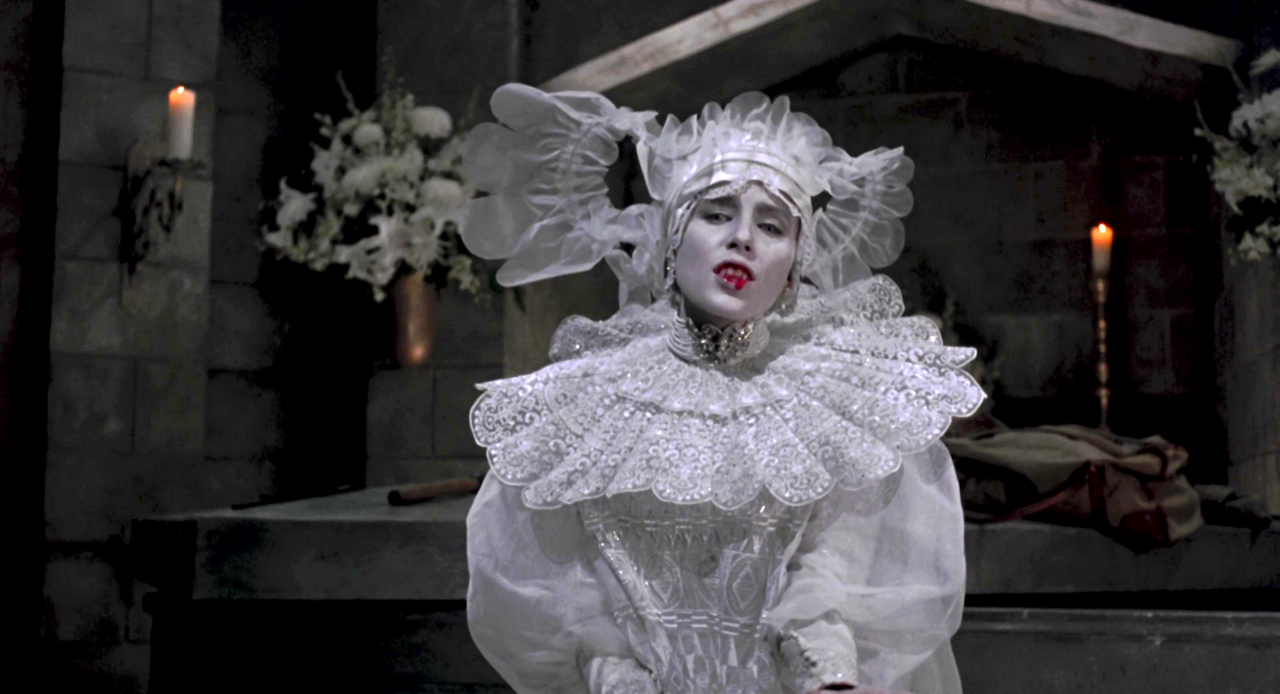
Since its publication in 1897, Bram Stoker’s Dracula has been adapted countless times. There are reimaginings, retellings, graphic novels, plays, musicals (I need to find some of these), games, television shows, and of course films. In honor of Halloween, I thought it would be fun to revisit one of my favorites: Francis Ford Coppola’s 1992 Bram Stoker’s Dracula.
If you haven’t seen the film, or haven’t seen it recently, be prepared to yell “Ahhh Baby Keanu Reeves!” around the seven minute mark. Don’t worry, he sticks around as Jonathan Harker, one of the main non-vampires. Along with Winona Ryder as Mina Harker, Gary Oldman as Count Dracula, and Anthony Hopkins as Van Helsing, this is a star-studded 90s extravaganza.
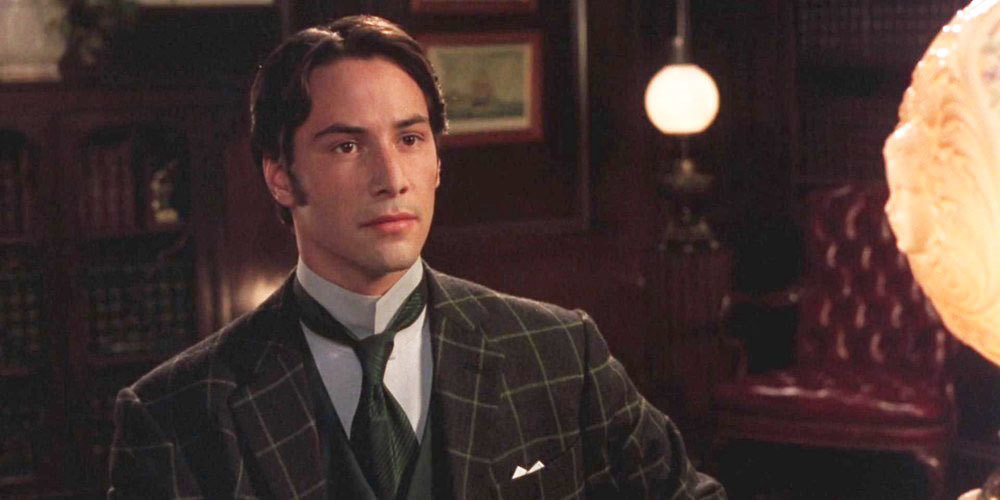
Coppola clearly loves old horror films and is not afraid to pay homage to the Golden Age of Hollywood. I appreciate the complete lack of modern effects in here (even by 1992 standards), as it really adds to the dreamy splendor of the film.
Heads up, there will be SPOILERS, although I’m assuming that most of you already know the general outline of the story. Also, if you want to know more about how the Unicorn Scale works, check it out over here.
What I Liked:
Mina was an actual character with desires and motivations! I feel like she is too often portrayed as an object of desire with no will of her own. In Coppola’s version, she has some agency and falls in love with Dracula (or maybe a past version of Mina does, it’s a little complicated). It’s hard to blame anyone for preferring Dracula to the profoundly boring Jonathan, I’ve always found his character insufferable, even in the novel. Although much of the story is driven by all of these men trying to protect Lucy (Sadie Frost) and Mina, while also desiring them, she actually gets the last word in the film.
I know I’m not the only one who feels as though Mina and her friend Lucy have some kind of sexual tension between them. Apparently, Coppola agrees with me as the two share a kiss in the shrubbery early on. It’s a pretty chaste kiss, but taken in the context of their giggling about sex and looking at some suggestive illustrations, it seems like this isn’t their first time.
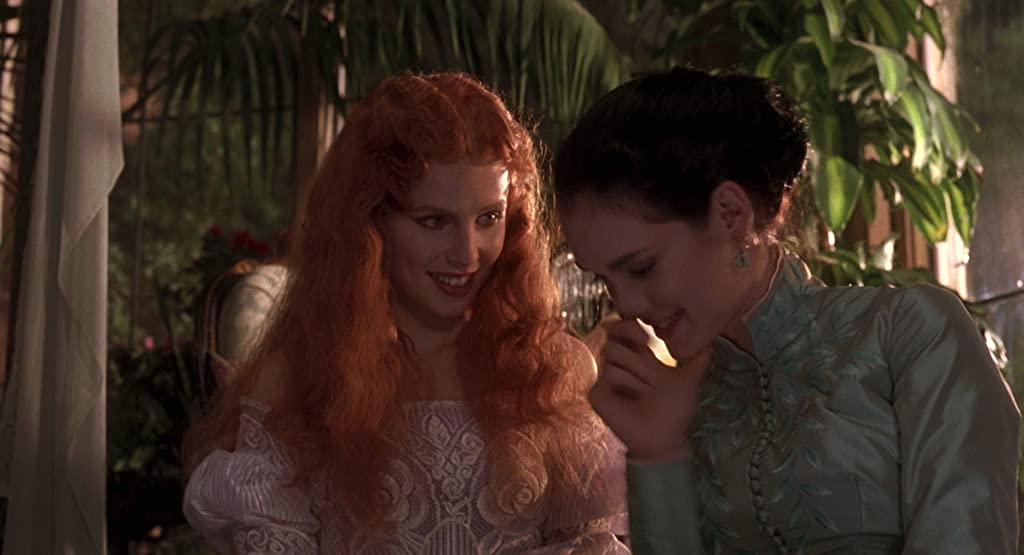
Much later, when Mina finally gets the letter to join Jonathan abroad, the first thing she does is go to Lucy, who’s been sick with a case of vampire. Mina promises she won’t go to Jonathan unless Lucy allows it, and when Lucy gives her blessing, Mina gently and repeatedly kisses her friend’s face before leaving to join her fiancé.
The human characters all seem to have a simmering level of desire just under the surface that the mores of Victorian England society won’t allow them to fulfill. Every moment seems to have an erotic charge coursing through the space between the words left unsaid and deeds left unperformed. In one scene, Dracula stands behind Johathan, wraps his arms around him, and gently shaves his face. Is it a threat, a caress, or a little of both?
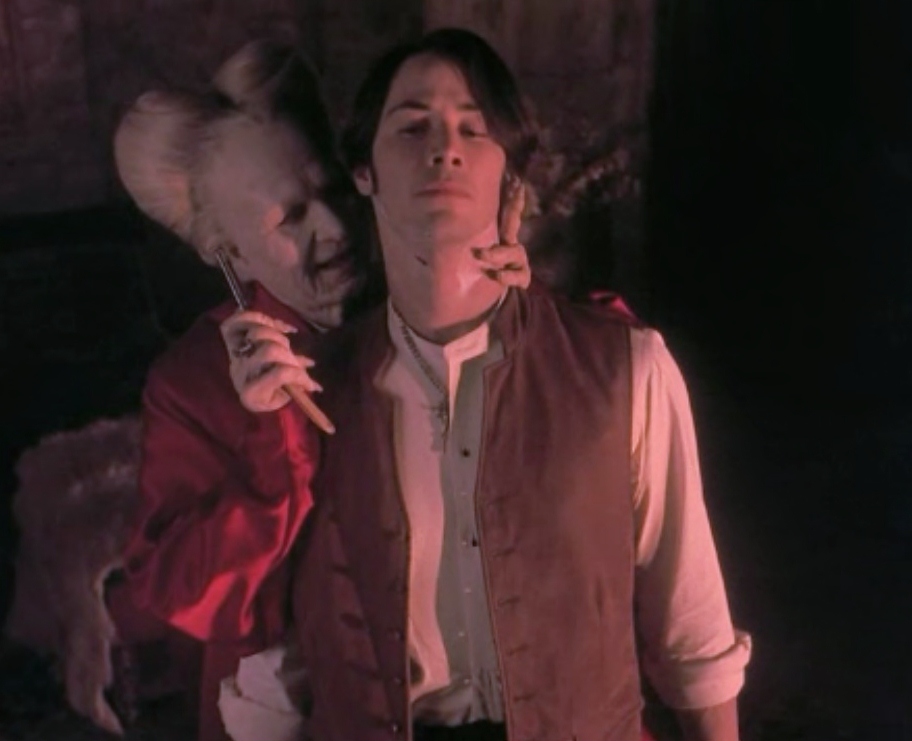
There is, of course, the obligatory bisexual vampire orgy in which the three lady vampires in the basement seduce Jonathan and attempt to eat him. The orgy is an old-school game of guess the body part, and the lady vampires are playing with each other as well as Jonathan. A jealous Dracula charges in, enraged that they attempted to take what he considered to be his. It’s implied that he meant they stole Jonathan as food, but again, the act of eating a person is very sexual in vampiredom.
Although there are some bi moments, including a real vibe between Lucy and Mina and some strange chemistry between Dracula and Jonathan, this is really a story about being forced to hide your true passions and desires, something I think most bi folks will be able to understand very well.
What I Didn’t Like:
You could argue that in a movie about sexual repression — a campy, spooky, gory, wonderful movie about sexual repression — it’s only natural that representation manifests differently from how we normally think of it. There are no out bi characters because the characters are afraid to express any desire. Sexuality and sexual desire are instead closely linked with vampirism.
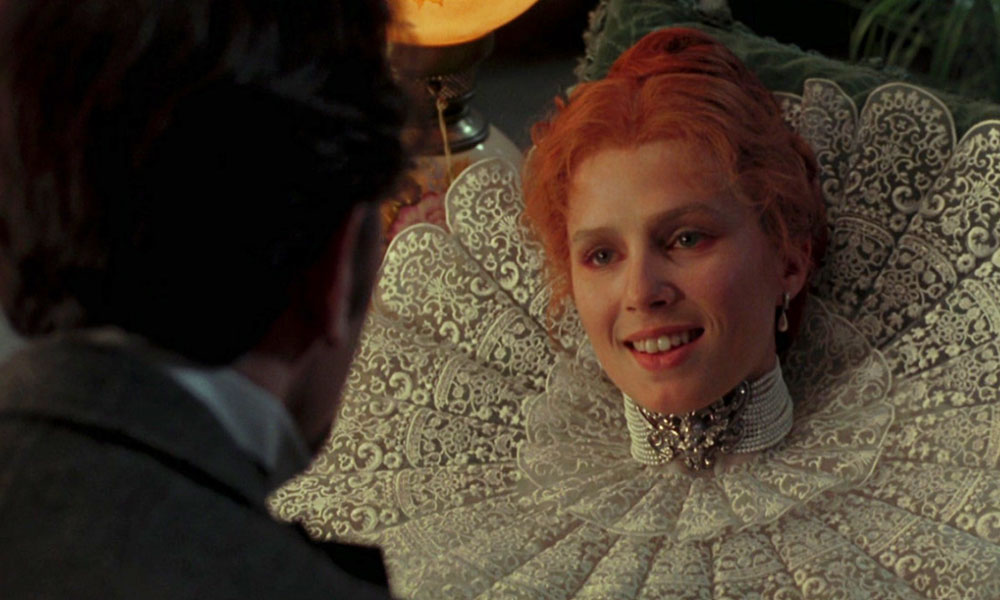
When Lucy is ill after being bitten, she spends most of her time with a breast exposed writhing orgasmically and groaning or trying to seduce the people caring for her. It seems that her own uncontrolled sexuality is what gets her in trouble in the first place. She’s the more flirtatious of the two friends and the one who is lured out into the garden where she has sex with and is bitten by Dracula.
The theme throughout is that desire and sexuality are things that need to be repressed. Jonathan gets trapped in a vampire orgy where he’s also lunch. Lucy writhes in diaphanous gowns. Dracula eventually awakens Mina’s own sexual desires and eventually, she falls in love with him.
Dracula is oddly the most likable character. He lost the woman he loved and went a little batty. And sure, there was a lot of murder and blood-drinking, but he did it for love. When he finally gets Mina, the object of his desire, he doesn’t want to turn her into a monster like himself. His resolve doesn’t last in the face of passion, but he tries. In fact, Dracula and Mina’s passion ends up being the most powerful force of the film.
The Rating:
Ultimately, this is a movie about sexual repression in Victorian England. It’s hardly surprising that there aren’t a lot of characters shouting their bisexuality from the rooftop, nor that most of their desire is expressed through smoldering glances, lingering touches, and, of course, eating people. That being said, a few bi moments did manage to shine through. Don’t watch this if you’re looking for an upbeat coming-out story, but if you want a movie that explores what it means to have to hide your true desires, Bram Stoker’s Dracula will be right up your alley.