Bonjour, mes amours! I hope all of you are doing well out there across the cyber void. I thought it would be a good idea to take a look at what’s quickly becoming a modern LGBTI classic on first love, the French film Blue Is the Warmest Color.
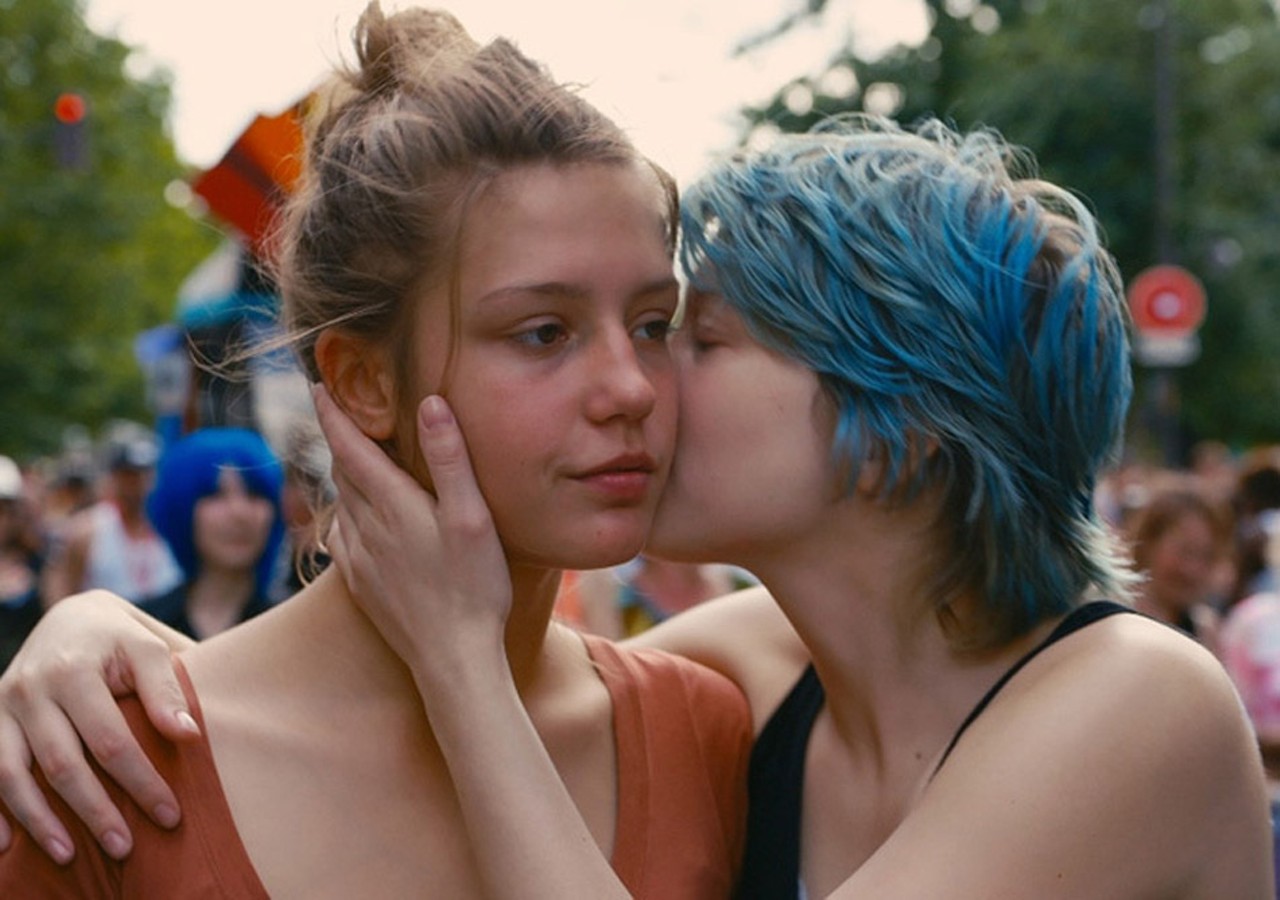
I had first heard about this French foray into first (same-sex) love a few years ago when I started pecking out my novel. Friends and strangers alike kept asking about my latest creative endeavor. When I explained it was a bi coming-of-age YA novel, they’d grin and ask, Like Blue Is the Warmest Color?
I hadn’t seen it, but it stayed on my list of movies to review for this column for a long time. Now, after having finished my book, I wanted to finally watch it and see if there were any huge similarities (all I knew was one of my characters dyed her hair, but she didn’t speak any French.)
Il y aura des spoilers dans cet article. Don’t worry, I’ll save you a trip to Google Translate — there’ll be SPOILERS. Oh, and also, if you need a refresher on how our unicorn rating works, check out our first unicorn scale, s’il vous plaît. (Please forgive my cruddy French — I took years of Spanish.) You can also browse our Bi Media Entry for the show if you’re looking for a quick summary!
What I Liked:
This is a magnificently acted film about a love that is at times tender and at others fiercely felt. No matter the gender or the attraction, the feelings are deeply felt — everything from boredom to rapture. Truly, the patterns of attraction are not categorized into genders throughout this film, and that felt so refreshing.
Not only that, but we had multiple bi characters at play! I felt like it’s safe to call Adéle (Adéle Exarchopoulos) and the gallery owner bi. Through their discussions and lived experiences, I think it’s fair to say that Emma (Léa Seydoux) is gay.
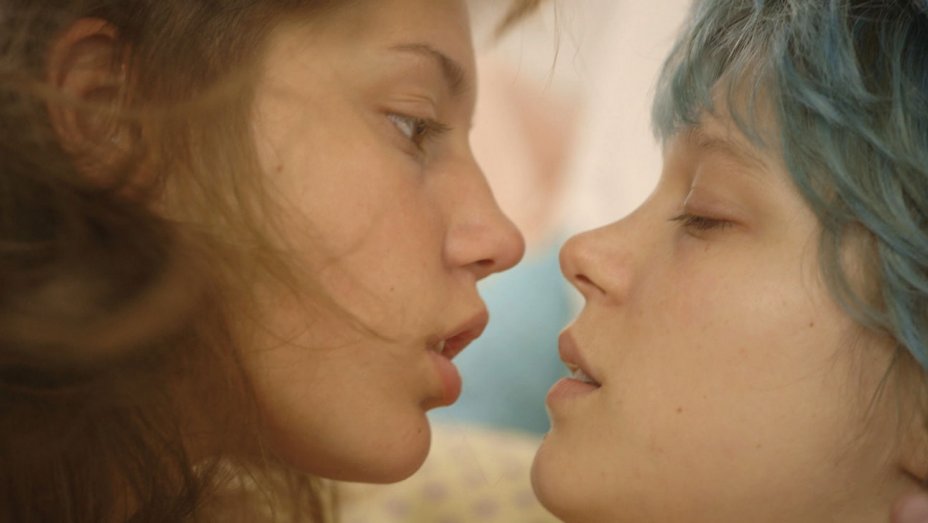
Yet this mixed-orientation coupling never is questioned because of their initial coupling (but rather because of Adéle’s infidelity later on). Emma was patient with Adéle’s awakening, never pushing or pressuring her attraction. While some of the peripheral characters may have diminished Adéle’s attractions to multiple genders or questioning through questioning or outright bullying, the film never diminished or questioned Adéle’s ability to love multiple genders.
I could see some people questioning whether Adéle’s multi-gender attractions were valid because of the lack of successful relationships with men. I still feel she was merely bored by her first male lover, and other male opportunities presented themselves when she felt emotionally vulnerable. This doesn’t mean she isn’t attracted to men; it simply means she hasn’t had successful relationships with men. She still pursued relationships with multiple genders, and that wasn’t invalidated or erased.
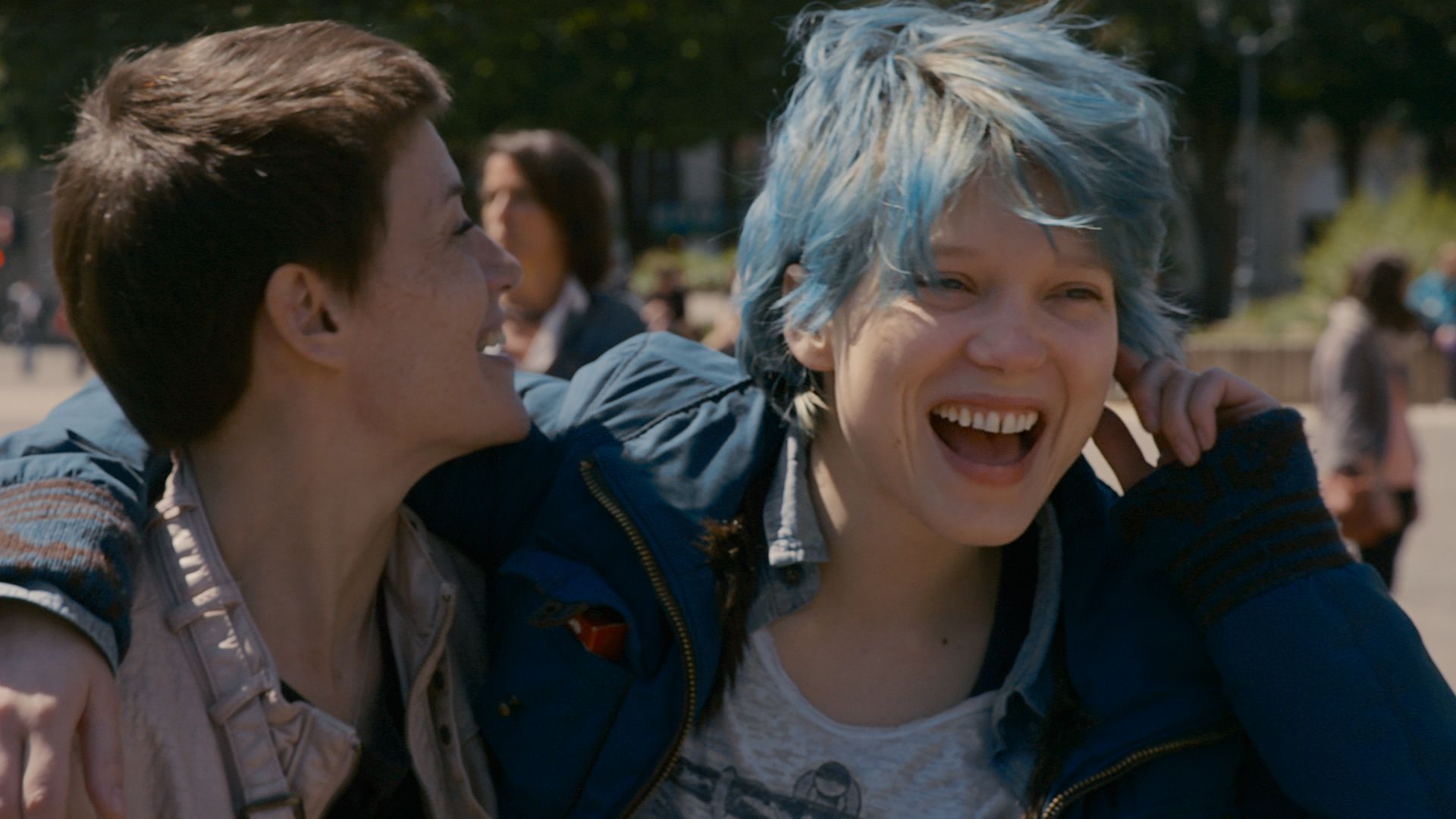
What I Didn’t Like:
While there was a lot to love about this movie, I certainly had a lot of quibbles. The running time alone felt self-indulgent at times. Even for a modern portrait of France, the term “bi” is never even pushed forward. I wish that Adéle hadn’t ended up cheating because that ends up feeding into the stereotype that those with bi leanings are less likely to be faithful. Not only that, but I wish that the only other examples of lesbians in the film weren’t either cheaters or super-aggressive clubbers. That doesn’t help anyone and didn’t even push the story forward in any meaningful way.
Then there were the controversial sex scenes. Most of the critiques I read centered around three subjects: their length, their explicitness, and their authenticity.
As far as their length, I wasn’t bothered by that until the last minute or so. The film had taken so much time to establish their attraction, the payoff didn’t bother me so much. It was only at the last minute or two of the first encounter that I started checking the clock.
With regard to explicitness, I kept having to remember this was a French film, and European audiences have a much higher, non-Puritan tolerance for sex scenes, so most everything rang true in that department. And most same-sex sessions I’ve known last for hours, so I still felt like there was necessary emotional editing going on with the scenes. Plus, Emma and Adéle’s sexual chemistry is crucial to their relationship, so I wasn’t bothered by the showing of different positions.

What did bother me, however, was the insistent male-gaze feeling of the encounters. Everything was lit well, but it smacked of a fantasized sex scene that had no consultation from anyone who has had a few experiences with the same gender in bed. Was no one going to take turns? Really? Not even in the later years? No conversation (or barely any). This rang very falsely to me.
The Rating
I’m taking umbrage with the film. And yet, I still highly recommend watching it. The performances are engaging to the point that I was flashing back on multiple relationships of my past with each scene — only really good stories get me to do that. I think an average viewer will need to have some patience with the way it unfolds – in more ways than one. It’s not the strongest or most bi portrayal out there, but Blue is an excellent display of the gauntlet of emotions of a first, true love — regardless of gender.