Richard Franklin Lennox Thomas Pryor was an American comedian and actor widely regarded as being among the most influential comics of all time.
Born in 1940 in the small city of Peoria, Illinois, Pryor’s upbringing was as rough as it was remarkable, with a mother who was a prostitute and a father who was a former boxer and then hustler and pimp. When his mother lost custody of him as a child, young Richard grew up in a brothel run by his grandmother, a stern woman who often struck him over trivial matters. Pryor was sexually assaulted when he was seven, expelled from school when he was 14, and worked as a shoeshine, a janitor, and a truck driver. He joined the military when he was 18 and spent most of his service in an army prison over his involvement in the non-fatal beating and stabbing of a white soldier he saw as racist.
After being discharged from the Army, Pryor briefly returned to Peoria and entertained at a local cabaret before moving to New York City in 1963. Having gained a reputation as a class clown in his school daysand taken an interest in stand-up comedy, Pryor decided topursue it as a career. He began regularly playing New York comedy clubs, opening for performers including Bob Dylan and Nina Simone (who famously once calmed him down from a severe bout of stage fright). As Pryor honed his performance skills, he caught the notice of Woody Allen, who mentored him for a time before Pryor took his show on the road and started touring the US.
While developing his act on tour, Pryor carved out a career as a writer and performer. Initially, he modeled his routine after the comedian Redd Foxx and stuck to the standard comedy structure of standing at the microphone and telling straightforward jokes. While he was earning his spurs, he made appearances on television shows such as The Ed Sullivan Show and The Tonight Show Starring Johnny Carson, as well as a few acting gigs on the big screen. He even managed to cut his first live comedy album during this era.
But the constraints of both the stand-up form as well as the typecasted expectations of a black comic in mid-20th-century America began to chafe at him until it came to a head on one Vegas night in 1967. Poised to open for Bobby Darin at the Flamingo and break into mainstream fame, Pryor walked onto the stage (with Dean Martin sitting among the sold-out crowd), looked at the audience, and said, “What the f*ck am I doing here?” and walked off the stage.
For a time, Pryor took a hiatus from stand-up and moved to Berkeley, California, and became involved in the counterculture scene. This creative sabbatical proved to be a fruitful time for Pryor. In the mid 1970s, he returned to show business via Hollywood, landing writing gigs such as Sanford and Son, in which he wrote for his idol Redd Foxx, as well as helping to write Lily Tomlin’s television specials, earning an Emmy in the process.
Eventually, Pryor ended up on the writing staff for Mel Brooks’s envelope-pushing comedy classic Blazing Saddles. He also turned to acting, with memorable performances such as Lady Day Sings the Blues, Silver Streak, The Wiz, The Muppet Movie, and Brewster’s Millions, to name a few. Pryor also briefly hosted his eponymous variety show in 1977 (although it was canceled after just four episodes) and starred in some legendary sketches on Saturday Night Live, as the first black man to host the show.
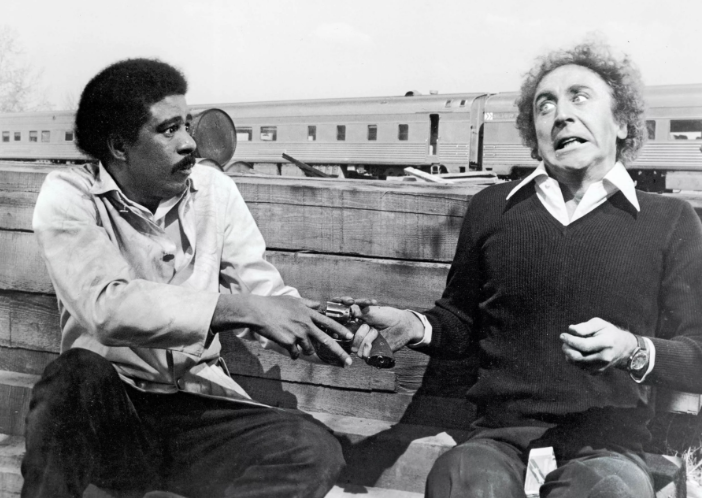
He also returned to stand-up comedy, and it is in this domain that Pryor’s contributions are most celebrated. More than anything, Pryor is remembered for how he revolutionized the art of stand-up. Recording a streak of wildly successful live comedy albums, Pryor pushed the boundaries of the genre, moving away from more traditionally structured routines to a more freewheeling style of storytelling — many colored by his own life. His work frequently focused on issues of race, sex, and culture in ways that were accessible, universally relatable, and still resonate to this day. His confessional, stream-of-consciousness style, which often focused on life and social issues, made for comedy that was as insightful as it was hilarious. It was at once topical in how it addressed the black American experience of the era and timeless in how it exposed the absurdities of the human condition. His legendary comedy performances remain admired and studied, including Richard Pryor: Live In Concert and Richard Pryor: Live on the Sunset Strip.
Often glossed over in Richard Pryor’s biography is his bisexuality — a fact he was open and unapologetic about exploring. Pryor was married seven times to five different women throughout his life, fathering seven children (including the actress and comedian Rain Pryor).
In between those marriages, Pryor dated around — including Pam Grier as well as a trans woman, which he detailed in his autobiography, Pryor Convictions. Pryor was also known for joking about his label-free sexuality in public, getting ahead of rumors by joking about it on stage in front of select audiences so he could not be blackmailed later. It was even revealed by music industry legend Quincy Jones in a 2018 interview that Pryor and actor Marlon Brando hooked up in the seventies — and Pryor’s final widow, Jennifer Lee, quickly confirmed the rumors. Within the year, Lee (the executor to Pryor’s estate) further confirmed Pryor’s bisexuality by publishing his unabridged, unedited diaries, in which Richard explores and discusses his sexuality at length and with deep candor.
Despite his high artistic output, Pryor was not without his demons. He struggled with dyslexia and remained haunted by his traumatic upbringing, with a reputation for hard living and a penchant for sometimes being physically abusive to the women in his life. At one point during a drug-addled haze in 1980, he intentionally lit himself on fire in an attempt to end his life. While he covered this event in one of his sets, purporting it as a freebasing cocaine accident, the fire put third-degree burns over at least half of his body.
In 1986, Pryor was diagnosed with multiple sclerosis, which robbed him of the ability to walk and speak. Nevertheless, Pryor strived to continue to perform stand-up for another decade, often being carried onto the stage at the Improv, a comedy club, up to the year 1995. Pryor died in 2005 of a heart attack at age sixty-five.