Baldur’s Gate 3 is a 2023 role-playing video game developed and published by Larian Studios, based on the world and rules of Dungeons & Dragons. It is the third main entry in the Baldur’s Gate series and takes place in the Forgotten Realms, where the player and several companions have been infected with mind flayer parasites. The central story follows the party as they try to understand and remove these parasites while becoming involved in larger conflicts across Faerûn. The game combines character creation, turn-based combat, dialogue choices, exploration, and branching quests, giving players a high level of freedom in how they build relationships and shape the story.
A key part of Baldur’s Gate 3 is its emphasis on companions, many of whom can become close friends, rivals, or romantic partners depending on the player’s choices. The player can create a custom character or play as one of the origin characters, and the story adapts around those decisions. This flexibility is important to the game’s queer and bisexual representation because romance is not restricted by the player character’s gender. Instead, the game allows relationships with romanceable companions regardless of whether the player character is male, female, non-binary, or otherwise customized. Characters’ queerness is optional, since the player can define their gender and sexuality through play.
For bisexual representation specifically, Baldur’s Gate 3 is notable because it normalizes attraction across gender rather than treating same-gender romance as a special or hidden route. Bi characters include Astarion, Shadowheart, Karlach, Gale, Halsin, Lae’zel, Wyll, and Minthara, all pansexual, with romance options available regardless of the player character’s gender identity. While “pansexual” and “bisexual” are not identical terms, the game’s structure is still highly relevant to bi representation because it portrays characters whose romantic and sexual possibilities are not limited to one gender. This gives bi and queer players a broad range of relationship options without forcing them into a narrow identity category.
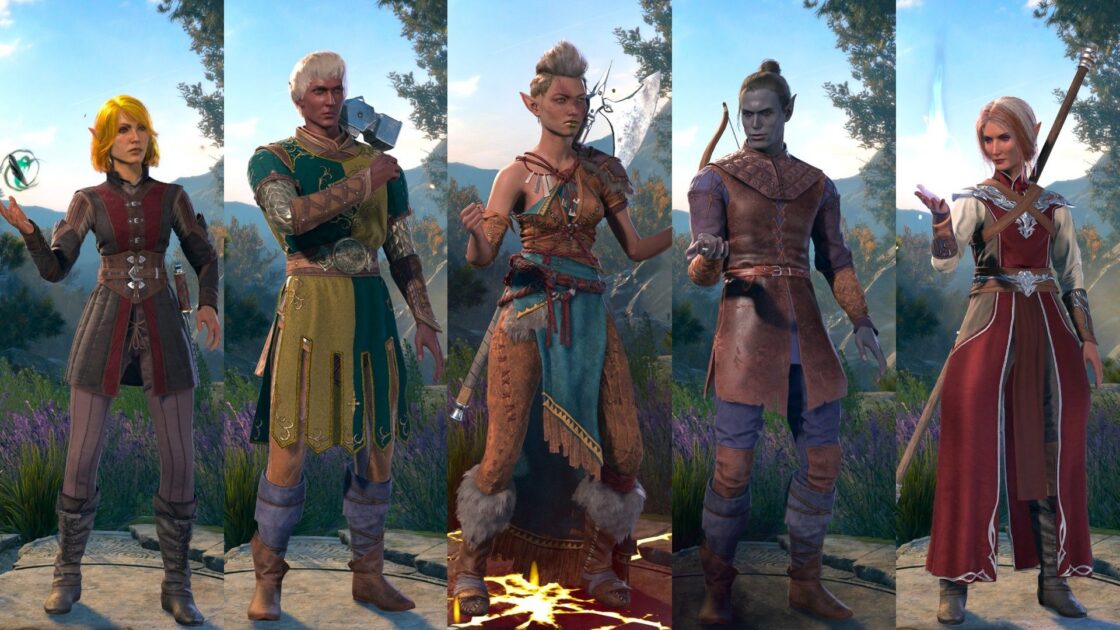
The effect is that bisexuality and broader queer desire feel integrated into the world rather than isolated from it. Romance is part of the same role-playing system as combat, dialogue, morality, and party-building: players make choices, build trust, and see relationships develop from those choices. This helps avoid a common problem in games where LGBT romance is treated as an optional side feature or a single “representation” character. In Baldur’s Gate 3, many central characters can participate in queer relationships, so bisexual and pansexual attraction becomes part of the game’s ordinary emotional landscape.
The game was also widely praised for its writing, performances, production quality, and player freedom, and it became one of the most awarded games of its time. Its success matters for representation because it showed that a mainstream, big-budget fantasy RPG could include flexible queer romance systems and still achieve major commercial and critical acclaim.
As a placeholder summary, Baldur’s Gate 3 can be described as a landmark fantasy RPG whose bi and queer representation comes mainly through its open romance design, gender-flexible character creation, and companions whose relationships are not restricted by traditional heterosexual romance rules.