Welcome, Unicorn fans old and new! Now, who loves cracking a case? I know I sure do. I’ve loved mysteries for decades. Ever since I took a detective fiction class back in college — former English major in the hoooouse — I’ve been hooked.
And, with all respect to Raymond Chandler, I have a soft spot for hardboiled detective series that aren’t straight, white men. (Forgive me, Marlowe, for I have sinned.) Sue Grafton’s alphabet series (A Is For Alibi, etc), and Walter Mosley’s Easy Rawlins series are particular favorites. So when I heard ABC picked up Stumptown, a graphic novel about a bi female Portland private eye, for serialization, I knew I had to check it out.
Before I dive too deep into this crime dramedy, I should throw down the typical disclaimers so everyone knows what they’re getting into. First and foremost, this review will contain SPOILERS. I should also note there should probably be a content warning: discussion of PTSD, often including flashbacks with flashing lights. Finally, if you want to find out how I’m rating this show (or would just like a quick refresher), you can swing by this page for a quickie explanation.

Stumptown follows the life and cases of freshly minted private dick Dexadrine “Dex” Parios (Cobie Smulders), a Marine vet saddled both with intel training and PTSD from her tours in Afghanistan. Battling a gambling addiction and difficulty maintaining a steady job, Dex gets asked to look into a missing persons case for an old frenemy, casino owner Sue Lynn (Tantoo Cardinal), and discovers she has a knack for solving crimes that the local Portland police can’t touch. These capers are usually scored to a 1980s mixtape stuck in the stereo of her rusting, unsexy orange Mustang.
What I Liked:
Oh man, there is so much to enjoy here.
When I saw the news come down the pike that Dex was canonically bi, I had to admit I was skeptical. We’ve only had a small handful of bi lead characters in American network television, so I was wary, worrying that the show would just give us some, sultry references to same-sexploits of yore. And at first, it seemed like that was going to be the case. The pilot quickly sets up both a Sam and Diane-esque chemistry between Dex and her best friend, bar owner Gray (Jake Johnson) as well as an attraction to her steamy police contact, Detective Hoffman (Michael Ealy). There’s also a montage of Dex trying to find a booty call to overpower the traumatic images running through her brain, in it the vet calls an old flame named Sarah who we never see. Convenient.
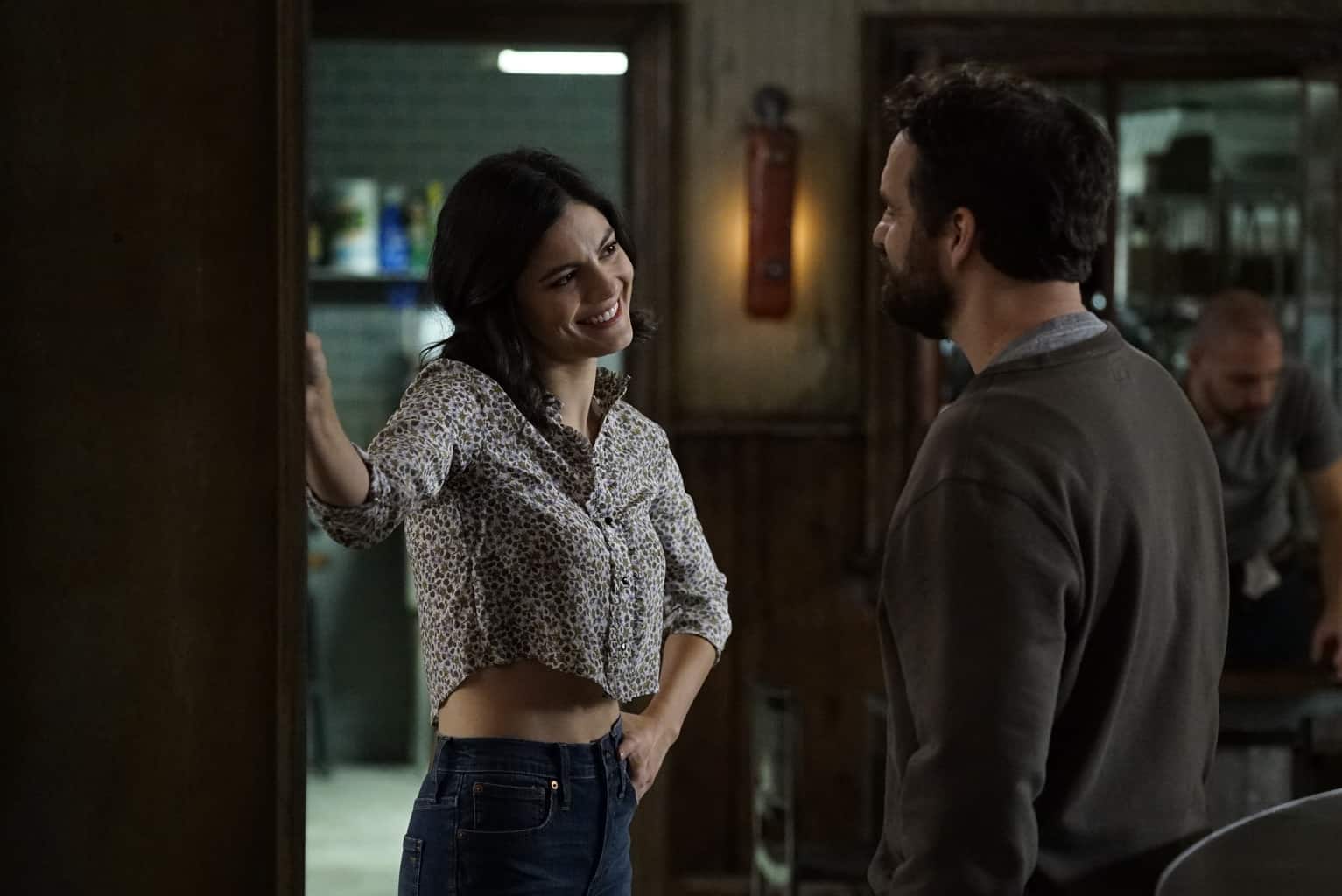
But it turns out that we do get to actually see Dex express her same-sex attractions as the series progresses. In an extended flashback to her first time meeting Grey, Dex discusses an ex named Sam — and quickly corrects Grey when he assumes Sam’s gender is male. So we are starting to see that Dex is biromantic too. Then, happily, all biphobic doubts get dashed during Episode 6, “Dex, Drugs, and Rock and Roll” when Fiona X, a punk star, breezes through town and asks Dex to be her bodyguard.
(Sidebar: Did we all sign a bi contract where we have to either be, or at least have, one goth-y lover, or is that just me?)
At any rate. While the affair with Fiona (whose aesthetic gave off major punk-y, Atomic Blonde vibes) was brief, Dex’s attraction and history with her is made abundantly clear. Plus, despite the fact the show is set in the flannel capital of the world, this episode is the first time we start to see Dex in the signature fabric of the Pacific Northwest. Oh yes — homegirl starts busting out the flannel in this episode. Maybe she took notes from Brooklyn Nine-Nine.

Even beyond Dex’s bisexuality, creator Greg Rucka and his writing staff take pains to make the wisecracking P.I. not only compelling to watch, but fully developed as a character. While this is still a straightforward procedural show at its core, the crew and Smulders conjure a character that not only has a fascinating past, but relationships, fears, dreams, and flaws with consequences for herself and the people around her.
While Dex is smart and resourceful, she isn’t as hardboiled as her predecessors; her empathy keeps her from becoming too flat as well as being a source of strength and insight as she takes on the many cases that tumble through her door. This is the kind of bi representation I’ve wanted to see on network television for a long damn time.
I know we can feel spoiled these days with assuming there is more bi+ representation than ever (which, yes, there is), but I still think it’s crucial to see this play out in a really mainstream show. This is the type of series most of our mothers will watch, and will likely live on forever in syndication, played at gyms while I run on a treadmill. Its presence is now undeniable, and not just another flash in the pan.
But even beyond the delicious queerness on full display in Stumptown, there is much to recommend the series. Diversity and representation don’t just stop at Dex’s creation; most of the supporting cast are people of color, people with disabilities, and full-fledged characters that have their own arcs with little to do with our bodacious bi lead. Of particular note is the storyline with Sue Lynn, who inhabits a role that is rarely seen on national television — a Native American woman with dimension and personality, whose complicated relationship with the law is fascinating to watch.

What I Didn’t Like:
To be honest, it’s difficult for me to find fault with the show. We can go to my old standard of “they don’t say bi enough”, which will probably always be true until a show has the word in the title. And maybe not even then.
Wait. I take that back. I’d love to see a bi male character come in and cut through the triangle between Dex/Grey/Hoffman. Not only for funsies, but also to have someone that Dex can talk to about her experiences and how she moves through the world — if she would be willing to open up to them. If we’re going down this road in broadcasting (which looks likely), we might as well show even more queer representation while we’re at it to normalize our presence in the media landscape.
The Rating:
Rare is the time when we have a kickass, flawed bi character at the helm of a major television show — let alone one as entertaining as Stumptown has shown itself to be. Dex may not be open about a lot of her life, but she is queer af and makes no qualms about that part of her identity.
May we all be inspired by her lead. Just maybe don’t mimic the part where she chases suspects without calling for back-up first.