Outside of cats and dogs, there may be no animal that’s been closer to the lives and hearts of humans than horses. For millennia, horses were our galloping steeds, our beasts of burden, and our weapons of war. They’ve also been our trusty companions. Horses have been symbols of strength, power, wealth, speed, grace, untamed nature, and especially virility. It should come as no surprise, then, that our equine friends are full-blooded bisexuals.
Like many social mammals, horses are highly sexual creatures, especially males. In fact, young males (known as colts) often begin engaging in sexual behaviors within a week or two of being born, and can father offspring before their first birthday! Males, both free-running and in confinement, have also been observed to become spontaneously aroused every one to three hours on average and to frequently masturbate, regardless of whether females were around. Imagine having that job, sitting around with a clipboard watching for two-foot-long horse erections.
Of course, equines get up to all kinds of horseplay with one another as well. Both colts and stallions (adult males), particularly those in bachelor groups of other males, engage in what one equine behaviorist and researcher describes as “considerable (many encounters per day per stallion) inter-male sexual behavior” as well as “occasional heterosexual encounters”. Mares (female horses) have also been documented to engage in stallion-like behavior, including mounting other females while thrusting. This can occur during certain parts of their fertility cycles, and can also be induced with hormone injections.
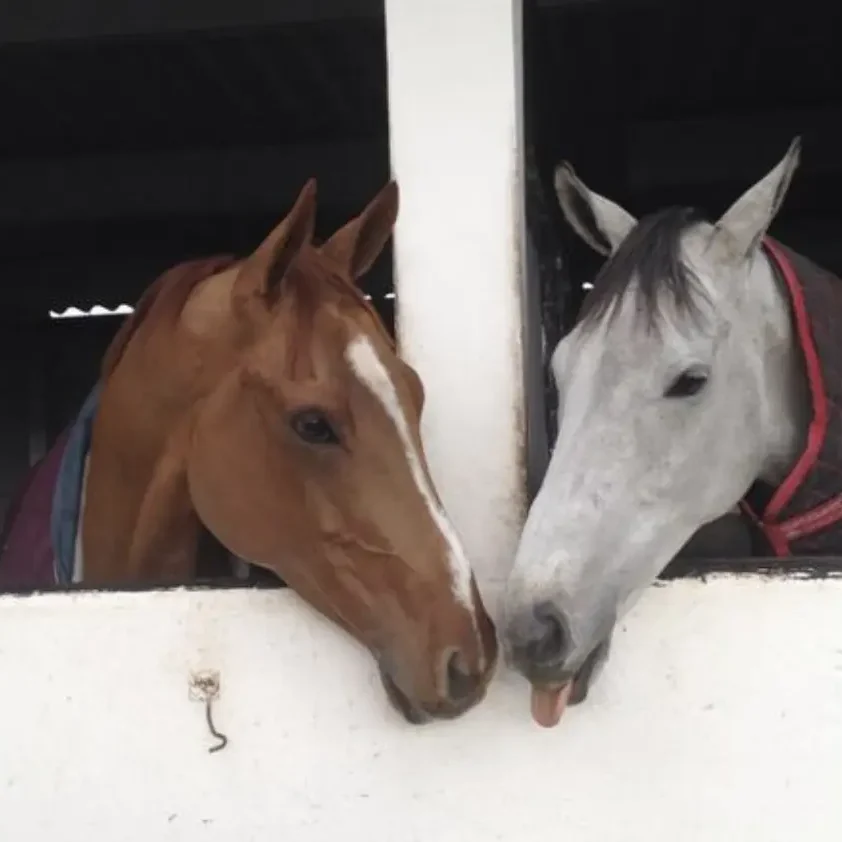
In addition to sexual behavior, horses have the capacity to form very close same-sex social bonds. In 2017, the heartwarming — and heart-wrenching — story of two male prize-winning racehorses named Simonsig and Triolo D’Alene went viral online. The pair took to one another instantly, developing a level of inseparability and intimacy beyond anything their seasoned trainer had ever seen. They stood together, walked together, ate together, bunked together, and even cuddled. Their trainer described the relationship as “two boys that fell in love with each other”. Then, tragically, Simonsig broke his hind leg during a race and had to be euthanized. Whether or to what degree Triolo D’Alene was bereaved is difficult to say, but letters and messages of sympathy poured in for the horse from far and wide.

One of the most reliable indicators of how much humans care about a particular animal is how enraged they get when they hear about their mistreatment. And aside from the cases involving the most common household pets, stories of cruelty and violence toward horses are a surefire way to evoke people’s disgust and fury (in my opinion, this should include the horse-racing industry). Horses have been an integral part of human history, the development of human civilization, and the human imagination — from fables and mythology to celebrated fiction to true stories. They may not be as much a part of our day-to-day lives as in centuries past, but these galloping bis still have a cherished place as our kindred spirits.